Exploring the Symbiotic Collaboration Paradigm in Virtual Reality and Its Potential Applications to Human Spaceflight

Abstract
As the quest to go back to the Moon and beyond continues, preparation for such critical missions relies in part on the use of immersive technologies. Especially, Virtual Reality (VR) unique affordances allow to simulate scenarios in a convincing digitally recreated space. But the potential of VR is not limited to solely emulating real-world environments. Indeed, some works from the Human-Computer Interaction (HCI) community explored new ways to collaborate virtually by inhabiting the same virtual representation, namely an avatar. Taking this paradigm further, one could offer new ways to collaborate between an immersed VR user and an external supervisor being granted access to the virtual environment by way of non-immersive devices like a computer or a smartphone. The non-immersed user could for instance inhabit some body parts of the VR user’s avatar to benefit from unique viewpoints and leverage mutual spatial awareness, as well as social interactions, alike a symbiotic relationship that benefits both actors. Therefore, this paper introduces our on-going research project exploring this new paradigm of symbiotic co-embodiment as a tool leveraging social presence during supervised embodied sessions in VR. It especially discusses how this paradigm could benefit human spaceflight, both in mission preparation and during spaceflight.
Keywords and phrases:
Virtual Reality, Co-Embodiment, Human Spaceflight, Supervised Training, On-field ActivitiesCopyright and License:
![[Uncaptioned image]](x1.png) © Florian Dufresne, Geoffrey Gorisse, and Olivier Christmann; licensed under Creative Commons License CC-BY 4.0
© Florian Dufresne, Geoffrey Gorisse, and Olivier Christmann; licensed under Creative Commons License CC-BY 4.0
2012 ACM Subject Classification:
Human-centered computing Virtual reality ; Human-centered computing Collaborative interactionEditors:
Leonie Bensch, Tommy Nilsson, Martin Nisser, Pat Pataranutaporn, Albrecht Schmidt, and Valentina SuminiSeries and Publisher:
 Open Access Series in Informatics, Schloss Dagstuhl – Leibniz-Zentrum für Informatik
1 Introduction
The efforts from the space sector are turned toward Humankind return to the Moon. The National Aeronautics and Space Administration (NASA)’s Artemis program [8] plans to have crew landing on the Moon as early as mid-2027. Institutions and private companies have historically relied on terrestrial analogues to prepare for space missions [5]. But technology has evolved since the Apollo era, and analogues limitations in terms of emulating specific features of the mission environment can now be overcome thanks to immersive technologies. Virtual Reality (VR) Head-Mounted Displays (HMDs) have the ability to accurately simulate situations with respect to the audiovisual features of the mission concept, such as lighting conditions or object physics. Nevertheless, VR is a complex medium on its own that needs to be carefully controlled to make the most out of it. Especially, as it is oftentimes used for design reviews, learning or training purposes, user experience must be taken into account to make the simulation as seamless as possible. Therefore, user-induced perceptual illusions like presence [15] or the Sense of Embodiment (SoE) [17] towards the virtual body must be observed as factors that could increase the fidelity of the simulation and in turn the relevance of VR as a spaceflight preparation tool [11].
Design reviews and training use cases are deemed highly relevant to spaceflights preparation. In this context, the immersive simulations used may support the supervision of the sessions in a cross-platform collaborative way. Indeed, it is common practice to have users immersed in a virtual scenario whereas an external collaborator operates the simulation from a desktop or mobile station. Such settings could benefit investigating new collaboration paradigms like co-embodying the same virtual body [12] to leverage training and social aspects of the collaborative experience [30]. Even if co-locating users in the same body shows promising applications [18], the impact of knowing and sensing that another is inhabiting one’s own virtual body remains underexplored. Moreover, cross-platform supervision may benefit from an operationalization of co-localization principia and associated evaluation. We therefore propose the symbiotic collaboration paradigm in which a VR user shares her/his avatar with a non-immersed supervisor. The presence of the supervisor within the VR user virtual body would be signified through haptic stimuli to enhance cooperation and mutual understanding. The study we forward would focus on the experience of the VR user in a sense that they experience a one-way co-embodiment situation whose implications need to be understood before being operationalized.
This paper first introduces the relevant literature. Then, the concept of haptic-enhanced symbiotic collaboration is presented before introducing a unique haptic gear meant to foster the symbiotic relationship. A preliminary study evaluating operational aspects of the hardware is thoroughly reported. Then, it introduces the follow-up user study that is meant to provide insights with respect to this new paradigm and its impacts on the VR user experience. We finally present relevant perspectives for Human spaceflight when applying the proposed paradigm, before wrapping up our discussion.
2 Collaborating in Mixed Reality
2.1 Embodied Experiences in Immersive Realities
EXtended Reality XR technologies find a well suited use case for design review and training purposes. This tendency is even more salient in the context of VR experiences, mainly due to its advanced sensorimotor contingency features. The latter facilitates “an inclusive, extensive, surrounding, and vivid illusion of virtual environment” to the users [26]. As presented in the opening of this document, VR is a complex medium on its own. It induces perceptual illusions among users that are referred to as qualia (singular: quale), defined as “a subjective and internal feeling elicited by sense perceptions” [25].
For instance, being immersed through VR technologies elicits among users a subjective experience of presence, meaning the sense of being there in the virtual space [15, 29]. Slater introduced two orthogonal components to presence, namely Place Illusion (PI) and Plausibility Illusion (PsI), that are sine qua non conditions for the users to experience events happening to them in the virtual place as if they were real [27]. This authenticity of the simulation is what drives new training practices in using immersive technologies.
In addition, the users may interact with the digitally recreated space through a virtual representation commonly referred to as an avatar. Experiencing an avatar as being one’s own body is conceptualized as the Sense of Embodiment (SoE) in VR [17]. Kilteni et al. proposed a framework of the SoE made of three dimensions: Self-Location, denoting “one’s spatial experience of being inside a body” (distinct from being in the virtual world) ([17, 9]); Agency, signifying the sensation of having complete motor control over the virtual body, which also encompasses the intention of actions ([7, 16]); Body Ownership, referring to the self-attribution of the virtual body [28, 19]. Developing a SoE may appear critical in some use cases. For instance, Gorisse et al. [13] showed that users with increased ownership towards their avatar where more likely to protect their body integrity.
Therefore, presence and the SoE appear as two major qualia, on top of every immersive experience, that should be carefully considered when designing for practical use cases in the context of human spaceflights and beyond.
2.2 Supervising Immersive Experiences
As mentioned above, VR could be a perfect ground for design reviews or training activities. But such use cases often involve a supervision setting, in which users are rarely to be left alone with the simulation. Indeed, the aforementioned use cases would imply that one or more operator supervises the immersive session, usually using non-immersive setups for practicality. A concrete example of such practice can be observed when using standalone VR applications that can be monitored thanks to external device screen mirroring features, but that only gives access to the VR user’s viewpoint. Some tailored applications go further by providing the supervisor with interaction means, and even a virtual representation. However, collaborating with non-immersed users has been reported to create occlusion problems and peripersonal space invasion in collaborative settings [22]. More specifically, a literature review of collaborative virtual environments proposed by Derouech et al. [10] may support the claim that avatar representation tend to be understudied in this context, even if the number of papers considered for the review was limited based on the inclusion criteria ().
Still, a concrete benefit that arises when making the remote supervisor part of the simulation is the potential emergence of a sense of social presence [6, 30, 25], encompassing the sense of “being there with another” [6]. Leveraging this quale may benefit positive communication outcomes, like persuasion among others [21]. However, when the supervision is operated through a cross-platform setup, the inherent asymmetry between devices and associated virtual representations may limit non-verbal communication. This latter point is exemplified by Olin et al. who designed the mobile user’s avatar to signify their inability to use hand tracking and object manipulation by making its hands static [22].
All things considered, there may be alternatives to these methods to leverage collaboration and non-verbal communication in a supervision context, by taking advantage of devices affordances.
2.3 Co-locating Users in the Same Avatar
At the frontier of the virtual and real worlds, Piumsomboon et al. [23] explored the question of the supervisor representation through an innovative Mixed Reality (MR) collaboration. Their application allowed for a local trainee in Augmented Reality (AR) and a distant supervisor in VR to collaborate in real-time. They notably reported that having the remote supervisor embodied in a 360° camera mounted on the VR user’s shoulder is well appreciated by the latter. This indicates promising benefits for multiscale collaboration with the remote user in close vicinity of the local user. The concept of virtual co-embodiment is crystallizing such an approach. It was recently introduced by Fribourg et al. [12] as “a situation that enables a user and another entity (e.g., another user, robot, or autonomous agent) to be embodied in the same virtual avatar”. In most virtual co-embodiment settings, two VR users share control over the same avatar. The use of such paradigm shows promising perspectives for motor skills training [18].
Yet, lot of work on co-embodiment focuses on the impact of control distribution over the virtual body [12, 32, 18, 14]. There is therefore room to investigate the sole fact another is co-inhabiting once own avatar. This may especially appear critical as, to the best of our knowledge, the impacts of co-embodiment on the SoE or social presence are yet unknown. Studying such impacts would require first to make users aware someone is inhabiting their body. Venkatraj et al. [32] provided initial insights about mutual awareness cues in their co-embodiment experiment as they operationalized the perceptual cross paradigm through haptic vibrations. It consisted in triggering a vibration when both users hand locations overlapped in space. Even if this attempt yielded a negative effect with respect to perceived agency, the result must be considered carefully as the users were not aware of the vibration feedback signification. Moreover, haptics may be beneficial to co-embodiment on the social presence aspect, like when passing objects to each other, or when the haptic communication supplements the verbal one [21].
Finally, the literature would benefit from a first attempt that could lead to operationalize co-embodiment for cross-platform applications. Indeed, as presented in Subsection 2.2, providing the non-immersed operator with an independent virtual representation may cause collaboration issues. Then, making the non-immersed user inhabit the VR user’s avatar may help bridge the gap between their device interaction possibilities. Still, the consequences on qualia from the VR user perspectives are still to be explored.
3 Exploring Haptic-enhanced Symbiotic Collaboration in VR
3.1 The Symbiotic Collaboration Paradigm
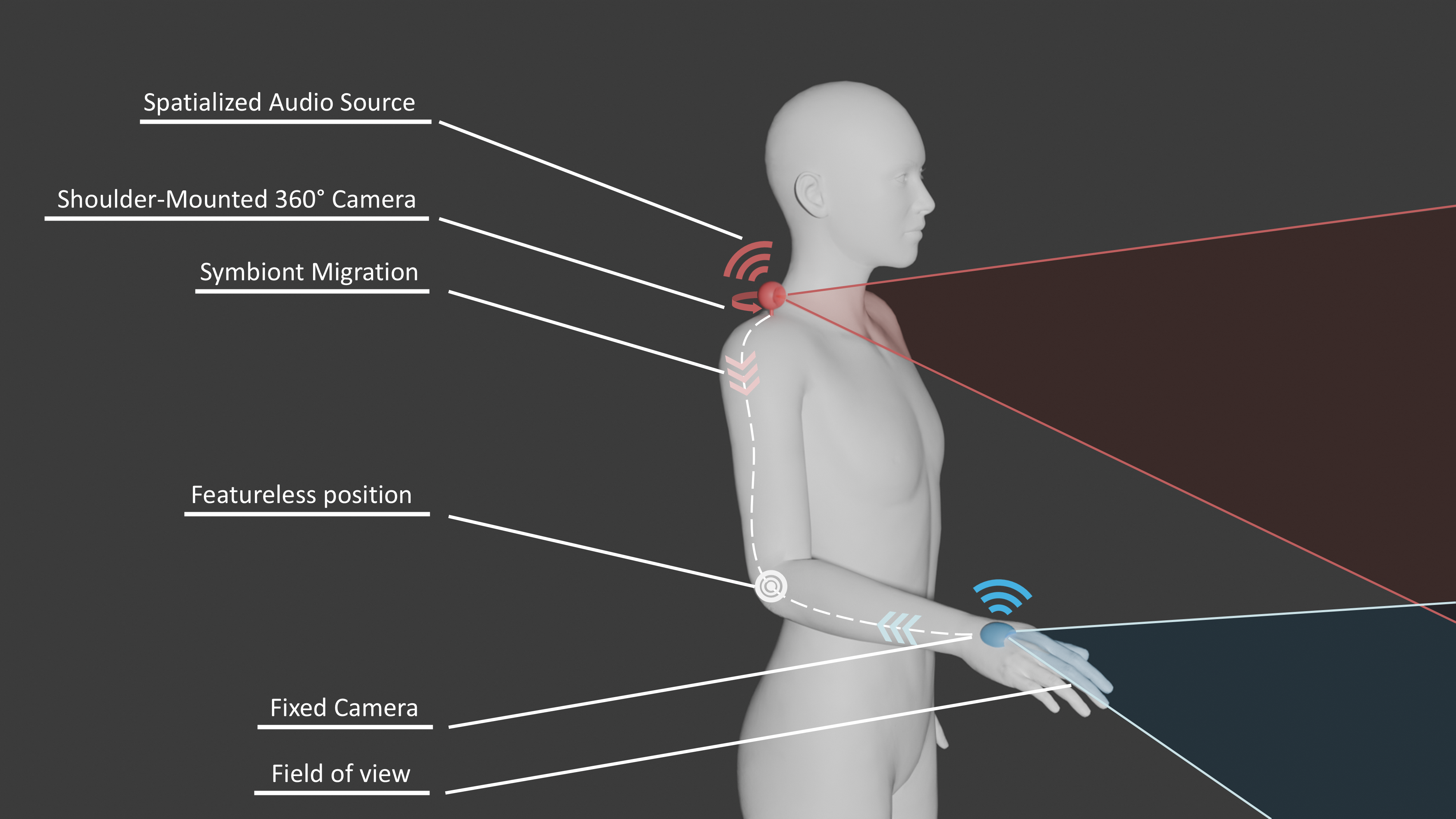
In an effort to investigate an innovative way to collaborate between a VR user and non-immersed supervisor, we propose a new collaboration paradigm, namely the symbiotic collaboration paradigm. It would consist in providing the illusion of a spatially co-located non-immersed supervisor, further referred to as symbiont, to the VR user, further referred to as the host. This paradigm is inspired by the co-embodiment one in ways that are explained in the remaining of this section. However, for the first iteration of symbiotic collaboration, we convoke a significant difference between both concepts by preventing shared control between the host and the symbiont. Initial design considerations are as follows:
-
The host should have full control over the body: as a consequence, the symbiont would not have agency over parts of the host’s virtual body. However, from the host perspective, she/he may perceive not being in full control of the avatar due to the co-located symbiont in some body parts. On that point, we claim the symbiotic collaboration paradigm requires particular attention.
-
The host should always be aware of the symbiont position: the main characteristic and cornerstone of the concept we propose is to solely signify the presence of the symbiont user to the host, audio visually and through haptics. By doing so, the symbiont would be provided with unique viewpoints of the host perspective, which leads to the next requirement.
-
The symbiont should be able to freely navigate between body parts: the available migration location should also be communicated to the host to leverage mutual understanding. One could for instance think of a shoulder mounted viewpoint on the host’s shoulder that would give a co-located 360° panorama [23], or a viewpoint in one hand to give access to close-ups. At any moment, the host would be aware of the body part inhabited by the symbiont.
-
The host and symbiont should be able to interact in a diegetic way: finally, providing the symbiont with specific viewpoints, and signifying them to the host with adequate cues, would enable innovative interactions. For examples, one could equip the avatar shoulder with a representation of the 360° camera and embedded speakers that would spatialize the symbiont audio source. Additionally, figuring a screen and speakers in one of the avatar’s hand palm would enable live discussion between both collaborators.
Following the aforementionned requirement, we illustrated on Figure 1 a concept of what a symbiotic avatar may look like in the context of the VR experiment we tease on Subsection 3.3. The concept of symbiotic collaboration is hypothetically well positioned to foster collaboration between the host and the symbiont. Even so, it is still conjectural and initial prototypes for such features should contribute to the validation of its advantages and exploration of its limits.
3.2 Haptic System Design and Evaluation
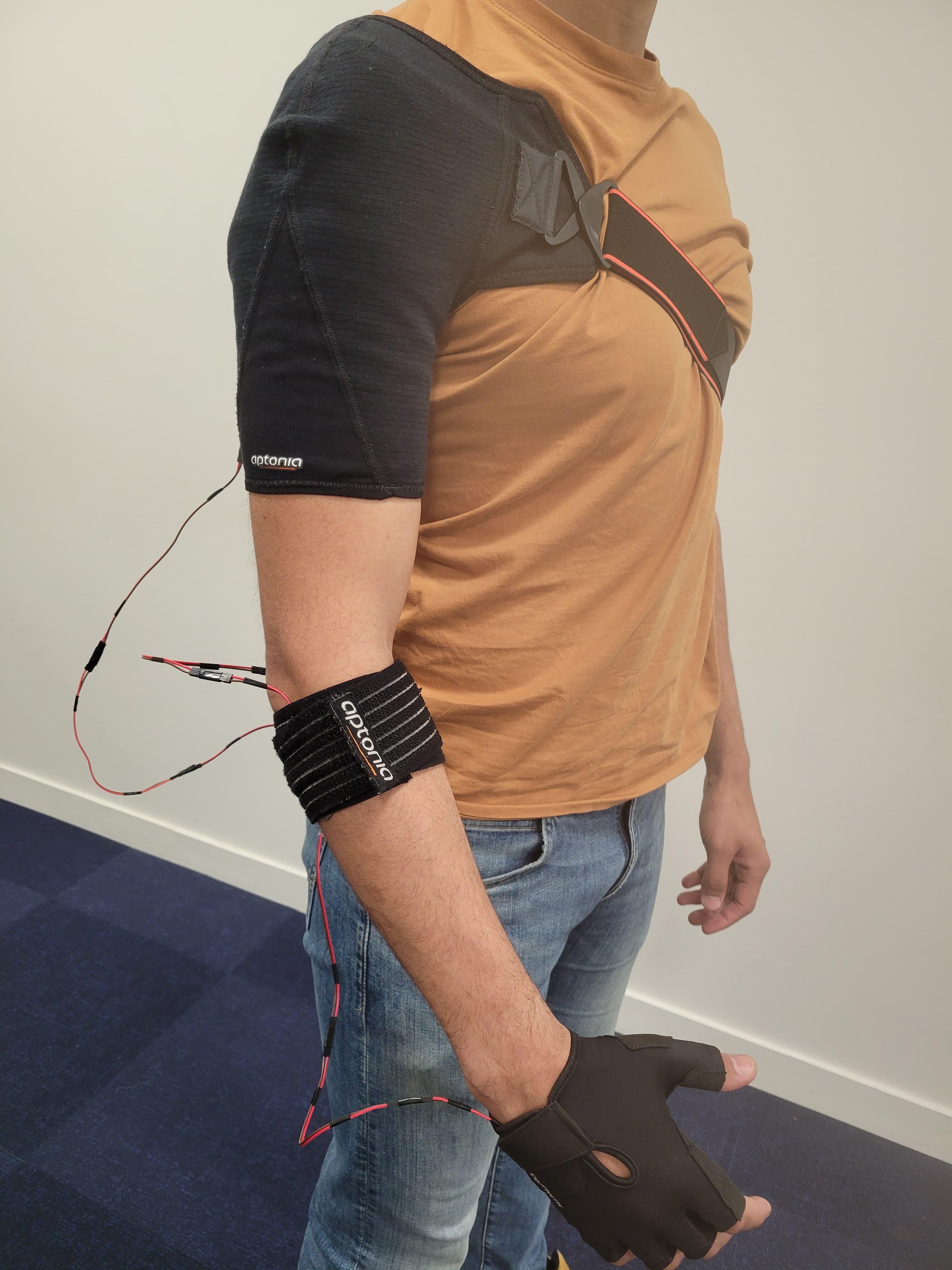
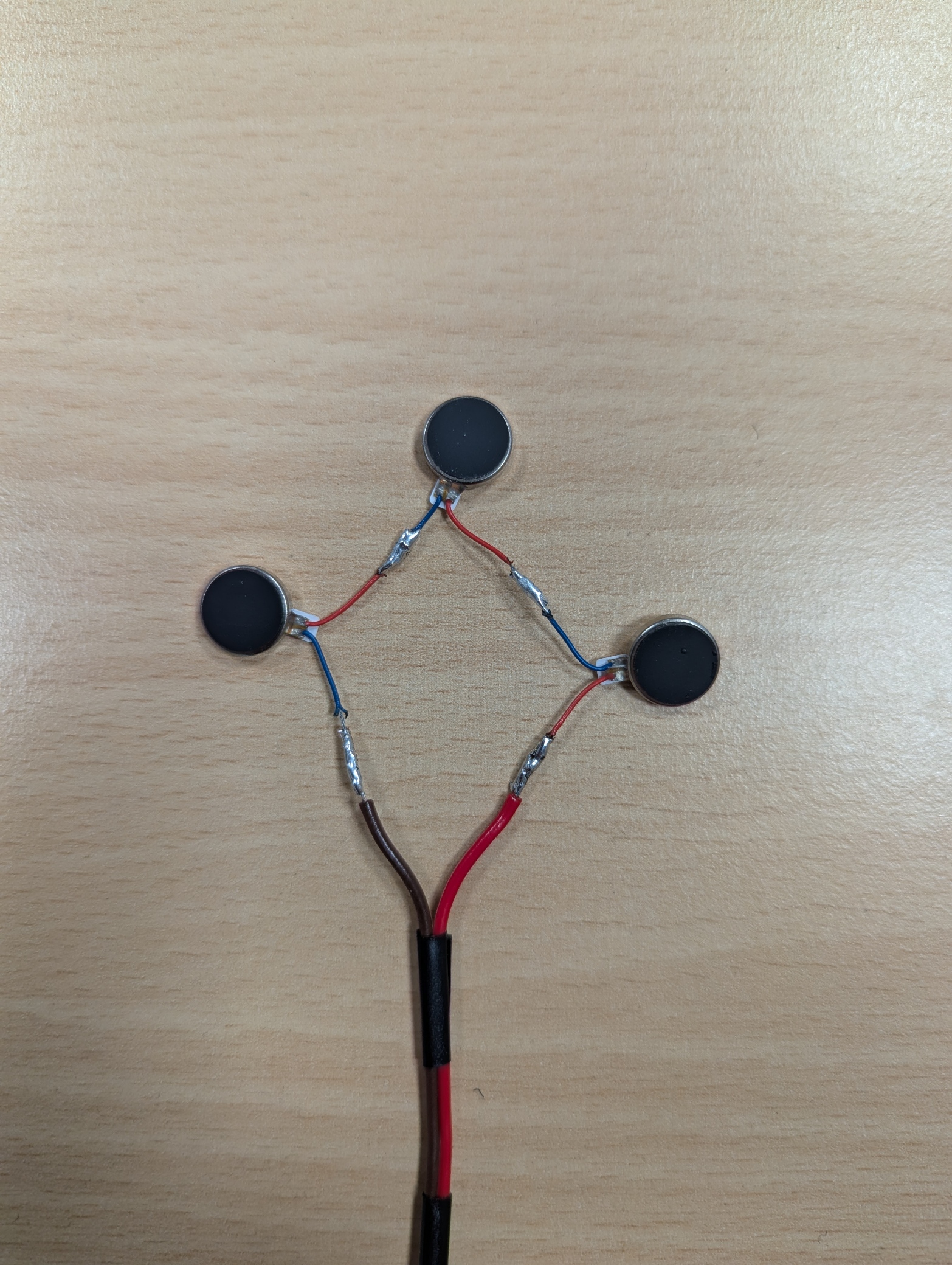
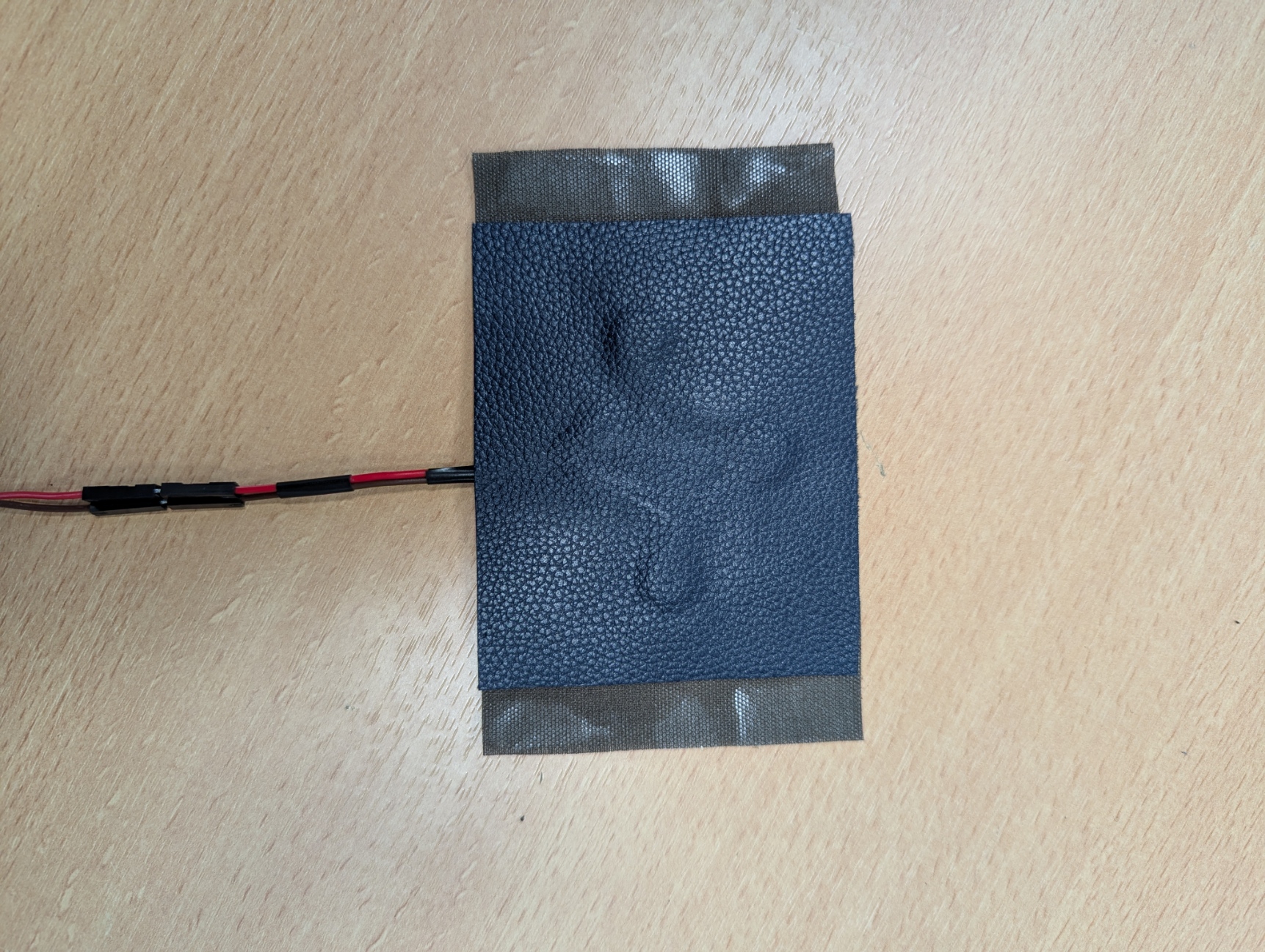
Prior to any evaluation of this new paradigm, it may benefit from the careful design of a device that could help signifying the presence of the symbiont user to the host, namely a “position-aware feedback mechanism” [32]. We designed a haptic device as a candidate to fulfill this goal. The active haptic prop we designed shall be attached to the arm with three key points: on the shoulder, on the back of the hand, and lastly close to the elbow. Each of the aforementioned positions is associated with a cluster of three vibration motors (see Figure 2). Then, each cluster is wrapped between two layers of textile that are sewed together and then to a shoulder patch, a elbow strap and a fingerless glove. An Arduino board provides independent controls for the different clusters. Finally, on top of the active haptic feedback capabilities, the physical hardware may provide additional passive haptic sensations, more specifically the sensation of wearing the gear on the arm for instance.
3.2.1 Preliminary assessment
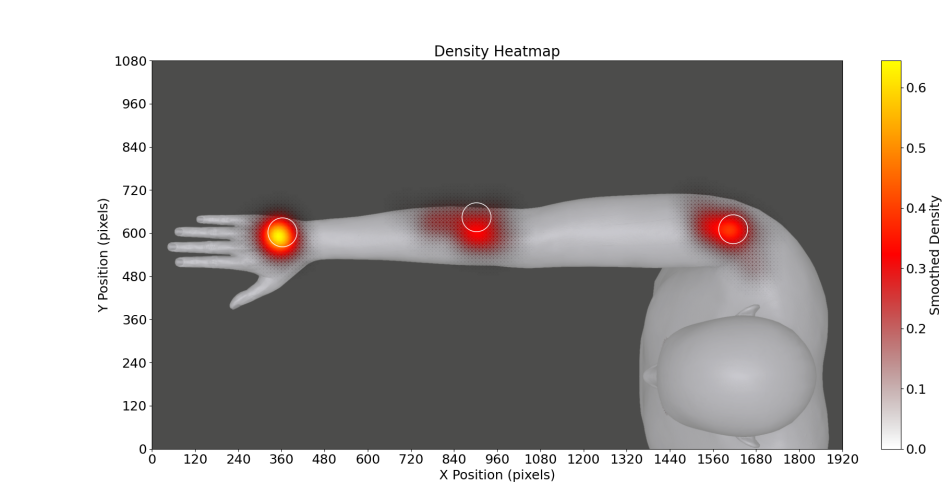
A preliminary experimental evaluation was undertaken to assess the capabilities of our system to successfully draw attention over the selected locations. For this purpose, we led a user study during which participants experienced different vibration patterns and had to report on the location where they sensed it on a schema representing a human arm (see background on 3(b)). As mentioned in the device description, the three primary sources of vibrations were located on the hand, forearm-elbow, and shoulder. Each participant experienced three times the vibrations coming out of these independent sources in a randomized order, resulting in nine trials for these patterns.
Additionally, this preliminary study was also a testbed for patterns that may signify a smooth transition from the symbiont between locations. To this end, we made either the hand and elbow sources, or the elbow and shoulder sources vibrate at the same time and asked our participants to report whether they felt a stronger vibration toward one of the two sources on the same arm schema. Again each participant experienced three times each of those two patterns in a randomized order. To sum this up, the possible vibration patterns that could be activated through the study were:
-
Single: hand
-
Single: elbow
-
Single: shoulder
-
simultaneous: hand-elbow
-
simultaneous: elbow-shoulder
Finally, we also made the three sources vibrate in a sequential ascending (hand, elbow, shoulder) or descending (shoulder, elbow, hand) pattern and the participants were asked to order the sources following the experienced pattern. This directionality test gave only one failed trial among all participants, resulting in success rate.
Measures
A schema of a human arm (see background on 3(b)) was displayed as a picture on a tactile screen and participants clicks coordinates in pixels were collected.
Participants
In total, people ( females, males), aged 21 to 44 years old (, ), participated in the experimental study. Researchers and engineers from our laboratory (), as well as master students () were hired for this early evaluation of the haptic device.
Results and discussion
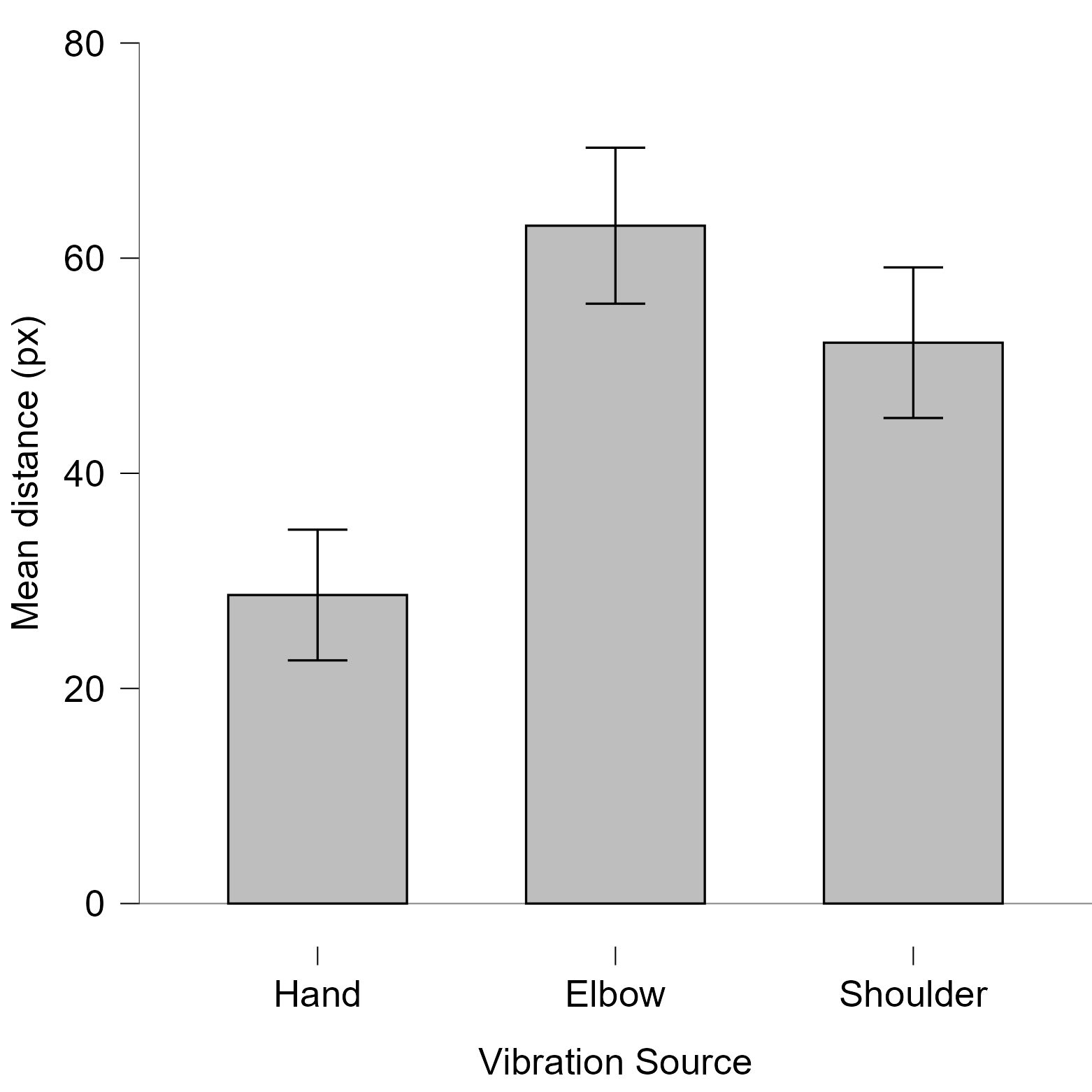
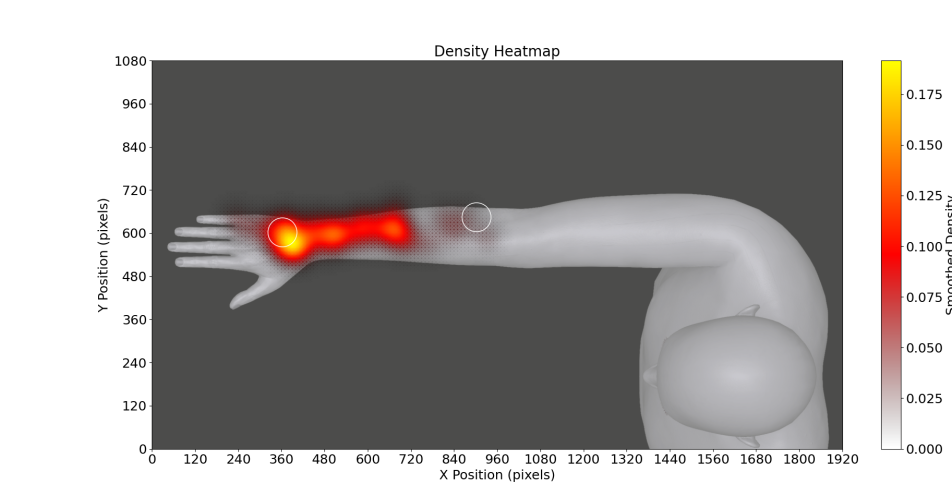
The first part of the analysis focused on comparing the different vibration sources with respect to the subjective perception of the stimuli. Thanks to the point coordinates () participants reported as being the origin of the vibrations using the dedicated touch-screen, we computed a mean location for each source (hand, elbow and shoulder). We then computed the distance between the self-reported points and the mean point as a measure of data dispersion. As the datasets failed the normality test, we performed a non-parametric tests. Friedmann’s test showed the vibration source location has a significant effect on the computed source dispersion (, ). Conover’s pairwise post hoc comparisons with a Bonferroni correction showed that the dispersion for the hand source (, ) was significantly lower than for the shoulder (, , , ) and elbow sources (, , , ) (see 3(a)). No significant difference was observed between the elbow and shoulder sources. The heatmap on 3(b) highlights that participants localized more precisely the stimulus origin on the hand than on both the shoulder and the elbow. Most importantly and as expected, the participants were able to localize quite well the origin of the vibrations they experienced.
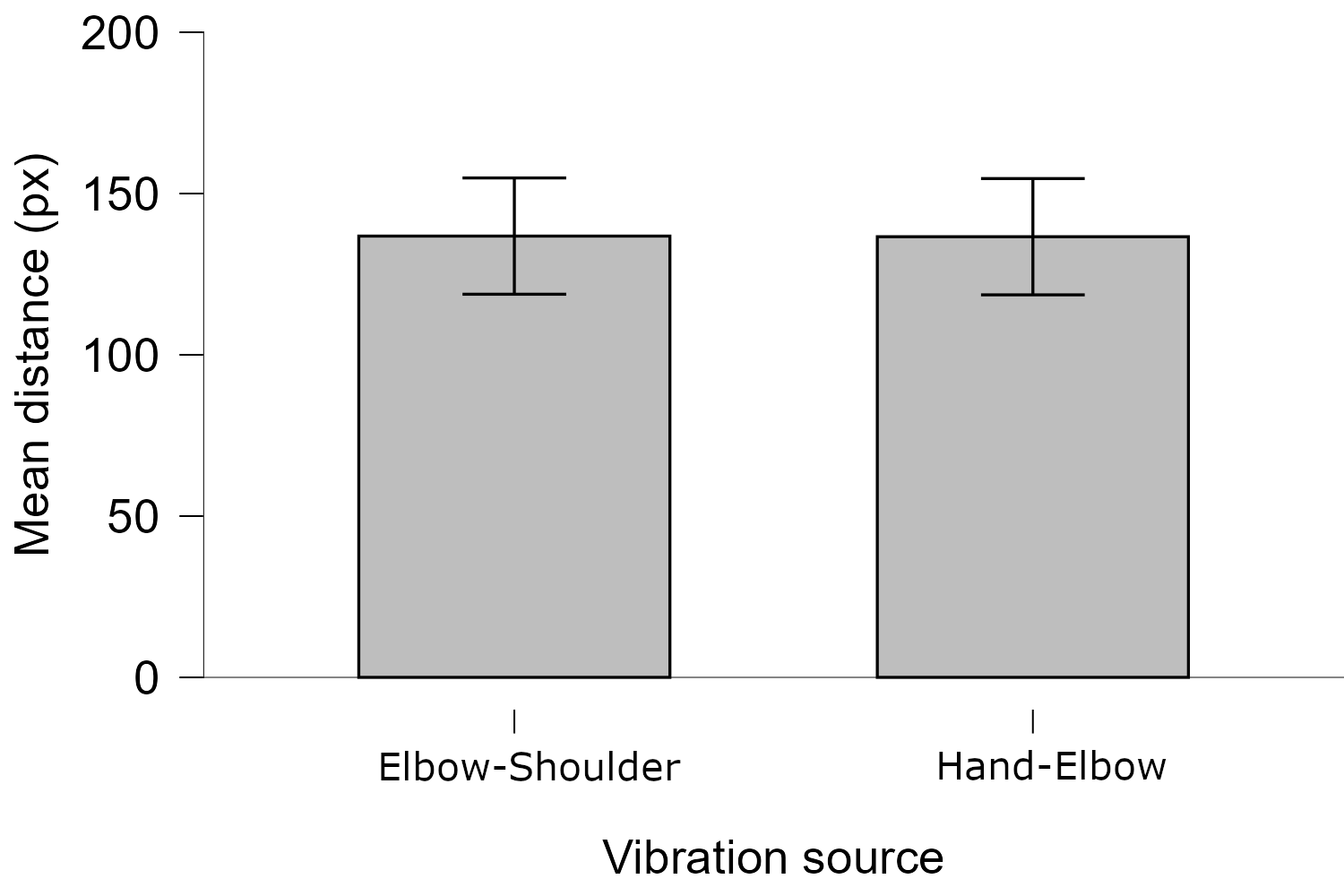
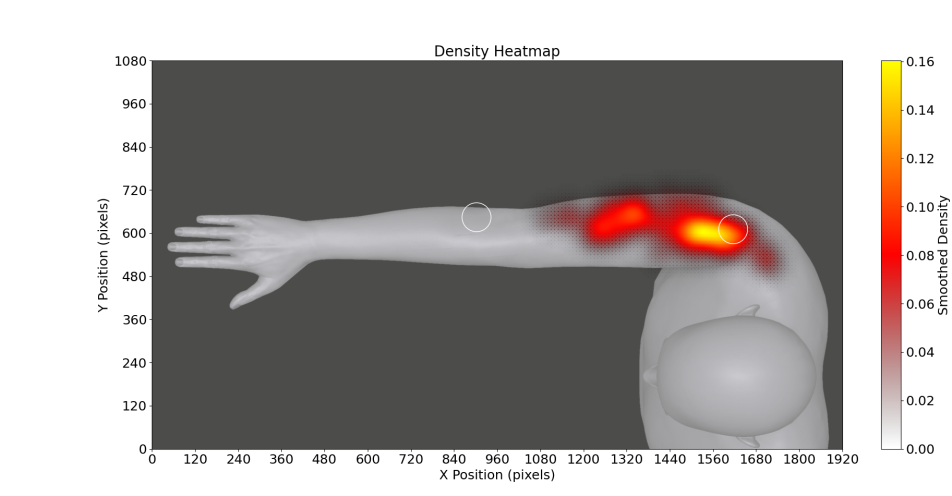
For the second part of our analysis, we considered the simultaneous activation of two vibration sources. Mean designated locations for the hand-elbow and elbow-shoulder patterns were calculated and allowed for computing the distance of participants’ reported points to these mean locations. This allowed us to investigate wether a polarization would occur when activating two clusters at the same time. A Student’s T-test revealed no significant differences between both patterns with respect to the reported source dispersion (see 4(a)). However, the heatmap on 4(c) revealed that the participants perceived the vibrations as originating more strongly from the hand rather than from the elbow. Similarly, the heatmap on 4(b) revealed that the participants perceived the vibrations as originating more strongly from the hand rather than from the elbow. This is a strong indicator in favor of an experimental setup in which the elbow should not be considered as a primary location for the symbiont, but rather a relay position for signifying the movement of the symbiont between the hand and shoulder through ascending and descending vibration patterns. One reason for these observations may be found in the stronger sensitivity of the hand.
In addition we collected qualitative insights from our participants that raised important design considerations. Indeed, 3 participants spontaneously reported that the fact of hearing the shoulder vibration source stronger than the elbow one during simultaneous patterns may have influenced their answers. For instance, one participant mentioned “the sound can be confusing when interpreting vibrations, especially when it comes from the shoulder which is close to the ear”. Another reported that “the sound of the vibrators, especially near my shoulder, can give me more sense of vibrations near my shoulder, and make me ignore the vibrations near the elbow”. We thus need to acknowledge this feedback when developing the follow-up cross-platform collaborative experiment, especially as this may interfere with spatialized audio sources in the virtual environment.
3.3 Follow-up Experiment
Building up on our hardware assessment, we plan to conduct a follow-up user study in order to compare the symbiotic collaboration paradigm to a regular cross-platform supervision situation, further referred to as the control condition. By doing so, we aim at investigating whether a symbiotic paradigm between a VR user and non-immersed one foster collaboration and the social presence. In addition, we aim at characterizing the impact of such symbiotic relationship on the experience of the VR user. The collaboration methods will be compared according to two conditions: an omniscient presence of the non-immersed supervisor, and a symbiotic collaboration situation in which the non-immersed user’s presence would be suggested to the VR user through audio-visual cues, and through our haptic device. A concept of the symbiotic paradigm implementation is illustrated on Figure 1.
A virtual scenario is being designed in which the experimenter, acting as the supervisor, will guide participants immersed in the VR simulation in completing complex assembly tasks. At the end of each condition, the VR user will have to answer questionnaires assessing their physical presence, sense of embodiment, and social presence as well as items translating how they identify with the avatar in the different configurations. Semi-structured interviews will ultimately be conducted to collect insights about participants experience of the collaboration setup.
4 Perspectives for Human Spaceflight
Space missions are usually articulated around Concepts of Operations (ConOps) defined by Beaton et al as “the instantiation of operational design elements that guide the organization and flow of personnel, communications, hardware, software, and data products involved in a mission concept” [2]. ConOps are therefore concerned with organizing human resources, hardware and software into coherent operations while managing inter-organizational frictions. When it comes to preparing, testing operations, but also training teams to the latter, institutions, like NASA or ESA, as well as private companies, have historically relied on analogue terrains and facilities that features one or more aspects of the actual environment. Natural analogues are oftentimes selected for their geological and environmental proximity with the mission location [1, 3, 5], whereas facilities may be built to emulate specific features of with greater control [5, 31], like reduced gravity using the buoyancy principle for instance. What is mainly seeked when using analogues is a high fidelity with respect to one or more features of the mission environment to support increased evaluation and training of the crews. Fidelity is defined by Silva-Martinez et al. as the degree to which it “replicates a real-world, built-environment from the user’s perspective by considering form, function and user-interaction” [24]. A prominent example of analog facility is the LUNA building [31], recently inaugurated in Cologne, that is operated by the European Space Agency (ESA) and the German Aerospace Center (DLR). However, analogues may not recreate all desired conditions of the mission. Therefore, eXtended Reality (XR), and more specifically Virtual Reality (VR), has appeared as a low-cost but rather well suited solution to simulate complementary aspects of the mission location, like objects accurate physics or lighting conditions. In this context, LUNA is planned to integrate XR capabilities [31] that could leverage the advantages of the analogue terrain which constitutes a relevant test ground for innovate XR collaboration paradigm applied to space missions. Possible use cases are described in the following sections.
ConOps Review and Training
Preparing ConOps or training crews for these operations often requires a form of supervision from one or more experts outside of the simulation. This question is arising whether it is a rehearsal in an analogue or in an immersive virtual environment. In this context, the use of VR, in combination with physical mockups replicating actual hardware, has already demonstrated advantages for ConOps evaluation. Indeed, Dufresne and Nilsson et al. [11] reproduced a well-known and extensively debriefed Apollo 12 ConOp in VR. Subject matter experts invited to take part to the experiment reported an increased fidelity when interacting in the VR simulation with mockups, which resulted in a feedback closer to the one provided by the Apollo 12 crew during mission debriefing. One could then advocate for the acceptance of haptic-enhanced symbiotic collaboration as a relevant add-on when evaluating ConOp in VR by hypothetically leveraging the synergy and understanding between the non-immersed operator and the VR user.
Nevertheless, applications of the symbiotic collaboration paradigm to training situations may not appear as evident. The fidelity of the simulation with respect to real-world conditions is undoubtedly crucial when training for specific ConOps. Besides, negative training caused by inaccurate simulations may have consequences for the astronaut’s safety during the mission. As a matter of fact, including a symbiotic collaboration feature in training settings can be difficult when we advocate for a diegetic integration of a concept that may not be perceived plausible with the simulation content. Yet, such feature may not be deemed to remain activated all way through the training session. One could save it for specific rehearsal sessions before training to proficiency. More interestingly, one may also transpose the concept into real life. In fact, real-world applications may not be considered science fiction, as the following section discusses it.
In-Mission Perspectives
Astronauts are not alone when performing an Extravehicular Activity (EVA), as these operations are the most critical and risky when it comes to spaceflight. Indeed, distant operators and support teams are assisting the astronauts in their tasks, while additionally providing social contact through constant communications. Moreover, remote operators have likely access to a video stream from the astronaut’s view point. It has even been reported that astronaut attached camera to their arms [20]. In this context, we believe that the symbiotic collaboration paradigm could easily be transposed to real-world situations with the relevant hardware provided to astronauts. Such hardware could for example be embedded in their spacesuits. It may provide a deeper interaction between the remote supervising team and the local astronaut performing some operation. During activities that could last hours on the surface of harsh planetary bodies like the moon, providing astronauts with a constant and perceptible presence may also contribute to their emotional well-being.
On another note, offline Artificial Intelligence (AI) assistants are expected to provide support for astronauts during long duration missions [4]. Consequently, one could take the symbiotic collaboration paradigm one step further by embodying the AI assistant directly in the astronaut’s suit, enabling for a new interface that would foster the synergy between the human user and the AI.
5 Conclusion
As a conclusion, this paper introduced the symbiotic collaboration paradigm and its forwarded applications. This innovative collaborative solution may show great possibilities in fostering social presence, not only in virtual settings, but also maybe in real-world use cases. Enhancing the symbiotic co-embodiment situation using haptic stimuli is expected to take the experience to greatness with respect to users’ perception. For this purpose, we designed and preliminary assessed an arm-mounted hardware that showed promising perspectives for the follow-up experiment. In particular, it demonstrated its ability to suggest smooth transitions between the symbiont’s viewpoints embedded in the arm. This new paradigm and the forwarded benefits it may bring could be well suited for virtual design reviews and VR training applications, which are of paramount importance to the space exploration industry. If the concept is taken beyond the virtual applications, one may consider using the haptic hardware for in-flight applications to leverage social experiences during long space missions. Ultimately, one may couple such paradigm with AI embodied agents to foster collaboration and the astronauts’ on-field experience.
References
- [1] K H Beaton, S P Chappell, A F J Abercromby, M J Miller, S E Kobs Nawotniak, A L Brady, A H Stevens, S J Payler, S S Hughes, and D S S Lim. Assessing the Acceptability of Science Operations Concepts and the Level of Mission Enhancement of Capabilities for Human Mars Exploration Extravehicular Activity. Astrobiology, 19(3):321–346, 2019. doi:10.1089/ast.2018.1912.
- [2] Kara H Beaton, Steven P Chappell, Andrew F J Abercromby, Matthew J Miller, Shannon E Kobs Nawotniak, Allyson L Brady, Adam H Stevens, Samuel J Payler, Scott S Hughes, and Darlene S S Lim. Using Science-Driven Analog Research to Investigate Extravehicular Activity Science Operations Concepts and Capabilities for Human Planetary Exploration. Astrobiology, 19(3):300–320, 2019. doi:10.1089/ast.2018.1861.
- [3] Kara H Beaton, Steven P Chappell, Alex Menzies, Victor Luo, So Young Kim-Castet, Dava Newman, Jeffrey Hoffman, Johannes Norheim, Eswar Anandapadmanaban, Stewart P Abercrombie, Shannon E Kobs Nawotniak, Andrew F J Abercromby, and Darlene S S Lim. Mission enhancing capabilities for science-driven exploration extravehicular activity derived from the NASA BASALT research program. Planetary and Space Science, 193:105003, 2020. doi:10.1016/j.pss.2020.105003.
- [4] Oliver Bensch, Leonie Bensch, Tommy Nilsson, Florian Saling, Wafa M Sadri, Carsten Hartmann, Tobias Hecking, and J Nathan Kutz. Towards a Reliable Offline Personal AI Assistant for Long Duration Spaceflight. arXiv e-prints, page arXiv:2410.16397, October 2024. doi:10.48550/arXiv.2410.16397.
- [5] L Bessone, F Sauro, and H Stevenin. Training safe and effective spaceflight operations using terrestrial analogues. In Space Safety is No Accident, pages 313–318, 2015. doi:10.1007/978-3-319-15982-9_37.
- [6] F Biocca, Chad Harms, and Jennifer Gregg. The Networked Minds Measure of Social Presence: Pilot Test of the Factor Structure and Concurrent Validity. 4th annual International Workshop on Presence, Philadelphia, March 2001.
- [7] Olaf Blanke and Thomas Metzinger. Full-body illusions and minimal phenomenal selfhood. Trends in Cognitive Sciences, 13(1):7–13, January 2009. doi:10.1016/j.tics.2008.10.003.
- [8] David Coan. Exploration EVA System Concept of Operations. In EVA-EXP-0042, 2020. URL: https://ntrs.nasa.gov/citations/20205008200.
- [9] Henrique G. Debarba, Eray Molla, Bruno Herbelin, and Ronan Boulic. Characterizing embodied interaction in First and Third Person Perspective viewpoints. 2015 IEEE Symposium on 3D User Interfaces, 3DUI 2015 - Proceedings, pages 67–72, June 2015. doi:10.1109/3DUI.2015.7131728.
- [10] Oumaima Derouech, Hamid Hrimech, Mohamed Lachgar, and Mohamed Hanine. A Literature Review of Collaborative Virtual Environments: Impacts, Design Principles, and Challenges. Journal of Information Technology Education: Research, 23:011–undefined, May 2024. doi:10.28945/5283.
- [11] Florian Dufresne, Tommy Nilsson, Geoffrey Gorisse, Enrico Guerra, André Zenner, Olivier Christmann, Leonie Bensch, Nikolai Anton Callus, and Aidan Cowley. Touching the Moon: Leveraging Passive Haptics, Embodiment and Presence for Operational Assessments in Virtual Reality. In Proceedings of the CHI Conference on Human Factors in Computing Systems, pages 1–18, New York, NY, USA, May 2024. ACM. doi:10.1145/3613904.3642292.
- [12] Rebecca Fribourg, Nami Ogawa, Ludovic Hoyet, Ferran Argelaguet, Takuji Narumi, Michitaka Hirose, and Anatole Lecuyer. Virtual Co-Embodiment: Evaluation of the Sense of Agency while Sharing the Control of a Virtual Body among Two Individuals. IEEE Transactions on Visualization and Computer Graphics, 27(10):4023–4038, October 2021. doi:10.1109/TVCG.2020.2999197.
- [13] Geoffrey Gorisse, Olivier Christmann, Samory Houzangbe, and Simon Richir. From robot to virtual doppelganger: Impact of visual fidelity of avatars controlled in third-person perspective on embodiment and behavior in immersive virtual environments. Frontiers Robotics AI, 6(FEB):412036, February 2019. doi:10.3389/FROBT.2019.00008.
- [14] Harin Hapuarachchi and Michiteru Kitazaki. Knowing the intention behind limb movements of a partner increases embodiment towards the limb of joint avatar. Scientific Reports 2022 12:1, 12(1):1–12, July 2022. doi:10.1038/s41598-022-15932-x.
- [15] Carrie Heeter. Being There: The Subjective Experience of Presence. Presence: Teleoperators and Virtual Environments, 1(2):262–271, January 1992. doi:10.1162/pres.1992.1.2.262.
- [16] Camille Jeunet, Louis Albert, Ferran Argelaguet, and Anatole Lécuyer. "Do You Feel in Control?": Towards Novel Approaches to Characterise, Manipulate and Measure the Sense of Agency in Virtual Environments. IEEE transactions on visualization and computer graphics, 24(4):1486–1495, April 2018. doi:10.1109/TVCG.2018.2794598.
- [17] Konstantina Kilteni, Raphaela Groten, and Mel Slater. The Sense of Embodiment in Virtual Reality. Presence: Teleoperators and Virtual Environments, 21(4):373–387, December 2012. doi:10.1162/PRES_a_00124.
- [18] Daiki Kodama, Takato Mizuho, Yuji Hatada, Takuji Narumi, and Michitaka Hirose. Effects of Collaborative Training Using Virtual Co-embodiment on Motor Skill Learning. IEEE Transactions on Visualization and Computer Graphics, 29(5):2304–2314, May 2023. doi:10.1109/TVCG.2023.3247112.
- [19] Elena Kokkinara and Mel Slater. Measuring the Effects through Time of the Influence of Visuomotor and Visuotactile Synchronous Stimulation on a Virtual Body Ownership Illusion. https://doi.org/10.1068/p7545, 43(1):43–58, May 2019. doi:10.1068/P7545.
- [20] Chatwin Lansdowne. Space Suit Helmet Cameras use Wi-Fi® to Stream Video. The Beacon, 2021. URL: https://ntrs.nasa.gov/citations/20210013369.
- [21] Catherine S. Oh, Jeremy N. Bailenson, and Gregory F. Welch. A Systematic Review of Social Presence: Definition, Antecedents, and Implications. Frontiers in Robotics and AI, 5(OCT):409295, October 2018. doi:10.3389/frobt.2018.00114.
- [22] Patrick Aggergaard Olin, Ahmad Mohammad Issa, Tiare Feuchtner, and Kaj Grønbæk. Designing for Heterogeneous Cross-Device Collaboration and Social Interaction in Virtual Reality. ACM International Conference Proceeding Series, pages 112–127, December 2020. doi:10.1145/3441000.3441070.
- [23] Thammathip Piumsomboon, Gun A. Lee, Andrew Irlitti, Barrett Ens, Bruce H. Thomas, and Mark Billinghurst. On the Shoulder of the Giant: A Multi-Scale Mixed Reality Collaboration with 360 Video Sharing and Tangible Interaction. In Proceedings of the 2019 CHI Conference on Human Factors in Computing Systems, pages 1–17, New York, NY, USA, May 2019. ACM. doi:10.1145/3290605.3300458.
- [24] Jackelynne Silva-Martinez, Gordon Vos, Jennifer Boyer, Robert Durkin, William Foley, Sarah Margerum, Kritina Holden, Victoria Smith, Leah Beebe, and Christopher Van Velson. Human in the Loop Evaluations: Process and Mockup Fidelity, July 2022. URL: https://hdl.handle.net/2346/89696.
- [25] Richard Skarbez, Frederick P Brooks Jr., and Mary C Whitton. A Survey of Presence and Related Concepts. ACM Comput. Surv., 50(6), November 2017. doi:10.1145/3134301.
- [26] Mel Slater. Measuring Presence: A Response to the Witmer and Singer Presence Questionnaire. Presence: Teleoperators and Virtual Environments, 8(5):560–565, October 1999. doi:10.1162/105474699566477.
- [27] Mel Slater. Place illusion and plausibility can lead to realistic behaviour in immersive virtual environments. Philosophical Transactions of the Royal Society B: Biological Sciences, 364:3549–3557, 2009.
- [28] Mel Slater, Daniel Perez-Marcos, H. Henrik Ehrsson, and Maria V. Sanchez-Vives. Inducing illusory ownership of a virtual body. Frontiers in Neuroscience, 3(SEP):214–220, September 2009. doi:10.3389/NEURO.01.029.2009.
- [29] Mel Slater and Sylvia Wilbur. A Framework for Immersive Virtual Environments Five: Speculations on the Role of Presence in Virtual Environments. Presence: Teleoper. Virtual Environ., 6(6):603–616, December 1997. doi:10.1162/pres.1997.6.6.603.
- [30] Radosław Sterna and Katja Zibrek. Psychology in Virtual Reality: Toward a Validated Measure of Social Presence. Frontiers in Psychology, 12, October 2021. doi:10.3389/fpsyg.2021.705448.
- [31] T. Uhlig, A. E.M. Casini, P. Mittler, and J. Schlutz. First Operations in the ESA-DLR LUNA Analog Facility. Proceedings of the International Astronautical Congress, IAC, 1A:242–245, 2024. doi:10.52202/078357-0030.
- [32] Karthikeya Puttur Venkatraj, Wo Meijer, Monica Perusquía-Hernández, Gijs Huisman, and Abdallah El Ali. ShareYourReality: Investigating Haptic Feedback and Agency in Virtual Avatar Co-embodiment. Conference on Human Factors in Computing Systems - Proceedings, May 2024. doi:10.1145/3613904.3642425.