Navigating Exoplanetary Systems in Augmented Reality: Preliminary Insights on ExoAR

Abstract
With thousands of exoplanets now confirmed by space missions such as NASA’s Kepler and TESS, scientific interest and public curiosity about these distant worlds continue to grow. However, current visualization tools for exploring exoplanetary systems often lack sufficient scientific accuracy or interactive features, limiting their educational effectiveness and analytical utility. To help address this gap, we developed ExoAR, an augmented reality tool designed to offer immersive, scientifically sound visualizations of all known exoplanetary systems using data directly sourced from NASA’s Exoplanet Archive. By leveraging augmented reality’s strengths, ExoAR enables users to immerse themselves in interactive, dynamic 3D models of these planetary systems with data-driven representations of planets and their host stars. The application also allows users to adjust various visualization scales independently, a capability designed to aid comprehension of comparative astronomical properties such as orbital mechanics, planetary sizes, and stellar classifications. To begin assessing ExoAR’s potential as an educational and analytical tool and inform future iterations, a pilot user study was conducted. Its findings indicate that participants found ExoAR improved user engagement and spatial understanding compared to NASA’s Eyes on Exoplanets application, a non-immersive exoplanetary system visualization tool. This work-in-progress paper presents these early insights, acknowledges current system limitations, and outlines future directions for more rigorously evaluating and further improving ExoAR’s capabilities for both educational and scientific communities.
Keywords and phrases:
Immersive Analytics, Data Visualization, Astronomy, Astrophysics, Exoplanet, Augmented Reality, ARCopyright and License:
![[Uncaptioned image]](x1.png) © Bryson Lawton, Frank Maurer, and Daniel Zielasko; licensed under Creative Commons License CC-BY 4.0
© Bryson Lawton, Frank Maurer, and Daniel Zielasko; licensed under Creative Commons License CC-BY 4.0
2012 ACM Subject Classification:
Human-centered computing Scientific visualizationEditors:
Leonie Bensch, Tommy Nilsson, Martin Nisser, Pat Pataranutaporn, Albrecht Schmidt, and Valentina SuminiSeries and Publisher:
 Open Access Series in Informatics, Schloss Dagstuhl – Leibniz-Zentrum für Informatik
1 Introduction
In recent decades, efforts like NASA’s Kepler [6] and TESS [26] missions have led to advancements in planetary astronomy through the identification of thousands of exoplanets orbiting distant stars. These discoveries have sparked considerable scientific interest and widespread public fascination, prompting fundamental questions about the characteristics and behaviors of these distant planetary systems. Although NASA’s Exoplanet Archive [20] provides comprehensive and scientifically vetted exoplanetary data, existing tools for visualizing these systems often either incorporate artistic interpretations or are constrained by the limitations of conventional 2D displays. As a result, such approaches can limit the scientific accuracy of these visualizations or hinder a users’ ability to accurately understand the complex 3D spatial relationships within them. In turn, such traditional approaches can inadvertently lead to misconceptions or incomplete understandings of the physical and orbital characteristics of their celestial bodies.
As extended reality (XR) technologies, encompassing both virtual reality (VR) and mixed reality (MR) [19], continue to evolve, their unique offerings present new opportunities for immersive scientific visualization and data analysis. These technologies can be particularly well-suited for representing complex 3D spatial relationships, as unlike traditional non-immersive methods, XR environments allow users to physically navigate and interact with data in 3D spaces. When compared to non-immersive methods, this has been shown to offer benefits like improved spatial comprehension and increased user engagement for a variety of data analysis tasks, especially for multidimensional and 3D spatial data [3, 8, 11, 12]. As a subset of MR, augmented reality (AR) technologies superimpose digital content onto the user’s view of the physical world, enabling interaction with virtual elements while maintaining one’s real-world awareness. In contrast to VR, this spatial and situational awareness allows users to explore and manipulate 3D visualizations without the risk of colliding with physical obstacles – an issue shown to hinder a user’s ability to interact with and navigate through data during immersive analysis tasks [13, 15, 29]. These qualities make AR especially promising for visualizing exoplanetary data, as understanding orbital configurations, planetary scales, and system dynamics may similarly benefit from such immersive representation. Doing so is aimed to not only offer educational benefits, but also help support deeper scientific inquiry by enabling more intuitive exploration of complex, astronomical datasets.
To explore these possibilities, we developed ExoAR, an AR application designed to provide dynamic and empirically sound visualizations of all known planetary systems, encompassing both our Solar System and the thousands of confirmed exoplanetary systems orbiting distant stars. It generates these using data directly sourced from NASA’s Exoplanet Archive, allowing both space enthusiasts and scientists alike to explore data-driven representations of known exoplanets orbiting their host stars in immersive 3D. Users can spatially interact with and manipulate these visualizations, adjust individual scaling factors to highlight different spatial and temporal characteristics of interest, and access the numerical data underlying each visualization.
In this work-in-progress paper, we present an overview of ExoAR’s system design, implementation, and formative evaluation through a pilot user study. Using NASA’s Eyes on Exoplanets [21] as a comparative baseline, the study gathered user feedback and usability insights to inform iterative design improvements and assess ExoAR’s relative ability to support accurate understanding of system-specific characteristics and spatial relationships. Our initial findings highlight both strengths and limitations of the current system, providing initial insights into the educational and analytical potential of AR-based exploration of exoplanetary data. We conclude by outlining directions for future development and more rigorous evaluation of ExoAR to further understand AR’s potential for advancing space education and research.
2 Related Work
As exoplanet discoveries have grown over recent years, so too has the demand for accurate, interactive, and intuitive visualization tools to understand and communicate astronomical phenomena. Several modern tools currently exist both within and outside of academia that attempt to address this demand, though each faces distinct limitations that constrain their scientific accuracy, educational utility, or immersive interactivity.
2.1 Public Tools for Planetary System Visualization
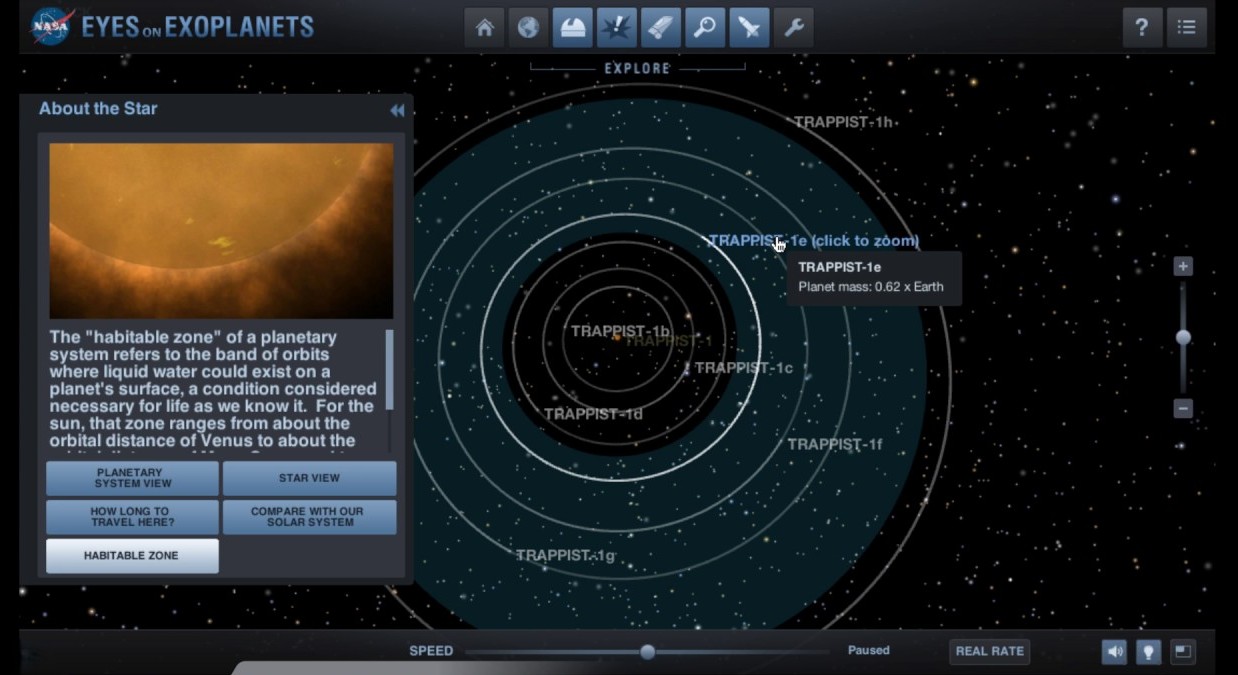
Among publicly available software, NASA’s Eyes on Exoplanets [21] (see Figure 1(a)) represents one of the most widely recognized and scientifically grounded tools. Leveraging data from NASA’s Exoplanet Archive, it provides three-dimensional visualizations of known exoplanetary systems through a standard two-dimensional desktop interface. However, its interactive capabilities remain limited, as users cannot freely navigate or engage with models in a spatially immersive manner. Viewing complex three-dimensional planetary architectures on a flat screen often hinders spatial comprehension and makes it difficult to intuitively interpret orbital mechanics, planetary scales, or relative separations. This lack of embodied interaction may limit both its educational effectiveness and its value for scientific exploration.
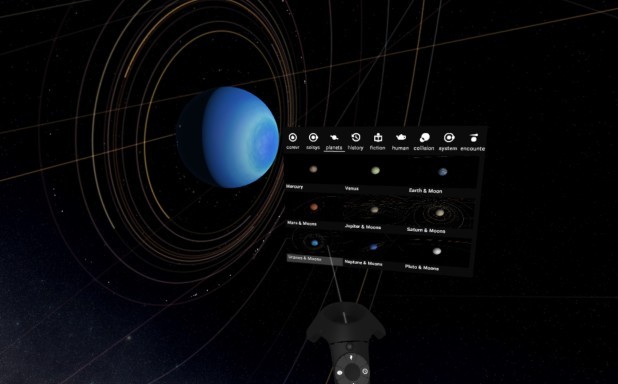
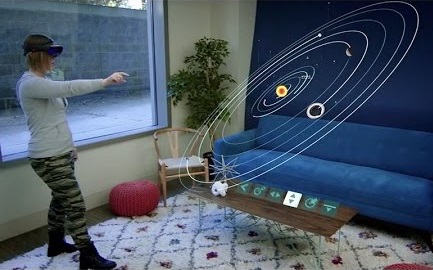
Other notable tools, such as Universe Sandbox 2 VR [2] and Microsoft’s Galaxy Explorer AR [17], have attempted to harness the immersive capabilities of extended reality technologies for astronomical visualization. Universe Sandbox 2 VR (see Figure 1(b)) offers dynamic simulations of celestial events in a fully immersive environment, but its focus remains on Solar System phenomena and its visualizations often prioritize interactivity and user experimentation over scientific precision. Similarly, Microsoft’s Galaxy Explorer AR (see Figure 1(d)) presents holographic representations of planets and stars, yet also concentrates on Solar System content and contains simplifications in orbital dynamics and scaling accuracy. Neither platform incorporates scientifically validated exoplanet data in a form that enables detailed spatial analysis or exploratory learning. As such, both fall short of meeting the growing need for immersive, data-accurate exoplanet system visualization.
2.2 Academic Tools for Planetary System Visualization
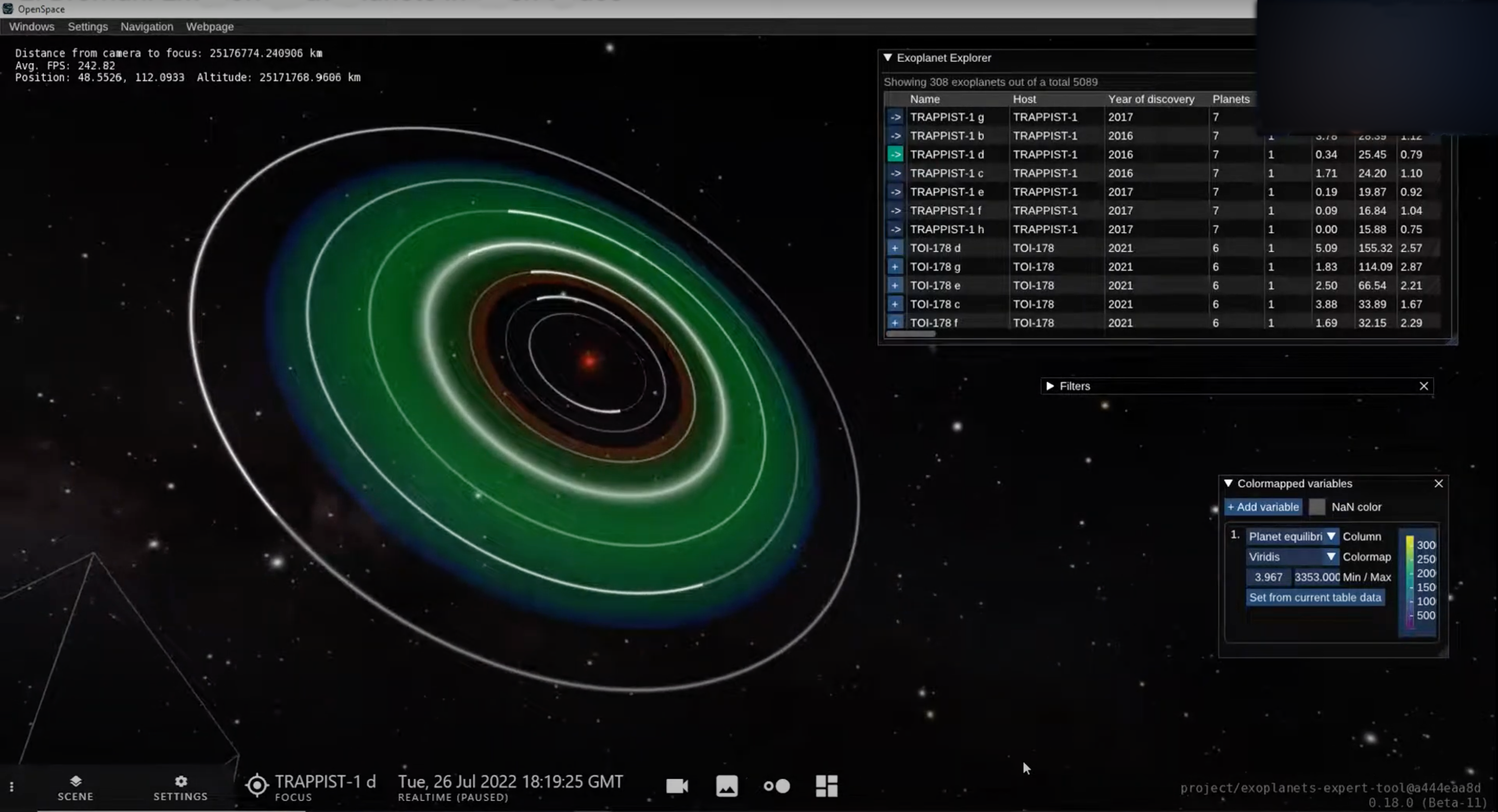
Within academia, more advanced astronomy visualization frameworks have emerged, offering tools for exploring large-scale cosmic datasets. For example, software like Gaia Sky [27] and OpenSpace [5] (see Figure 1(b)) support interactive 3D visualizations of astrophysical data, including exoplanets in some cases, but remain largely tied to screen-based environments. A more recent system by Broman et al. [7] demonstrated high-fidelity exoplanet renderings enriched with contextual scientific information, yet their application similarly relies on conventional desktop displays and lacks immersive or embodied interaction capabilities. As Lan et al. [14] emphasizes in their comprehensive survey though, most astronomy visualization tools continue to be confined to traditional screens, limiting users’ ability to engage meaningfully with spatially complex content.
2.3 XR for Astronomy Education & Visualization
More and more, however, XR technologies are being recognized for their potential to enhance astronomy education and spatial reasoning. Prior studies have demonstrated that immersive environments can support deeper conceptual understanding by reducing perceptual distortion and enabling embodied interaction with abstract phenomena. For instance, Antoniou et al. [1] reported that students using an AR-based astronomy application showed improved motivation and spatial understanding compared to those using traditional resources. Kersting et al. [10] similarly found that VR-based visualizations helped learners intuitively grasp cosmic distances and object scale. Broader reviews further support these results, suggesting that XR can improve learning outcomes in spatially demanding domains such as astronomy and geoscience [23, 25].
Despite this promise, relatively few XR applications have focused specifically on exoplanetary systems. The Exoplanets–A project by Peralta et al. [24] introduced a mobile AR application that allowed users to view simplified exoplanet orbits in educational contexts, while PlanetariumVR offers guided tours of selected exoplanet systems but limits user agency and scientific detail [9]. These efforts mark initial steps toward immersive exoplanet learning, yet no platform to date has successfully integrated validated exoplanet data with freeform, interactive XR exploration.
2.4 Addressing Current Gaps with ExoAR
This range of prior works highlights several gaps that ExoAR seeks to help address. Such existing tools either lack immersive interactivity, restrict user navigation, or rely on inaccurate data or artistic interpretations. Meanwhile, academic research into XR-supported astronomy education remains limited on how well it aids understanding complex exoplanetary systems and rarely incorporates rigorous evaluation. By combining scientifically accurate archival data with immersive exploration and an intuitive AR interface, ExoAR seeks to fill this void and contribute new insights into how immersive technologies can support conceptual learning and spatial reasoning in exoplanet science and education.
3 ExoAR: System Description
ExoAR is an AR tool designed to support the 3D visualization and immersive analysis of all currently known exoplanetary systems. Each is generated using validated astrophysical datasets from NASA, allowing for scientifically based representations of known exoplanets, their orbits, and their host stars that aim to be as accurate as the available data allows. ExoAR’s design targets two primary user groups: space enthusiasts and educators, who benefit from visualizations that simplify complex astronomical concepts, and scientific researchers in space-related domains, who could potentially utilize ExoAR for exploratory data analysis and hypothesis generation. As such, its design prioritizes usability, and interactive features, such as hands-on interactions and dynamic scaling controls, were purposefully implemented to help reduce user cognitive load and improve its educational effectiveness. Additionally, ExoAR’s underlying architecture was structured to adapt to dataset changes, allowing for seamless adaptation to updated data or new exoplanet discoveries, ensuring its sustained relevance as our scientific understanding of exoplanets progresses. Built using the Unity engine [28], ExoAR targets support for the Meta Quest 3 [16] and Microsoft HoloLens 1 and 2 [18] due to their immersive capabilities, hands-on spatial interaction support, and widespread accessibility.
3.1 Data Collection & Preparation
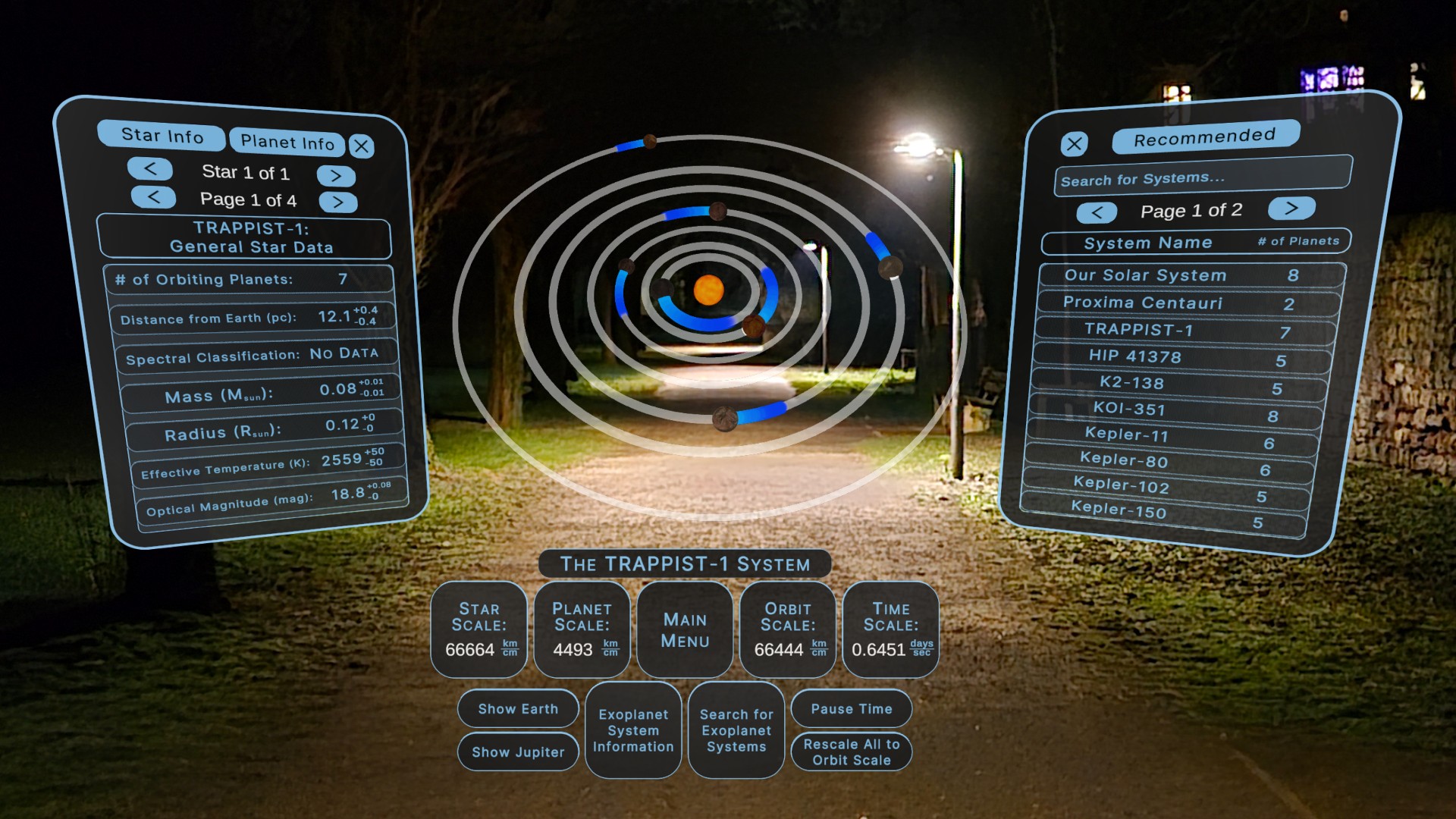
ExoAR’s visualizations are constructed using carefully curated data sourced directly from NASA’s Exoplanet Archive. This authoritative database is comprehensive, containing data for over 5,800 confirmed exoplanets and their host stars, each with over 350 associated parameters. Given its extensive scale, significant pre-processing was necessary to maintain efficient real-time performance. To ensure scientific integrity for the visualizations, ExoAR reduced this dataset to eighty-four key parameters deemed most crucial for effective and accurate visualization. These included those related to planetary radii, masses, orbital periods, eccentricities, semi-major axes, equilibrium temperatures, stellar radii, spectral types, and effective temperatures. Uncertainty values for these critical parameters were retained as well, so the data’s scientific precision could be presented transparently to users when viewing it in a system’s information menu (see Figure 4). Subsequent dataset filtering involved splitting planetary and stellar data into separate datasets and systematically combining redundant entries when necessary by keeping the most recent value of any that differed between duplicates.
3.2 Technical Implementation & Key Features
Using astrophysical formulae, ExoAR translates this refined exoplanet dataset into science-driven exoplanetary system visualizations through the following key features, each designed to balance scientific rigor with user interactivity and understanding. These include dynamic 3D data visualizations of celestial bodies, independent controls for adjusting core spatial and temporal scales, and hands-on menus for accessing all systems and viewing their underlying data.
Dynamic Visualizations of Planetary System Data
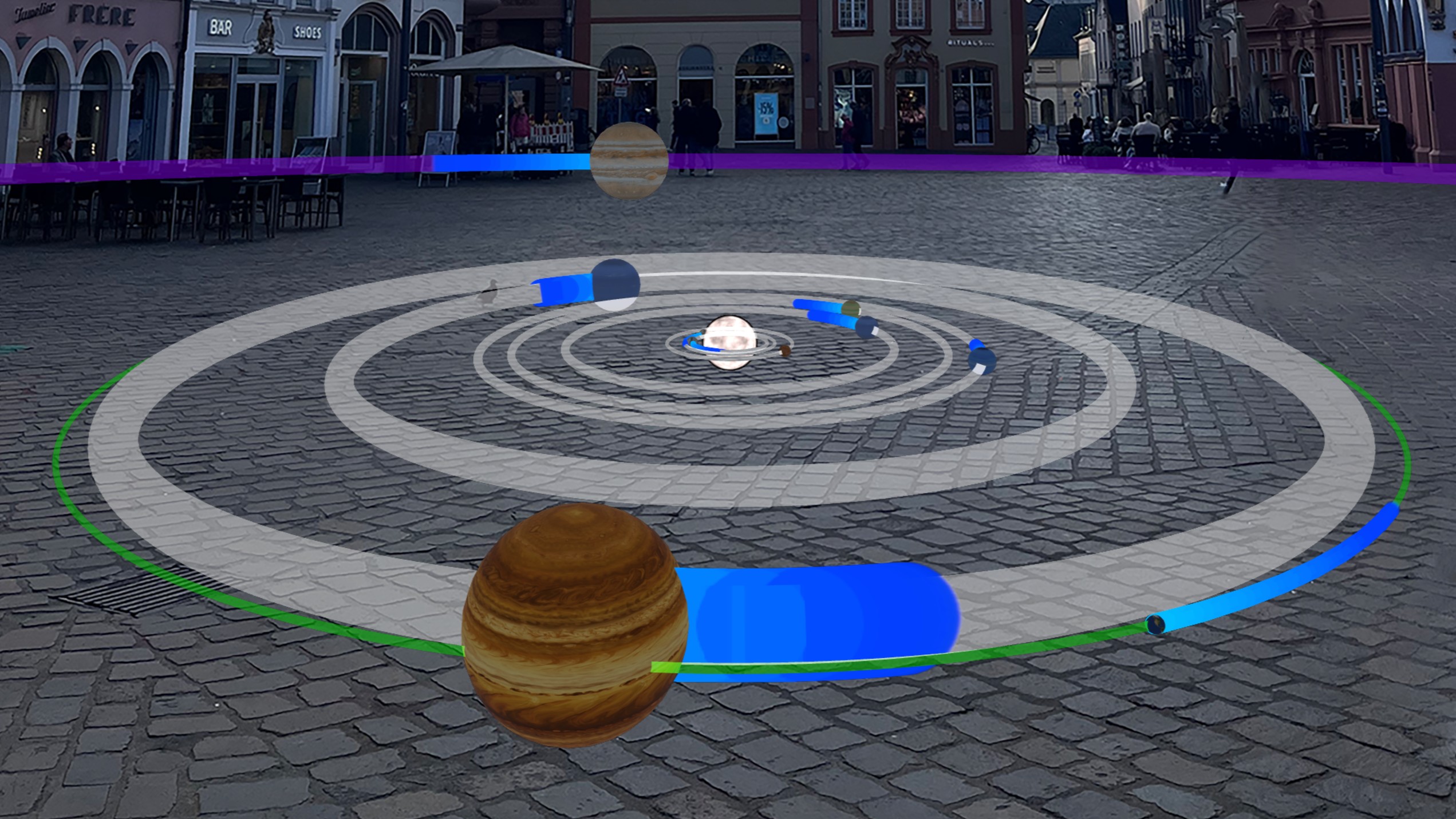
ExoAR accurately represents the relative sizes of host stars and planets based on NASA’s radius and mass data. When explicit radii were unavailable, astrophysical approximations based on stellar or planetary masses and densities were employed. Specifically, stellar radii were approximated using mass-density relationships relative to our Sun when necessary. Similarly, planets were classified into density categories based on their mass: rocky terrestrial planets, gas dwarfs, and gas giants, approximating their radii accordingly. This ensured visualizations remained empirically sound even when the data was only partially complete.
Planetary orbits within ExoAR are dynamically visualized using validated orbital parameters, including periods, semi-major axes, and eccentricities. For incomplete data, Kepler’s Third Law was carefully applied to calculate missing values, ensuring orbital paths remained accurate reflections of current astrophysical understanding. Planets missing eccentricity values were assigned circular orbits, reflecting known statistical prevalence. The resulting visualizations enable users to immersively observe planets as they orbit, a feature aiming to aid conceptual understanding of orbital mechanics and system configurations.
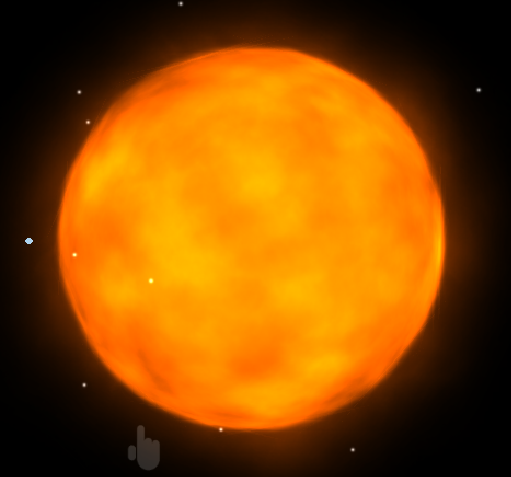
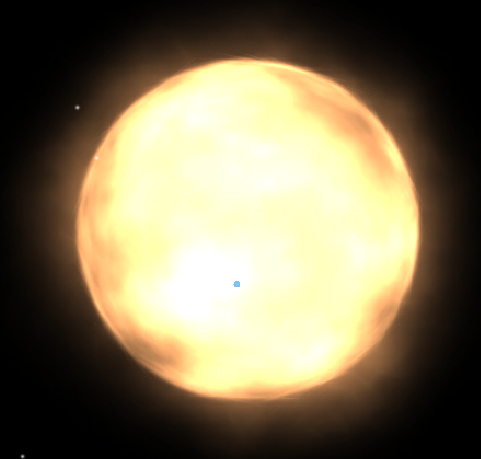
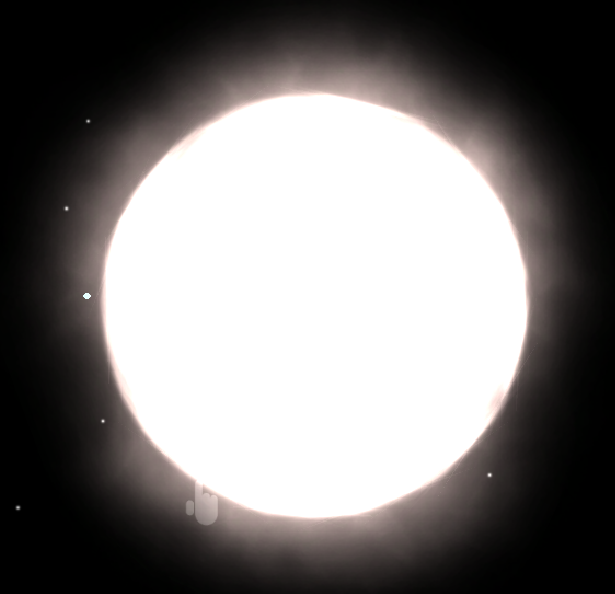
ExoAR also aims to more accurately represents host star colors based on effective temperature data. Utilizing established astrophysical formulas derived from the Planckian locus on the CIE 1931 Chromaticity Diagram [22], ExoAR converts stellar effective temperatures into precise RGB color representations on the visible spectrum. When effective temperature data was absent, spectral classification served as a reliable proxy. This attention to visual accuracy further supports ExoAR’s goal for educational authenticity and helps facilitate comprehension of common stellar properties.
Independent Data Scaling & User Controls
Recognizing the challenge posed by astronomical scale disparities, ExoAR provides customizable scaling options across four key dimensions: planetary size, stellar size, orbital distances, and temporal scaling of orbital motion. These independent scaling controls allow users to dynamically adjust visualizations according to their learning or analytical objectives. This flexibility seeks to remove confusion which can be introduced when multiple dimensions are linked and forced to stretch or shrink together in astronomical plots. For example, orbital scaling can compress vast interplanetary distances into manageable spatial contexts while planets can stay visible, or temporal scaling enables precise observation of planetary orbital periods at varying speeds. Users also have the option to temporarily freeze visualizations, allowing them to observe the data at specific moments in time.
Interactive Menus & Information Displays
To access all such features, ExoAR incorporates spatial AR menus, with the toggleable main menu always positioned centrally just below the user’s natural line of sight (see Figure 4). This main menu allows users to adjust scaling factors, pause or resume planetary motions, and insert two reference planets into the system: Earth and Jupiter. By showing these familiar planets alongside others, this feature provides crucial references for comparing planetary data against those more well-known ones in the aim of aiding comprehension of unfamiliar astronomical scales and distances. This main menu also provides access to the two other menu panels (see Figure 4). First, the System Search Menu lets users browse for and select any exoplanetary system they wish to visualize. The other menu, the System Information Menu, aids system-specific understanding by displaying the exact numerical values underlying a system’s visualization, revealing to users how the raw data maps to the AR rendering. Here, orange text indicates any values derived not from the raw data but via astrophysical calculations, providing users with a transparent means to identify which aspects of a visualization are scientifically approximated.
4 Pilot User Study
To begin evaluating ExoAR’s potential as an educational and exploratory tool for visualizing exoplanetary systems, we conducted a qualitative pilot study. The primary objectives of this initial evaluation were to assess the system’s usability, explore user perceptions regarding ExoAR’s effectiveness compared to comparable non-immersive system visualization tools, and gather preliminary insights into how an AR approach might influence understanding and engagement while learning about exoplanetary systems.
4.1 Procedure & Task
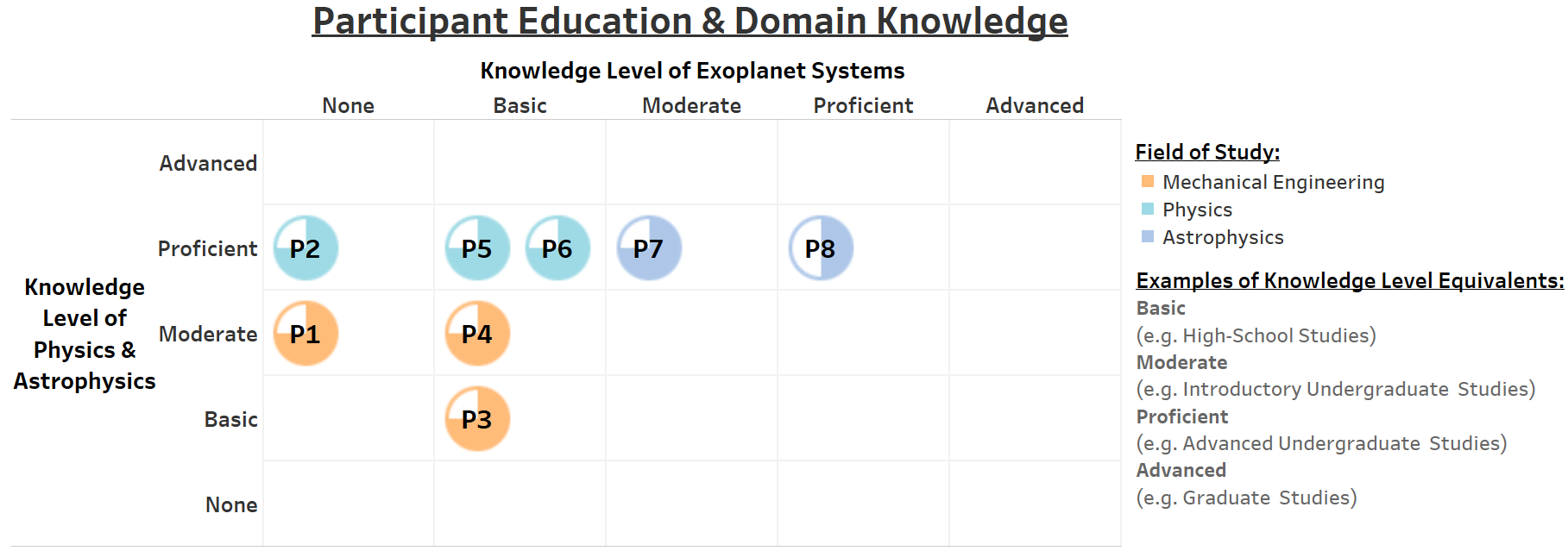
Each participant took part in a one-hour, one-on-one session that began with a brief demographic and self-assessment questionnaire covering age, academic background, and their self-rated level of knowledge in physics, astrophysics, and exoplanetary systems (see Figure 5). Participants then received a five-minute orientation to the HoloLens and its hand-gesture controls, covering essential interactions such as how to press AR buttons or grab and move AR objects. Next, they spent fifteen minutes in ExoAR, starting with a five-minute guided walkthrough of its core features to ensure all participants had experience with and knew how to use all of them. These introductory tasks started with participants using the main menu to scale planetary and stellar sizes, adjust orbital and temporal scales, and insert Earth and Jupiter reference planets into the current system. They then used the System Information Menu to view the system’s data, and lastly, used the System Search Menu to switch to a different system. Once complete, participants had the remaining ten minutes to freely use ExoAR as they wished. Participants then repeated the same sequence with NASA’s Eyes on Exoplanets, with five minutes of structured introductory tasks and ten minutes of unstructured use, to establish a non-immersive baseline.
Upon completing the fifteen-minute sessions for both tools, participants filled out a structured survey comparing the two tools’ effectiveness at conveying exoplanetary concepts. Through its questions, participants indicated which tool they felt better conveyed exoplanet system concepts and described where ExoAR excelled or fell short for this. Next, they explained which tool was their overall preference for learning about exoplanets before reflecting on whether ExoAR affected their learning experience and if they learned anything new while using it. Lastly, they offered feedback on their favorite ExoAR features, aspects in need of improvement, and suggestions for future additions.
4.2 Participants
In total, eight University of Calgary undergraduate students volunteered to participate in the pilot study, all aged 20 to 30 years old (, ). They were assigned identifiers P1–P8 in ascending order of their self-reported domain knowledge, determined by combining weighted ratings of their current knowledge in physics, astrophysics, and exoplanetary systems (see Figure 5). Distributed across the mechanical engineering, physics, and astrophysics fields, these participants’ differences in astronomy and exoplanet knowledge allowed us to capture feedback from various levels of domain familiarity. No participant had previous experience with ExoAR, NASA’s Eyes on Exoplanets, or the Microsoft HoloLens, guaranteeing fresh impressions of the AR hardware and both tools.
4.3 Results
Initial qualitative feedback on ExoAR revealed promising insights into ExoAR’s usability and educational potential. Most notably, when asked to compare ExoAR’s immersive approach to NASA’s Eyes on Exoplanets for visualizing planetary systems and learning about exoplanetary concepts, every participant preferred ExoAR. Upon analyzing their other feedback, three dominant themes emerged to help explain this unanimous preference.
First, nearly all participants (P1–P5, P7) appreciated how ExoAR’s immersive 3D experience made it easier to navigate the system visualizations and view their elements from different perspectives. This was for all three methods of viewpoint navigation: physically walking around, adjusting distance scales, or by using a pinch-and-drag gesture on its host star to move the system where desired. For example, P3 voiced that “standing in it and walking around” or “being able to move around and drag a system closer or further is much more intuitive”. Second, four participants (P1, P3, P6, P7) reported that ExoAR’s 3D immersion was a more intuitive experience for grasping the relative sizes, distances, and orbits between celestial bodies. P1 explained that being immersed gave them “a better physical sense of the systems”, while P6 shared they found it comparatively easier for “understanding the speed of some of the orbits, how wide planets are, and the distance between some of the planets”. Even P7, an astrophysics student, stated this “really helps for scale, especially if someone is unfamiliar with the massive scales of space”. Third, many participants (P1, P4, P6, P7) also reported that ExoAR’s immersion and hands-on approach made learning about exoplanets a more engaging and enjoyable experience. For instance, ExoAR was said to be “a video game with the side effect of learning” (P1), that it made for “a cooler and more memorable experience” (P7), with AR having a “large impact” (P4) that made the experience “far more interesting” (P4).
Supporting these themes, four participants (P1, P3, P4, P7) specifically praised ExoAR’s independent size, distance, and time scaling controls, which they found contributed to a better experience than when using Eyes on Exoplanets. P1 said “I found NASA’s hard to navigate without the scalability”, but they felt this feature of ExoAR “made the experience better as it allowed for exploration outside of the arrangement” that Eyes on Exoplanets keeps a user’s view to. Echoing this, P3 thought that “Eyes on Exoplanets lacks any physical scale”, but in ExoAR they could “easily scale planets and pan them, which is a large benefit”. In addition, participants P1, P2, P3, and P6 pointed out they valued the ability to use Earth and Jupiter as a familiar size and distance reference. This was explained well by P6, who shared “being able to compare to Jupiter and Earth gave me a frame of reference I didn’t have” with Eyes on Exoplanets, which helped them and others to anchor their sense of scale between otherwise confusing sizes and distances.
Despite this mostly positive feedback, participants also identified several areas for improvement. Five participants (P1, P3, P5–P7) experienced issues stemming from the limitations of the HoloLens hardware, namely its restricted field-of-view, relatively lower graphical fidelity, and occasional input lag. The main menu’s placement below eye level was also problematic to some (P2, P3, P4), who complained that due to its position “one must look down often” (P2) and it can sometimes be “difficult to find” (P4). Two participants (P6, P8) noted that NASA’s software felt more polished and feature-rich, an expected gap for ExoAR as a prototype. Despite these critiques, when asked to consider their overall experience for tasks shared across both tools and choose one tool to continue using for further learning, all but one chose ExoAR, each pointing to one or more of the aforementioned themes as their primary reason. P8 was the sole exception, who noted that despite preferring ExoAR’s immersion for analyzing planetary data in 3D, due to its current technical limitations they would rather use Eye on Exoplanets until ExoAR became more polished and its feature set more closely matched that of NASA’s tool.
5 Discussion
5.1 Preliminary Insights
The findings of this formative pilot suggest ExoAR’s approach to using AR for the scientific visualization of exoplanetary systems shows promise for enhancing user engagement and data comprehension. Overall, participants reported that ExoAR’s immersive approach allowed them to be more engaged with the system visualizations, had an easier time viewing them from different perspectives, and that being immersed within a system felt more intuitive for understanding relative celestial object sizes, distances between orbits, and orbital speeds compared to Eyes on Exoplanets. Such insights suggest that the immersive 3D experience, physical spatial navigation, and hands-on interactions commonly supported by AR and other XR technologies may help address some challenges traditionally difficult to overcome when using non-immersive visualization techniques. ExoAR’s independent scaling feature also emerged as particularly beneficial, with participants reporting that the ability to adjust planetary, stellar, and orbital scales separately made it noticeably easier to understand interplanetary relationships, orbital mechanics, and comparative planetary sizes. The ability to insert Earth and Jupiter as reference planets in a system was also said to aid understanding. It it important to note, however, that these features do not require AR or immersive technologies, suggesting they may be a useful addition for non-immersive system visualizations as well.
Room for improvement was also identified by participant feedback. Most commonly noted was participants citing usability concerns stemming from the HoloLens’ hardware constraints. While external to ExoAR’s software, these limitations negatively impacted user perception and highlight the need to either explore other XR hardware or optimize the visualizations’ complexity for the HoloLens’ limitations to maintain smooth, immersive interactions and minimize cognitive distractions. Furthermore, feedback on interface usability was mixed. While most found the design intuitive, others noted that the main menu’s placement disrupted immersion and increased cognitive load. Thus, future iterations should refine the main menu’s placement and design, and also explore gaze- or gesture-based interaction modalities to improve usability and maintain user engagement.
These useful preliminary insights highlight the importance of iterative design processes informed by user-centered evaluation, particularly when integrating novel visualization technologies into educational and research contexts. The feedback gathered in this pilot study will directly inform our planned improvements, which will focus on both technological and usability enhancements. Future research will benefit from systematically evaluating ExoAR’s impact more rigorously and across more varied demographics to assess how differences in prior exoplanet knowledge, familiarity with AR technologies, and past education may influence the tool’s effectiveness for learning and data analysis.
5.2 Limitations
While useful for guiding ExoAR’s future development and evaluation, as a formative pilot study, we acknowledge limitations of its findings. First, due to the pilot’s small, qualitatively evaluated sample, it findings cannot be generalized beyond initial user experiences. Although varying somewhat, the sample was still relatively homogenous in age, educational background, and prior exoplanet knowledge, which limits its generalizability to others like planetary researchers or older users. Short exposure to both XR and traditional systems also made it difficult to assess if learning curves or long-term use had any impact on opinions. Additionally, novelty effects from participants’ overall lack of AR experience may have inflated perceived benefits. Despite such these limitations, these early findings still suggest ExoAR holds promise for effectively conveying complex astronomical concepts to at least some users, justifying its further development and future larger-scale evaluation.
6 Conclusion & Future Work
Aimed to help address current limitations with exoplanetary data visualization, we presented ExoAR, a work-in-progress augmented reality visualization tool designed to enhance understanding and exploration of exoplanetary systems using scientifically accurate data from NASA’s Exoplanet Archive. Our pilot study provided preliminary insights into ExoAR’s effectiveness, indicating promising educational benefits compared to traditional two-dimensional visualization tools. Participants reported notable improvements in engagement, spatial cognition, and improved comprehension of exoplanetary concepts, primarily due to ExoAR’s immersive 3D visualization offerings, hands-on interactions, and independent scaling controls. Several key limitations emerged, however, notably usability challenges related to current AR hardware constraints and interface design considerations. Addressing these issues through iterative design improvements thus remains essential. Furthermore, the promising yet preliminary nature of the study underscores the necessity of conducting larger evaluations that both quantitatively and qualitatively assess ExoAR’s educational impact more rigorously across more diverse demographics and use cases. Future iterations will prioritize technical optimization, user-centered design refinements, and robust empirical validation studies. By systematically addressing current limitations and expanding ExoAR’s current capabilities, we aim to improve the accessibility and effectiveness of exoplanetary data analysis through its capabilities. Ultimately, ExoAR represents a potentially useful step toward improving scientific communication and education in astronomy, demonstrating the unique advantages of AR technology for visualizing and exploring the rapidly expanding knowledge of exoplanetary systems.
References
- [1] Panagiotis E. Antoniou, Maria Mpaka, Ioanna Dratsiou, Katerina Aggeioplasti, Melpomeni Tsitouridou, and Panagiotis D. Bamidis. Scoping the window to the universe; design considerations and expert evaluation of an augmented reality mobile application for astronomy education. In Michael E. Auer and Thrasyvoulos Tsiatsos, editors, Interactive Mobile Communication Technologies and Learning, pages 409–420, Cham, 2018. Springer International Publishing. doi:10.1007/978-3-319-75175-7_41.
- [2] Giant Army. Universe sandbox vr, 2016. Version 20.6.1. URL: https://universesandbox.com/.
- [3] Dirk Norbert Baker, Tobias Selzner, Jens Henrik Göbbert, Hanno Scharr, Morris Riedel, Ebba Þóra Hvannberg, Andrea Schnepf, and Daniel Zielasko. VRoot: A VR-Based Application for Manual Root System Architecture Reconstruction. PlantPhenomics, 2025.
- [4] Alexander Bock, Emil Axelsson, Jonathas Costa, Gene Payne, Micah Acinapura, Vivian Trakinski, Carter Emmart, Claudio Silva, Charles Hansen, and Anders Ynnerman. Openspace: A system for astrographics. IEEE Transactions on Visualization and Computer Graphics, pages 1–1, 2019. doi:10.1109/TVCG.2019.2934259.
- [5] Alexander Bock, Anders Ynnerman, Emil Axelsson, Jonathas Costa, Gene Payne, Micah Acinapura, Vivian Trakinski, Carter Emmart, and Maria Kuznetsova. OpenSpace: A System for Astrographics. IEEE Transactions on Visualization and Computer Graphics, 25(1):1–10, 2019.
- [6] William J. Borucki, David Koch, Gibor Basri, Natalie Batalha, Timothy Brown, Douglas Caldwell, John Caldwell, Jørgen Christensen-Dalsgaard, William D. Cochran, Edna DeVore, Edward W. Dunham, Andrea K. Dupree, Thomas N. Gautier, John C. Geary, Ronald Gilliland, Alan Gould, Steve B. Howell, Jon M. Jenkins, Yoji Kondo, David W. Latham, Geoffrey W. Marcy, Søren Meibom, Hans Kjeldsen, Jack J. Lissauer, David G. Monet, David Morrison, Dimitar Sasselov, Jill Tarter, Alan Boss, Don Brownlee, Toby Owen, Derek Buzasi, David Charbonneau, Laurance Doyle, Jonathan Fortney, Eric B. Ford, Matthew J. Holman, Sara Seager, Jason H. Steffen, William F. Welsh, Jason Rowe, Howard Anderson, Lars Buchhave, David Ciardi, Lucianne Walkowicz, William Sherry, Elliott Horch, Howard Isaacson, Mark E. Everett, Debra Fischer, Guillermo Torres, John Asher Johnson, Michael Endl, Phillip MacQueen, Stephen T. Bryson, Jessie Dotson, Michael Haas, Jeffrey Kolodziejczak, Jeffrey Van Cleve, Hema Chandrasekaran, Joseph D. Twicken, Elisa V. Quintana, Bruce D. Clarke, Christopher Allen, Jie Li, Haley Wu, Peter Tenenbaum, Ekaterina Verner, Frederick Bruhweiler, Jason Barnes, and Andrej Prsa. Kepler planet-detection mission: Introduction and first results. Science, 327(5968):977–980, 2010. doi:10.1126/science.1185402.
- [7] Emma Broman, Jacqueline Faherty, Laura Kreidberg, Sebastian Zieba, Christian Hansen, Anders Ynnerman, and Alexander Bock. ExoplanetExplorer: Contextual Visualization of Exoplanet Systems. In IEEE VIS 2023 (Short Papers), 2023.
- [8] Adrien Fonnet and Yannick Prie. Survey of immersive analytics. IEEE Transactions on Visualization and Computer Graphics, 27(33):2101–2122, March 2021. doi:10.1109/TVCG.2019.2929033.
- [9] hublab. Planetariumvr. Video game, https://store.steampowered.com/app/1313970/PlanetariumVR/, December 2021. Released 17 December 2021.
- [10] Magdalena Kersting, Richard Steier, and Robb Lindgren. Virtual reality in astronomy education: reflecting on design principles through a researcher–practitioner dialogue, 2024. Manuscript in preparation.
- [11] Elif Hilal Korkut and Elif Surer. Visualization in virtual reality: a systematic review. Virtual Reality, 27(2):1447–1480, June 2023. doi:10.1007/s10055-023-00753-8.
- [12] Matthias Kraus, Johannes Fuchs, Björn Sommer, Karsten Klein, Ulrich Engelke, Daniel Keim, and Falk Schreiber. Immersive analytics with abstract 3d visualizations: A survey. Computer Graphics Forum, 41(1):201–229, February 2022. doi:10.1111/cgf.14430.
- [13] Michal Krichenbauer, Goshiro Yamamoto, Tomokazu Taketom, Christian Sandor, and Hirokazu Kato. Augmented reality versus virtual reality for 3d object manipulation. IEEE Transactions on Visualization and Computer Graphics, 24(2):1038–1048, 2018. doi:10.1109/TVCG.2017.2658570.
- [14] Fangfei Lan, Michael Young, Lauren Anderson, Anders Ynnerman, Alexander Bock, Michelle A. Borkin, Angus G. Forbes, Juna A. Kollmeier, and Bei Wang. Visualization in Astrophysics: Developing New Methods for Astrophysical Discovery. Computer Graphics Forum, 40(7):219–234, 2021.
- [15] Lindsay Lisle, Kaitlyn Davidson, Edward J.K. Gitre, Chris North, and Doug A. Bowman. Different realities: a comparison of augmented and virtual reality for the sensemaking process. Frontiers in Virtual Reality, 4:1177855, 2023.
- [16] Inc. Meta Platforms. Meta quest 3: Mixed reality vr headset. https://www.meta.com/quest/quest-3/, 2023. Accessed: 2025-05-15.
- [17] Microsoft. Galaxy explorer, 2016. HoloLens Application. URL: https://github.com/Microsoft/GalaxyExplorer.
- [18] Microsoft. Microsoft hololens 2, 2019. URL: https://www.microsoft.com/en-us/hololens/hardware.
- [19] Paul Milgram and Fumio Kishino. A taxonomy of mixed reality visual displays. IEICE Transactions on Information Systems, E77-D(12):15, December 1994.
- [20] NASA Exoplanet Science Institute at Caltech. NASA Exoplanet Archive. https://exoplanetarchive.ipac.caltech.edu/, 2011–. Launched December 2011; accessed 2025-05-03.
- [21] NASA Jet Propulsion Laboratory. Eyes on Exoplanets (version 2.0) [computer software], 2025.
- [22] Thor Olson. The colors of the stars. In The Colors of the Stars, November 1998.
- [23] J. Orlando et al. The Effects of Virtual, Augmented, and Mixed Reality as Training Enhancement Methods: A Meta-Analysis, 2019. Technical report.
- [24] Raphael Peralta and Vincent Minier. Design of a mooc and augmented reality applications about exoplanets. In European Planetary Science Congress, pages EPSC2020–709, 2020.
- [25] Jaziar Radianti, Tim A. Majchrzak, Jörg Fromm, and Irina Wohlgenannt. A systematic review of immersive virtual reality applications for higher education: Design elements, lessons learned, and research agenda. Computers & Education, 147:103778, 2020. doi:10.1016/J.COMPEDU.2019.103778.
- [26] George R. Ricker, Joshua N. Winn, Roland Vanderspek, David W. Latham, Gáspár Á. Bakos, Jacob L. Bean, Zachory K. Berta-Thompson, Timothy M. Brown, Lars A. Buchhave, Nicholas R. Butler, Ryan P. Butler, William J. Chaplin, David Charbonneau, Jørgen Christensen-Dalsgaard, Mark Clampin, Drake Deming, Janet J. Doty, Gilbert A. Esquerdo, Mark Everett, François Fressin, Jian Ge, Christoph Henze, Matthew J. Holman, Andrew W. Howard, Jon M. Jenkins, Grant Jernigan, Anders Johansen, Lisa Kaltenegger, Hans Kjeldsen, Gregory Laughlin, Alex Levine, Douglas N. C. Lin, Pamela W. Lucas, Morten N. Lund, Geoffrey W. Marcy, Peter McCullough, Timothy D. Morton, Philip Nutzman, Stanley Owocki, Enric Palle, Francesco Pepe, Joshua Pepper, Andrew Phillips, Andreas Quirrenbach, Stephen Rinehart, Dimitar D. Sasselov, Bun’ei Sato, Sara Seager, Alessandro Sozzetti, Keivan G. Stassun, Philip W. Sullivan, Andrew Szentgyorgyi, Guillermo Torres, Shin’ichi Uehara, John Villasenor, Steven S. Vogt, Charles A. Watson, Daniel Welz, Peter J. Wheatley, Monica Woods, et al. Transiting exoplanet survey satellite. Journal of Astronomical Telescopes, Instruments, and Systems, 1(1):014003, 2015. doi:10.1117/1.JATIS.1.1.014003.
- [27] Antoni Sagristà, Stefan Jordan, Thomas Müller, and Filip Sadlo. Gaia Sky: Navigating the Gaia Catalog. IEEE Transactions on Visualization and Computer Graphics, 25(1):1070–1079, 2019. doi:10.1109/TVCG.2018.2864508.
- [28] Unity Technologies. Unity: Real-time development platform. https://unity.com/, 2025. Accessed: 2025-05-17.
- [29] Michael Whitlock, Sarah Smart, and Danielle Albers Szafir. Graphical perception for immersive analytics. In 2020 IEEE Conference on Virtual Reality and 3D User Interfaces (VR), pages 616–625. IEEE, 2020.