(Can’t) Fly Me to the Moon or Mars? Context of Use Analysis Approaches for Space Exploration

Abstract
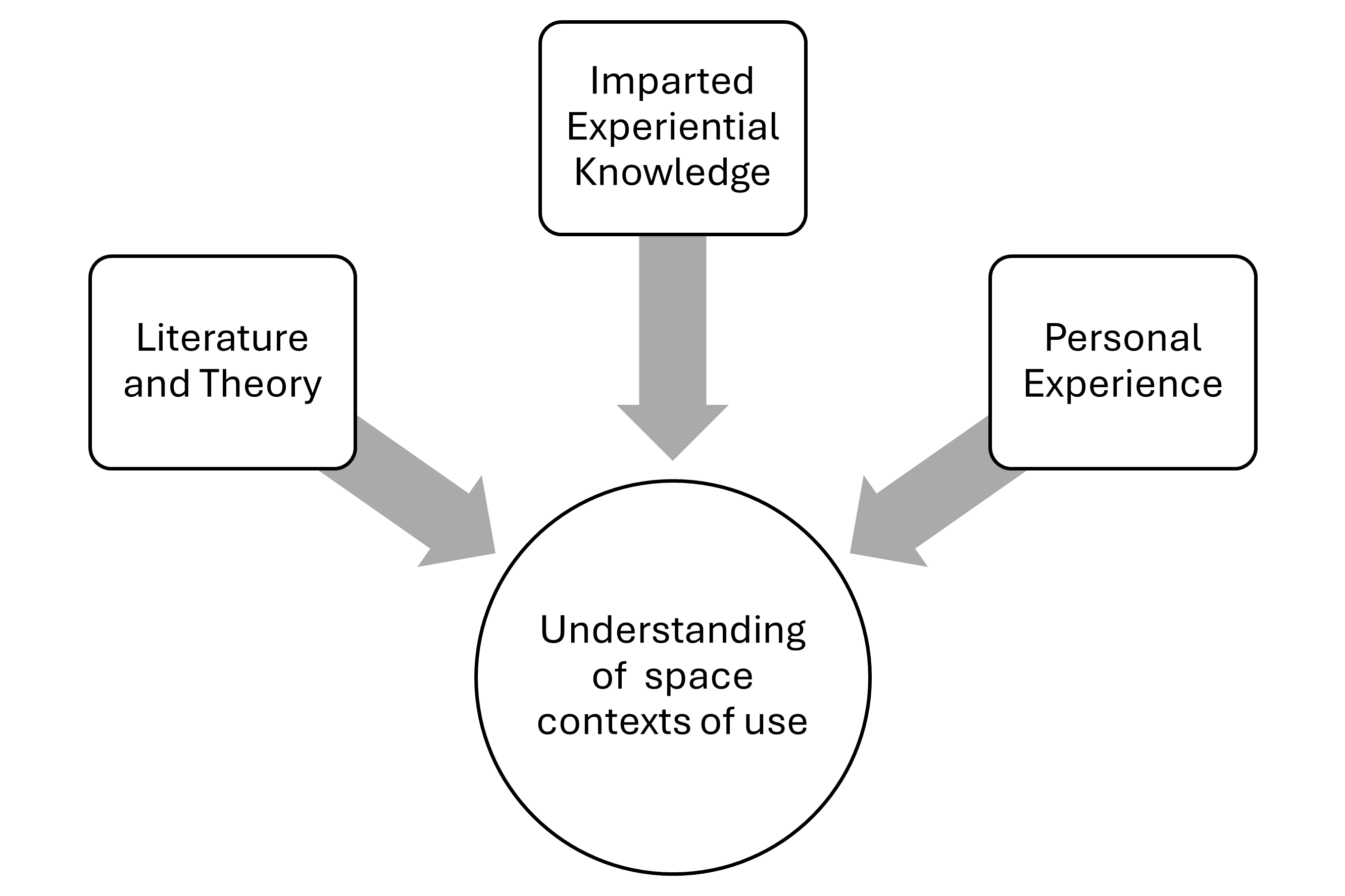
Contexts of use are a central concept of research and development in human-computer interaction (HCI). Their in-depth understanding is a key for usable and acceptable computer-aided solutions and a particular challenge in connection with space exploration. It is necessary to examine which of the established approaches can be implemented here and where methodological adjustments are necessary. This article provides a systematic consideration of three perspectives to understand space contexts of use: theory and literature, imparted experiential knowledge, and personal experience. Potentials and risks are evaluated. The findings of HCI research in safety-critical contexts and under COVID-19 conditions that can be transferred to space HCI are taken up.
Keywords and phrases:
Context of Use, Experiential Knowledge, Remote Contextual InquiryCopyright and License:
![[Uncaptioned image]](x1.png) © Tilo Mentler; licensed under Creative Commons License CC-BY 4.0
© Tilo Mentler; licensed under Creative Commons License CC-BY 4.0
2012 ACM Subject Classification:
Human-centered computing HCI design and evaluation methodsFunding:
This research was funded by the Deutsche Forschungsgemeinschaft (DFG, German Research Foundation), SPP 2199 - Project number 521584557 (PervaSafe Computing).Editors:
Leonie Bensch, Tommy Nilsson, Martin Nisser, Pat Pataranutaporn, Albrecht Schmidt, and Valentina SuminiSeries and Publisher:
 Open Access Series in Informatics, Schloss Dagstuhl – Leibniz-Zentrum für Informatik
1 Introduction
The concept of contexts of use in the sense of “combination[s] of users, goals and tasks, resources, and [technical, physical, social, cultural and organizational] environment” [13] is central to research and development in the field of human computer interaction (HCI). Their in-depth understanding is the key to developing usable solutions and enabling positive user experiences. Their lack of understanding is one of the main reasons for usage and acceptance problems.
With regard to space exploration and missions, several challenges have to be mastered in order to gain a sufficient context of use understanding:
-
Access to certain technical and physical environments is limited (e.g., control rooms) or hardly possible at all (e.g., space shuttles, space stations, other planets).
-
The number of potential users and suitable experts is comparatively low compared to other contexts of use. Due to their demanding professional activities, they cannot easily be recruited to participate in human-centered design processes.
-
Cultural and organizational environments are complex and are characterized by a large number of regulatory rules that require a great deal of familiarization for people from outside.
In addition, certain usage situations and user requirements are difficult to analyze in advance, despite all the planning and preparation, especially in borderline areas of personal experience (e.g. long-term isolation [26]).
However, in order to do justice to the “exciting opportunity for researchers in HCI to contribute to the great endeavor of space exploration” [27], understanding the respective usage contexts is one, if not the first step. In the following, related work is discussed before 3 possible perspectives on the context of use are presented. We end with the conclusion that “fly me to the Moon or Mars” should become a reality for HCI researchers, provided that space exploration no longer remains an experience for a very small number of people.
2 Background and Related Work
Previous research has already addressed questions whether earth-based interaction design frameworks are applicable to extraterrestrial environments [31] or how to bridge the gap between participatory design and space engineering [23]. One of the findings is: “The very notion of context of use […] may need revisiting for new relevant dimensions in the interplanetary perspective.” While they discuss human-centered and participatory design frameworks as well as suitable evaluation environments (e.g. size, lighting conditions, gravity), specific recommendations for space-related context of use analysis have been given occasionally (e.g., [5]).
Extending the consideration, specific challenges of studying “extreme environments” [22] as well as context of use characteristics [1] in general have already been highlighted. For example, special requirements were identified to define the contexts of use of mobile devices [17]. However, the transferability of these findings and recommendations to HCI in space has not been discussed sufficiently.
3 Three Perspectives on Space Contexts of Use
In the following, the three basic approaches to understanding usage contexts shown in Figure 1 are considered in connection with space missions and space exploration. They are not specific to space HCI, but are rather evident in a large number of (security-relevant) HCI research projects [21]. The respective characteristics and procedures in different domains are therefore more important.
These approaches reflect Herczeg’s structure for evaluation approaches of interactive systems (theory-based, task-based, user-based evaluation) [10]. Since, in the sense of an iterative human-centered development approach [14], the evaluation of a previous stage of development can also motivate an extended/new analysis of a context of use, among other things, this analysis-evaluation-connection does not seem coincidental.
3.1 Literature and Theory
Apart from proceedings of space- and HCI-specific workshops and conferences [27, 28], space agencies (ESA111https://www.esa.int/About_Us/Business_with_ESA/Space_Related_Standards2, NASA222https://ntrs.nasa.gov/) and other expert societies (e.g., German Society for Aeronautics and Astronautics333https://www.dglr.de/informieren/publikationen/) provide HCI researchers with access to various technical reports, standards and playbook considerations. This rich body of knowledge allows for a deep exploration of key terms and concepts that HCI researchers need to understand.
However, challenges are to find the needle in the haystack and to ensure a proper understanding of the content provided. In principle, both challenges also occur in other safety-critical contexts, but the necessary complexity of technical solutions for space operations and the diverse areas of standardization, see [18] on the topic of sustainability in space operations alone, are then even more special. In order to understand space research, it may also be necessary to have sufficient knowledge of domains with which HCI experts may have had little experience in their training (astrophysics, aerospace engineering).
3.2 Imparted Experiential Knowledge
Numerous studies involving former and prospective astronauts [6], their families [15], control room staff [2], and other experts [19] show that it is possible to draw on experiential knowledge in the space domain.
As in other safety-critical and expert-driven working domains, access and availability to these special and numerically rather small target groups are critical. Qualitative and often temporally synchronous approaches (interviews, field studies) should be combined with quantitative and temporally asynchronous measures (e.g., questionnaires) which allow for certain response periods and respond rates [9]. In addition, consideration should be given to whether corresponding feedback and work results should be made available in the sense of open educational (research) resources in order to avoid multiple surveys of the same issues.
In connection with the previous statements, the level of familiarization with the specific space-related context of use must, of course, be taken into account in order to gather relevant findings and not waste the experts’ limited resources unnecessarily.
3.3 Personal Experience
Personal experience can first of all be divided into two types:
-
direct (and also physical) involvement in the context of use, be it in control rooms, simulators, or as a crew member;
-
indirect participatory observation, e.g. in the form of video transmissions from spaceships or space stations.
Visiting space control centers and simulators is already possible today, with the appropriate amount of preparation [2]. However, the number of advanced simulators is limited and involves corresponding travel and organization costs. Especially in early project stages and for low-fidelity prototyping approaches, decentralized and flexible solutions would be desirable. Promising mixed reality approaches should be pursued, e.g. with respect to gravity alterations on users [24] and environments [32]. Virtual reality has been considered to investigate the “effect of communication delay across interplanetary distances” [30] and for space operations training [25]. Insights that can be expected from such approaches can certainly also make it easier to understand the respective contexts of use. Finally, space missions with participation of HCI researchers are still a topic that can be developed further. In order to avoid following an all-or-nothing approach, the role of usability engineering and user experience design approaches in space engineering should initially be examined in terms of maturity models like described by [4]. This could be followed by a gradual increase in importance in terms of decision-making powers, resources and culture.
Indirect observations are first of all a question of technical feasibility (bandwidth and latencies). In addition, appropriate equipment for users, e.g. with camera systems and sensor technology, as well as the physical environment (rooms, sections) is only ever conceivable with special consideration of safety and security requirements. Either existing infrastructure can be used or the potential dangers in terms of operating errors or security gaps must be carefully examined. Off-the-shelf hardware, as is often used in HCI studies, is generally not certified accordingly and is also integrated into infrastructures (communities, cloud systems) that hardly meet the specific requirements of space operations.
If the points mentioned above have been addressed, the question of the methodological approach arises. Many HCI analysis methods are based on the presence or even participation in the working environment (e.g., contextual inquiry [11], ethnography [16], field study [29]). Nevertheless, approaches have already been developed and tested that do not require direct presence or are related to the understanding of singular events in safety-critical environments that cannot be planned in advance. Remote contextual inquiry [8] or critical decision method (CDM) [20] are named here as examples. The former could take up the technical possibilities already available today for transmitting audio and video signals as well as sensor values over long distances and could therefore be carried out virtually live or with the help of a prepared script. With its retrospective approach, the latter can also be used after astronauts have returned from space missions, for example.
In connection with HCI research on distance, COVID-19 pandemic had (out of necessity) a huge impact with respect to participants, tools and study design [7, 3]. While face-to-face-experiments were prepared more carefully (e.g. social distancing, disinfection, checking body temperature), other approaches (remote, online, blended) were refined. Self-tracking and autoethnography [12] are just two methodological approaches that could also work well in space contexts. The experience gained and methodological adaptations that became necessary during and in the follow-up of this years can certainly be helpful to drive future HCI research in even more remote settings.
4 Conclusion
Understanding contexts of use, or even better, experiencing them first-hand, is not only an organizational and resource-intensive challenge in connection with space exploration. Both in safety-critical contexts and under specific framework conditions, e.g. during a pandemic, analysis approaches from general HCI research might fall short. This forces and enables us to think outside the box. Well-known approaches like remote contextual inquiry or critical decision method show that these challenges are not completely unique for space HCI. However, the special characteristics of the various space-related contexts of use (technical limitations, gravitational changes, long-term isolation) also require new methodological approaches in HCI research, possibly even a new understanding of the idea of context of use. Furthermore, a more specific approach to human-centered design in and for space in general is probably needed.
The previously discussed diversity of perspectives and methods should help to better understand even the most inaccessible contexts of use. However, the more space exploration becomes a “mass business”, the greater the desire and demand from an HCI perspective: Fly me to the Moon or Mars. Beforehand, however, and in the sense of a research agenda guided by intermediate steps, it should be investigated how usability engineering and user experience design can achieve an increased level of maturity in connection with space operations in terms of degree and timing of involvement, resources, leadership and organizational culture.
References
- [1] David Alonso-Ríos, Ana Vázquez-García, Eduardo Mosqueira-Rey, and Vicente Moret-Bonillo. A context-of-use taxonomy for usability studies. International Journal of Human-Computer Interaction, 26(10):941–970, 2010. doi:10.1080/10447318.2010.502099.
- [2] Elodie Bouzekri, Célia Martinie, Philippe Palanque, Erwann Poupart, and Sandra Steere. Ux for some and usability for others: Issues of blending multi-user and multi-property in control centers. In IFIP Conference on Human-Computer Interaction, pages 357–367. Springer, 2021. doi:10.1007/978-3-030-98388-8_31.
- [3] Katerina Cerna, Richard Paluch, Fabian Bäumer, Tanja Ertl, and Claudia Müller. Transformation of hci co-research with older adults: researchers’ positionality in the covid-19 pandemic. IxD&A, 50:27–47, 2021. doi:10.55612/S-5002-050-002.
- [4] Lorraine Chapman and Scott Plewes. A ux maturity model: effective introduction of ux into organizations. In Design, User Experience, and Usability. User Experience Design Practice: Third International Conference, DUXU 2014, Held as Part of HCI International 2014, Heraklion, Crete, Greece, June 22-27, 2014, Proceedings, Part IV 3, pages 12–22. Springer, 2014. doi:10.1007/978-3-319-07638-6_2.
- [5] William J. Clancey and Daniel Clancy. Field science ethnography: Methods for systematic observation on an expedition, 2001. NASA Technical Reports Server, Document ID 20020052386, Ames Research Center. URL: https://ntrs.nasa.gov/citations/20020052386.
- [6] Mary M Connors, Dean B Eppler, and Daniel G Morrow. Interviews with the apollo lunar surface astronauts in support of planning for eva systems design. Technical Memorandum (TM), 1994.
- [7] Gennaro Costagliola, Mattia De Rosa, Vittorio Fuccella, and Parinaz Tabari. The impact of the covid-19 pandemic on human–computer interaction empirical research. Interacting with Computers, 35(5):578–589, 2023. doi:10.1093/IWC/IWAD031.
- [8] Jeff English and Lynn Rampoldi-Hnilo. Remote contextual inquiry: A technique to improve enterprise software. In Proceedings of the Human Factors and Ergonomics Society Annual Meeting, volume 48, pages 1483–1487. SAGE Publications Sage CA: Los Angeles, CA, 2004.
- [9] Nadine Flegel, Daniel Wessel, Jonas Pöhler, Kristof Van Laerhoven, and Tilo Mentler. Autonomy and safety: a quantitative study with control room operators on affinity for technology interaction and wish for pervasive computing solutions. In Extended Abstracts of the 2023 CHI Conference on Human Factors in Computing Systems, pages 1–10, 2023. doi:10.1145/3544549.3585822.
- [10] Michael Herczeg. Software-Ergonomie: Theorien, Modelle und Kriterien für gebrauchstaugliche interaktive Computersysteme. Oldenbourg Wissenschaftsverlag, München, 2009. doi:10.1524/9783486595406.
- [11] Karen Holtzblatt and Hugh Beyer. Contextual design: Design for life. Morgan Kaufmann, 2016.
- [12] Sarah Homewood. Self-tracking to do less: An autoethnography of long covid that informs the design of pacing technologies. In Proceedings of the 2023 CHI Conference on Human Factors in Computing Systems, CHI ’23, New York, NY, USA, 2023. Association for Computing Machinery. doi:10.1145/3544548.3581505.
- [13] International Organization for Standardization. Iso 9241-11:2018 ergonomics of human-system interaction – part 11: Usability: Definitions and concepts, 2018. Accessed: 2025-03-31. URL: https://www.iso.org/obp/ui/en/#iso:std:iso:9241:-11:ed-2:v1:en.
- [14] International Organization for Standardization. Iso 9241-210:2019 - ergonomics of human-system interaction - part 210: Human-centred design for interactive systems, 2019. Edition 2. URL: https://www.iso.org/standard/77520.html.
- [15] Phyllis J Johnson. The roles of nasa, us astronauts, and their families in long-duration missions. In On orbit and beyond: Psychological perspectives on human spaceflight, pages 69–89. Springer, 2012.
- [16] Tejaswini Joshi, Heidi Biggs, Jeffrey Bardzell, and Shaowen Bardzell. Who is “i”?: Subjectivity and ethnography in hci. In Proceedings of the 2024 CHI Conference on Human Factors in Computing Systems, pages 1–15, 2024.
- [17] Satu Jumisko-Pyykkö and Teija Vainio. Framing the context of use for mobile hci. International journal of mobile human computer interaction (IJMHCI), 2(4):1–28, 2010. doi:10.4018/JMHCI.2010100101.
- [18] A Kato, B Lazare, D Oltrogge, and H Stokes. Standardization by iso to ensure the sustainability of space activities. In Proceedings of the Sixth European Conference on Space Debris, ESOC, Darmstadt, Germany, pages 22–25, 2013.
- [19] Frank Kirchner. Interview mit dr. thomas reiter: Esa-direktor für bemannte raumfahrt und missionsbetrieb, esa-astronaut. KI-Künstliche Intelligenz, 28(2):123–125, 2014. doi:10.1007/S13218-014-0296-1.
- [20] Gary Klein and Amelia A Armstrong. Critical decision method. In Handbook of human factors and ergonomics methods, pages 373–382. CRC Press, 2004.
- [21] Tilo Mentler and Michael Herczeg. Routine- und Ausnahmebetrieb im mobilen Kontext des Rettungsdienstes, pages 109–118. Oldenbourg Wissenschaftsverlag, München, 2013. doi:10.1524/9783486781229.109.
- [22] Katherine Meza and Lesia Crumpton-Young. The identification of user centered design factors required for products intended for extreme environments. In 40th International Conference on Environmental Systems, page 6279, 2010.
- [23] Tommy Nilsson, Leonie Bensch, Florian Dufresne, Flavie Rometsch, Paul de Medeiros, Enrico Guerra, Florian Saling, Andrea EM Casini, and Aidan Cowley. Out of this world design: Bridging the gap between space systems engineering and participatory design practices. In Proceedings of SpaceCHI 3.0, A Conference on Human-Computer Interaction for Space Exploration (SpaceCHI 3.0). MIT Media Lab, MA, USA, 2023.
- [24] Lars IE Oddsson, Robin Karlsson, Janusz Konrad, Serdar Ince, Steve R Williams, and Erika Zemkova. A rehabilitation tool for functional balance using altered gravity and virtual reality. Journal of neuroengineering and rehabilitation, 4:1–7, 2007.
- [25] Manuel Olbrich, Holger Graf, Jens Keil, Rüdiger Gad, Steffen Bamfaste, and Frank Nicolini. Virtual reality based space operations–a study of esa’s potential for vr based training and simulation. In Virtual, Augmented and Mixed Reality: Interaction, Navigation, Visualization, Embodiment, and Simulation: 10th International Conference, VAMR 2018, Held as Part of HCI International 2018, Las Vegas, NV, USA, July 15-20, 2018, Proceedings, Part I 10, pages 438–451. Springer, 2018. doi:10.1007/978-3-319-91581-4_33.
- [26] Judith I Pagel and Alexander Choukèr. Effects of isolation and confinement on humans-implications for manned space explorations. Journal of Applied Physiology, 2016.
- [27] Pat Pataranutaporn, Valentina Sumini, Ariel Ekblaw, Melodie Yashar, Sandra Häuplik-Meusburger, Susanna Testa, Marianna Obrist, Dorit Donoviel, Joseph Paradiso, and Pattie Maes. Spacechi: Designing human-computer interaction systems for space exploration. In Extended Abstracts of the 2021 CHI Conference on Human Factors in Computing Systems, pages 1–6, 2021. doi:10.1145/3411763.3441358.
- [28] Pat Pataranutaporn, Valentina Sumini, Melodie Yashar, Susanna Testa, Marianna Obrist, Scott Davidoff, Amber M Paul, Dorit Donoviel, Jimmy Wu, Sands A Fish, and others. Spacechi 2.0: Advancing human-computer interaction systems for space exploration. In CHI Conference on Human Factors in Computing Systems Extended Abstracts, pages 1–7, 2022.
- [29] Mary Beth Rosson and John M Carroll. Scenario-based design. In The human-computer interaction handbook, pages 1067–1086. CRC Press, 2007.
- [30] Adalberto L. Simeone, Robbe Cools, Stan Depuydt, João Maria Gomes, Piet Goris, Joseph Grocott, Augusto Esteves, and Kathrin Gerling. Immersive speculative enactments: Bringing future scenarios and technology to life using virtual reality. In Proceedings of the 2022 CHI Conference on Human Factors in Computing Systems, CHI ’22, New York, NY, USA, 2022. Association for Computing Machinery. doi:10.1145/3491102.3517492.
- [31] Jean Vanderdonckt, Radu-Daniel Vatavu, Julie Manon, Michael Saint-Guillain, Philippe Lefevre, and Jessica J Marquez. Might as well be on mars: insights on the extraterrestrial applicability of interaction design frameworks from earth. In Extended Abstracts of the CHI Conference on Human Factors in Computing Systems, pages 1–8, 2024. doi:10.1145/3613905.3650807.
- [32] Xian Wang, Diego Monteiro, Lik-Hang Lee, Pan Hui, and Hai-Ning Liang. Vibroweight: Simulating weight and center of gravity changes of objects in virtual reality for enhanced realism. In 2022 IEEE haptics symposium (HAPTICS), pages 1–7. IEEE, 2022. doi:10.1109/HAPTICS52432.2022.9765609.