Virtual Reality Prototyping Environment for Concurrent Design, Training and Rover Operations

Abstract
As part of the CASIMAR (Collaborative Astronaut Supporting Interregional Moon Analog Rover) project, initiated by the BVSR e.V. (Bundesverband Studentischer Raumfahrt), the TUDSaT (TU Darmstadt Space Technology e.V.) team is developing a Virtual Reality (VR) prototype environment to support the interdisciplinary design process of lunar exploration technologies. Given the complexity of collaboration among eight organizations, this tool aims to streamline design integration and enhance mission planning. The primary objective is to create a comprehensive 3D model of the rover, complete with predefined procedures and activities, to simulate astronaut-robot interaction. By leveraging VR technology, astronauts can familiarize themselves with the rover and its EVA (Extravehicular Activity) tools before actual deployment, improving operational safety and efficiency.
Beyond training applications, this virtual environment serves as a critical platform for designing, testing, and benchmarking rover functionalities and EVA procedures. Ultimately, our work contributes to optimizing human-robotic interaction, ensuring that lunar exploration missions are both effective and well-prepared before reaching the Moon.
Keywords and phrases:
virtual reality (VR), digital twin, human-robot-interaction (HRI), LUNA analog facility, rover, extravehicular activities (EVA), gamification, simulation, user-centered design (UCD), concurrent engineering (CE), space system engineeringCopyright and License:
![[Uncaptioned image]](x1.png) © Pinar Dogru, Hanjo Schnellbächer, Tarek Can Battikh, and Kristina Remić; licensed under Creative Commons License CC-BY 4.0
© Pinar Dogru, Hanjo Schnellbächer, Tarek Can Battikh, and Kristina Remić; licensed under Creative Commons License CC-BY 4.0
2012 ACM Subject Classification:
Human-centered computing Virtual reality ; Human-centered computing User centered design ; Computing methodologies Interactive simulationEditors:
Leonie Bensch, Tommy Nilsson, Martin Nisser, Pat Pataranutaporn, Albrecht Schmidt, and Valentina SuminiSeries and Publisher:
 Open Access Series in Informatics, Schloss Dagstuhl – Leibniz-Zentrum für Informatik
1 Introduction
1.1 What is CASIMAR
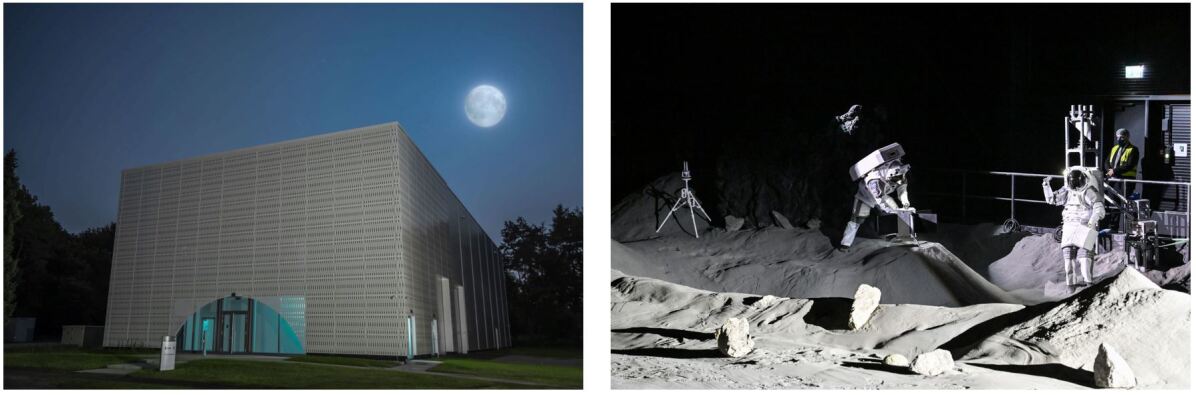
The CASIMAR student project aims to develop a rover as a testing platform to study tools to provide EVA (Extravehicular Activity) support, to carry out search and rescue missions, and be able to carry out stand-alone missions, as well. It’s intended testing target is the LUNA analog facility, which is a joint project between the European Space Agency and the German Aerospace Center (DLR). The LUNA hall contains about of regolith simulant up to a depth of and therefore recreates the lunar surface and its environmental conditions like dust, illumination, reduced gravity and ground communication. The aim for LUNA is to develop, test, and train exploration activities, processes, and relevant technologies [27].
1.2 Problem
The renewed interest and drive towards lunar exploration provides unique challenges to establish a human presence on Earth’s moon. Space systems and tools have been designed by building and iteratively testing analog models. This resource-intensive approach is not viable for the student associations designing and implementing the CASIMAR project, which is heightened by this multi-organizational design challenge. A viable virtual testing and training platform can alleviate these problems by providing an interactive environment in a virtual space that supports the project throughout its design, by making the rover accessible in a believable simulation of the moon, without requiring a partial or complete prototype or access to LUNA or a ticket to the moon.
1.3 Market
Predecessors of this research have applied VR to assist in the designing of systems, training of personnel and allowing to support astronauts in operations. Bensch et al. showcase the use of an VR environment to aid in testing the design for the Argonaut Lunar Lander in a design study. It is concluded that widely accessible VR technology allows a wide range of individuals to contribute to the early design stages, but is still restricted by being limited to only visuals and audio [5].
Costantini et al. explored with JIVE (Joint Investigation into VR for Education) the capabilities of VR for teaching, by delivering a unique visualization tool [7]. In a collaboration between NASA’s JPL, Johnson Space Center, and the Marshall Space Flight Center, the Cold Atom Laboratory on the ISS was upgraded by an astronaut assisted with an AR overlay [22].
1.4 Solution
Researching existing projects, the application of the VR environment in the aspect of this project could solve some open questions. The VR prototype environment creation will serve as a platform for design review and validation, human-robotic interaction (HRI) testing and implementation of components in a 3D design of the rover.
For the proposed solution, immersive VR will be used. Immersive virtual reality describes a fully enclosed, computer-generated environment that completely surrounds the user. This is usually achieved through a head-mounted display (HDM) and equipment such as hand-held controllers. This type of VR blocks perception of the real world and may achieve a sense of presence within the virtual environment [17]. Some examples of immersive VR devices include the HTC Vive and Meta Quest.
The subsequent sections elaborate on how the VR environment will assist the project throughout its project life cycle, with its respective challenges.
1.5 HRI Application
Within the CASIMAR project, special emphasis will be placed on the human-robot interaction (HRI), i.e. the interaction between the astronaut and the rover. HRI will be included as an integral part from early on, governing the design and development of the rover. The VR environment will be one tool to serve this goal, ensuring the inclusion of HRI in the whole development process.
Generally, research has shown VR to be an effective tool for testing HRI in contexts outside of space research. For example, in [29] the same experiment was conducted in reality and VR. They found similarities in all reported metrics, e.g. effectiveness, mental fatigue, perception and impressions of interaction, between both conditions. In another experiment, where reality and VR were compared, the authors concluded VR to be a “great way of simulating robotic scenarios” [9]. Similar results were found by [31] and [30].
Furthermore, through VR, user research can be conducted in the early stages, supporting informed decision making. Prototypes in the form of 3D models can be implemented in the environment to test the interaction with and perception of the rover. As research shows, important HRI measures can be effectively assessed within VR.
In 2006, Steinfeld et al. [24] defined common metrics for HRI which proved their importance since then. For the human side of HRI, they list situational awareness, workload and accuracy of mental models as important indicators. These can be assessed through questionnaires, i.e. the Situation Awareness Global Assessment Technique (SAGAT) for situational awareness or the NASA-Task Load Index (NASA-TLX) [15] for workload. Next to these query-based techniques, VR enables behavior-based assessment of metric through e.g. eye-tracking to assess workload, e.g. [19]. It is important to note that there is evidence that cognitive load, which is important for learning, can be reliably assessed in VR, e.g. [14] and [10].
Furthermore, Steinfeld et al. [24] also defined metrics regarding the rover, namely efficiency and effectiveness. Degrees of these two metrics can be simulated within the VR environment, and their consequences on the human-robot interaction investigated. These results can then be used to improve requirements and set benchmarks for the rover to ensure adequate HRI.
In a literature review, Lei, Su & Cheng [17] summarized eight key advantages of using VR for HRI. Some of these advantages include:
-
Immersive experiences: The ability to create immersive experiences, putting users in situations that resemble reality as closely as possible. This is especially relevant for environments like the moon, where simulation environments are limited.
-
Realistic Training: These immersive experiences create opportunities for realistic training environments. This can improve training quality, as the context of training is close to reality.
-
Remote Interactions: The possibility to enable remote interactions with robots in different locations, opening the opportunity to test teleoperation within the VR environment.
-
Customizable and cost-effective: The VR simulation can be tailored precisely to the needs of the project and modifications can be made throughout the project cycle - all while keeping costs low.
-
Increased safety: Within VR, there is reduced risk of accidents and injuries. A simulation can be used to teach users how to securely interact with a robot in a dangerous setting, enabling them to make errors and learn from them without facing real consequences.
These advantages will be considered within the project. This concludes that VR emerges as an effective opportunity to test HRI in the context of space exploration.
1.6 Project Management Approach
As part of the BVSR project, the aim is to develop software that benefits all student groups. To achieve this, the diverse domains and requirements involved must be considered. One way we address this challenge is by following the European Cooperation for Space Standardization (ECSS). Here, especially the ECSS-M-ST-10C [26] will be important for hardware development and applying the Concurrent Engineering (CE) approach.
Concurrent Engineering is a work methodology that emphasizes the parallel execution of tasks, also known as simultaneous engineering or integrated product development (IPD) – using an integrated product team approach. This method integrates design engineering, manufacturing, and other disciplines to reduce the time required to bring a new product to the market [32].
The European Space Agency (ESA) applies CE in its Concurrent Design Facility (CDF) as an iterative process where multiple disciplines work simultaneously on a project, making real-time adjustments to specifications and designs. The CDF is a state-of-the-art facility equipped with networked computers, multimedia tools, and software, enabling experts from different fields to collaborate efficiently. This setup ensures high-quality, consistent results in significantly less time [11].
At Technical University Darmstadt, the student group has access to a scaled-down version of ESA’s CDF, located in the Mechanical Engineering building on Lichtwiese Campus. The CEL Facility allows the implementation of the same collaborative project development approach.
The benefits of Concurrent Engineering in space mission design are proven and this methodology will be applied within this project. The ECSS Standard provides an excellent framework for managing an interdisciplinary hardware development process, covering all hardware design phases from 0 to F. The goal is to iterate through these phases, leveraging real-time feedback from the VR environment to enhance the final product’s quality.
Since the ECSS phases follow a traditional waterfall model, they are adapted for software development by integrating a more agile methodology, a more suitable approach for iterative software development. This creates a synergy between ECSS’s structured phases, the agile approaches flexibility, and Concurrent Engineering’s iterative design process.
By combining these methodologies, it is ensured that the project stays on scope and schedule, benefiting all teams involved and contributing to the success of the project. This approach streamlines collaboration, improves design efficiency, and enhances the overall project outcomes.
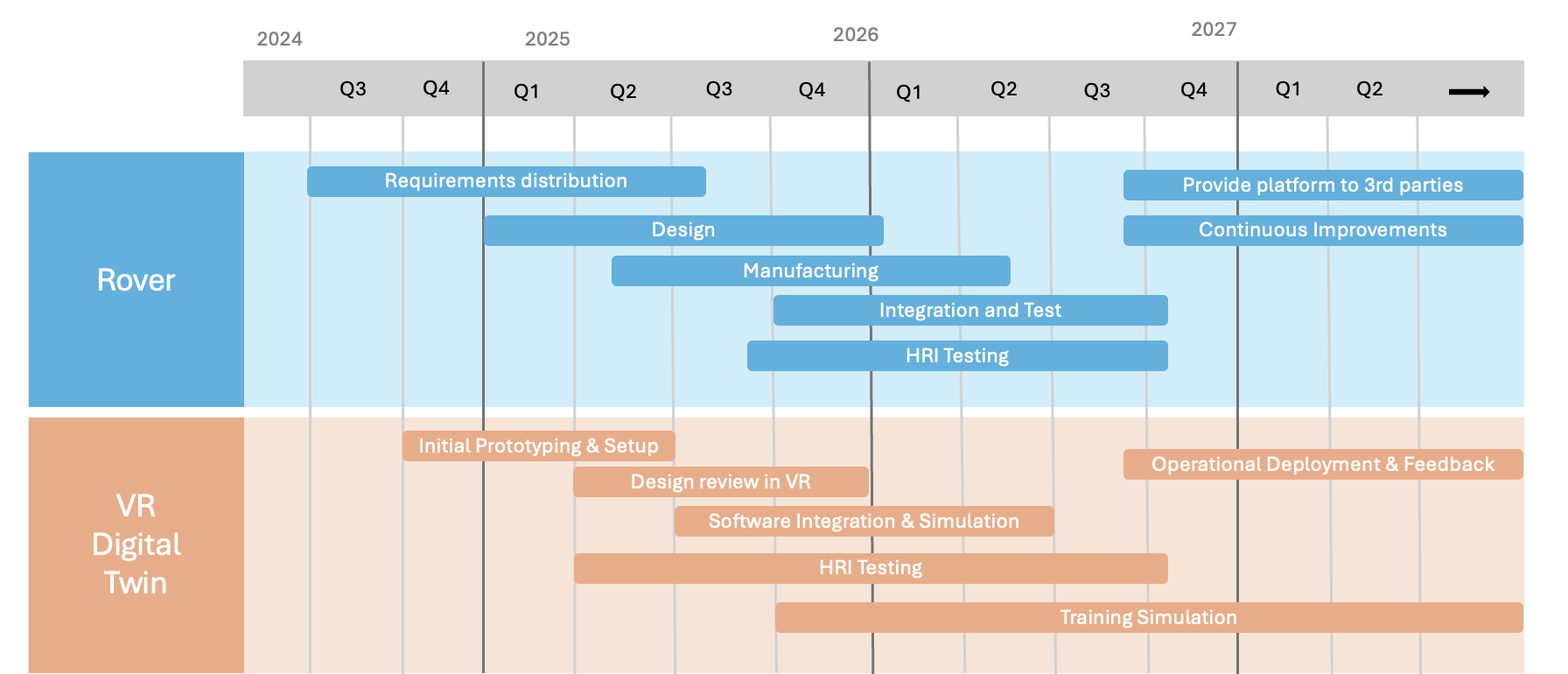
This combined roadmap helps understand that the VR system isn’t a post-hoc visualization tool, but a concurrent design and validation environment that grows with the rover, aiding every phase – from concept to training and operations.
2 VR Solution
2.1 General Information of Solution
The application of VR environments in the context of space exploration can take on different forms, which has already been explored in related works: It can be a tool to evaluate early designs in the prototyping and design phase [20], support and facilitate mission training as shown for lunar EVAs, be used for learning the operation and interaction with robotic components and be used to conduct simulations and tests on the software of interacting or inter-actable agents such as a lunar rover.
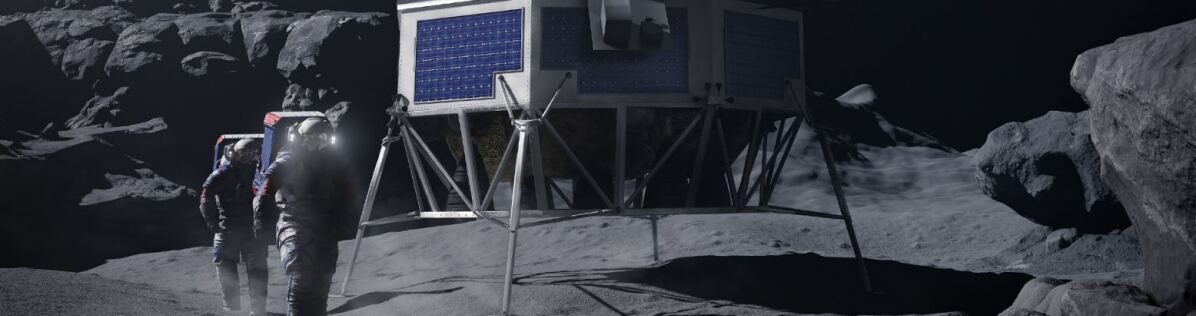
All of these use cases have been applied to different engineering projects at different stages of design and development, while having intersecting elements. In the context of the CASIMAR project, which is currently in the mission and requirements definition phase, a VR environment is proposed that leverages the above-mentioned use cases into one singular environment. This environment will support the CASIMAR project throughout the different phases up until the rover operations while growing along with it. The approach takes inspiration from the works of Nilsson et al. and their EL3 study. Here, the team examined the design concept of the European Large Logistics Lander (EL3; now the argonaut lander) in VR [20], [21].
This section of the current study defines the scope of the VR environment and the iterative additions and milestones for each stage. The purpose for the respective development phases is described with a particular focus on human-computer interaction (HCI) and human-robotic interaction (HRI) aspects. Subsequently the design phases are being referred to by ECSS-M-ST-10C from phase B to E, which describe phases of preliminary project definition (B), detailed project definition (C), qualification and production (D), as well as utilization (E).
2.2 Design Phase
The first proposed application for the VR environment concerns design phases from early prototyping up until later design stages.
2.2.1 Early Design Phase
The first proposed application for the VR environment starts with the early design stage of the rover (phase B), about exploring fundamental design choices such as components, dimensions and part placement, and aims at supporting the design of the rover up to phase D, where the configuration of the rover is frozen and the onboard software is being developed. The early design phase goal is to allow for continuous reviews of the rover’s design through visualization and (limited) interaction.
During these early design phases, human-robot interaction will also be enhanced by the iterative nature of the VR environment. The team will be able to quickly visualize and modify rover prototypes, enabling rapid prototyping and testing of interactions. Early user research will guide design decisions, reinforcing the project’s agile development approach.
Within the EL3 study [20] the authors describe similar experiences of how VR can foster a more iterative, user-centric approach to development. They describe how an interactive simulation in VR provided the means for rapid assessment and iterative development without the typical costs associated with real-world prototype deployments. For example, through VR, user feedback could be collected in early stages of the project life cycle, benefiting the development teams and anticipating potential problems and lower risks. They furthermore describe the suitability of VR for recreating aspects of the lunar environmental conditions while allowing assessments of design concepts. They conclude that using VR both improved the agility of their project teams, as well fostered a user-centric approach to the development of the EL3.
2.2.2 Late Design Phase
The later design assumes a frozen configuration of the rover (phase D) and will shift the subject of the investigation from the rovers hardware to the software. It is intended to extend the VR environment with the capability to emulate the rovers behavior. The rovers operating system is going to be ROS 2 which is a set of software libraries and tools for building robot applications. This requires the chosen engine for development of the VR application to have existing functional libraries that can emulate a rover based on given ROS 2 code to a satisfying degree. [12] have implemented a simple rover into Unity with ROS 2 for the rover control, encompassing autonomous behavior and collection of sensory data.
This also warrants special attention of the rover model to not only visually mimic the proposed hardware design but also describe its physical properties sufficiently enough to serve as a simulation environment. Conversely, the environment ought to also interact with simulated sensors of the rover to yield comparable data to what an analogue environment would produce. The sim-to-real gap remains a challenge and results will have to be cautiously reviewed and counter-verified with an analogue setup. However, for coarse behavior verification, this approach should provide useful results and in addition also serves as a safe space to test out the software, particularly when interacting with an astronaut.
2.2.3 Design Phase Requirements
To ensure the displayability of the rover model, the engine used for the VR environment is required to have either direct support of the data-types chosen for modeling the rover, or middle-ware that can convert to an engine-supported data-type. This is particularly important as this application is intended to be used concurrently in the design process throughout its stages in contrast to the works of Nilsson et al. [20], thus warranting a data-pipeline from the drawing board into the VR environment.
One key feature explored by Nilsson et al. is to mimic the environment where the subject of design and review, in this case the CASIMAR rover, is going to be deployed in. This would primarily be the LUNA hall and the lunar surface around Shackleton crater at the lunar south pole. Correspondingly, it is the aim to implement these environments with a high degree of accuracy with special attention to the lighting as a major factor of usability in real conditions [20]. The use is intended for immediate exploration of the design to experience small and incremental changes as well as for bigger evaluation studies, particularly those preceding the preliminary and critical design review at the end of phase B and C.
To cover all behavior, a list of scenarios, modular or stringed together, will have to be devised, that cover all the rovers interactions, as well as HRI-aspects and provide insightful observations as a means to test the rover.
2.3 Training Phase
This phase is not directly related to the ECSS standardised project phases, as these are mainly concerned with the development and deployment of the product. Rather, it is concurrent with the end of verification and production and, in particular, utilisation (phases D and E). After supporting the design phase of the project, the VR environment is planned to support the training of astronauts in interaction with the rover. Virtual reality bears various advantages that could faciliate the training phase.
2.3.1 VR and Game-Based Learning
The proposed setup from the design phase effectively poses a digital twin that emulates the rovers behavior in an engine conceived to facilitate interaction in the form of games which often challenge the user into expanding a skill set iteratively. This creates opportunities for game-based learning (GBL).
One form of GBL is gamification, i.e. the usage of game design elements in non-game contexts [8]. The main goal is to promote motivation and engagement in learning through motivational affordances and a gameful experiences [13]. Alsawaier summarized in 2018 that “in traditional instructional methods, the students earn their grades based on a performance of a task as they demonstrate achievement, whereas in gamification the effort is rewarded, with badges or points even when the objective is not completed” [1]. Good gamification rewards effort and not the sole completion of a goal.
According to several literature reviews, gamification has positive effects on motivation, learning outcomes, cognitive and social outcomes. Positive effects were found in different domains, e.g. work and education, and for both intrinsic and extrinsic motivation (e.g. [23], [33], [16]).
The proposition therefore is to extend the VR environment for this phase with gamification elements to provide intuitive and interactive training with the rover. As inspiration serves [7], a VR environment called JIVE (Joint Investigation into Virtual reality for Education) about teaching controls and important aspects of the operation of the Space Station Remote Manipulator System (SSRMS), a robotic arm on the ISS. This work leverages several techniques, particularly for memory retention as the main focus of the paper. The main idea of JIVE is to build up knowledge and experience step by step in isolated lectures and exercises, which build on each other and finally tests the users skill with an array of manipulation tasks with the arm.
The intent is to create a similar setup that also includes missions that can reuse the scenarios from the late design phases. For the mission training the work of [12] proved insightful in providing an example sketch for a mission.
2.3.2 VR and Cognitive Load
Another benefit of VR is the total control over the learning environment. Within multimedia learning, the concept of cognitive load (CL) is critical. Cognitive load theory [25] describes the limited resources of the working memory, limiting the amount of information that can be processed.
The theory describes three types of cognitive load: Intrinsic cognitive load that arises from the task itself, extraneous cognitive load that arises due to external factors or distractions within the learning material and germane cognitive load that is result of learning processes. Generally speaking, germane cognitive load needs to be maximized, while extraneous cognitive load needs to be minimized.
Within VR, there are somewhat mixed results on the effects on cognitive load [14], but the authors pointed out that the properties of the VR environment are crucial for this. Generally speaking, cognitive load was reduced when the VR environment was closer to the real space. It also was able to enhance users’ interests and motivations and also gave them a sense that they were truly, physically present in the environment which promoted positive attitudes and reduced distractions and CL.
As VR is an immersive technology where every aspect of what is being perceived can be controlled, the cognitive load of a learning situation can be reduced, and overload can be mitigated. The reduced cognitive load can therefore result in better learning outcomes. In three studies from Andersen and colleagues, positive effects on CL for an VR simulation in surgical training were found [2]. They attributed the reduced CL to the fact that many aspects of real-life surgical training, which are not important to the training itself but require attention, were missing in VR, freeing up resources for learning.
In a similar vein, better performance in a Stroop test and less CL within VR were found. These results were attributed to the elimination of external distractions within VR [4]. In another experiment, these findings were replicated and extrapolated to psychological, subjective and behavioral measures [3]. Here, they found that VR does not impose a higher cognitive load on any of these measures which underlines the suitability of VR for training and learning purposes.
2.3.3 Training Phase Summary
To summarize, the theorized advantages of training in VR are manifold: The consolidation of knowledge about the rover in a distilled and easy-to-learn form and the ability to train with the rover without requiring the hardware or an instructor. These aspects become accentuated for a distributed team as within the CASIMAR project. This may also serve to emulate missions beforehand and review the procedure on feasibility as well as train complex sequences before following them in costly and risky EVAs to minimize failure.
2.4 Operations Phase
The final proposed addition to the VR environment is to facilitate operations of the actual rover during its utilization (phase E). Part of the CASIMAR mission profile is the operations of the rover by a ground support team.
As the VR environment already poses a digital twin, the last piece to allow for this capability is the synchronization of the real rover with its digital twin. This consists of two parts: Updating the digital twin with telemetry and the system states of the analog rover as well as to inform the operator about what the rover senses and what the state of the rover is.
Ideally, they behave the same in the same environment, however, the digital environment can only ever realistically be an approximation and it is to be expected that the analog environment persistently changes due to the rovers actions, but also especially with an accompanying astronaut. To minimize desynchronization between both rovers, frequent updates are required but are also possibly straining the data budget. On the other hand for effective control of the rover, commanding functionality needs to be added to the VR environment as well: Inputs from the VR appliances, either directly or interpreted by the virtual rover, need to be translated into telecommands and sent to the analog rover. This may be the most experimental of all proposed features.
3 Limitations
In the current research landscape, VR emerges as an effective tool for human-robot interaction and development processes within the space sector. While providing unmatched opportunities, there will be challenges and limitations on the way.
As an example, not all HRI metrics seem to be equally applicable in reality vs. in virtual reality. Especially the topics of proxemics seem to yield differences. People seem to give real robots more personal space and are also less worried about security issues in virtual reality [9] [18]. While being a limitation, this could also pose an opportunity. As people worry less about their safety and are ready to closer engage with robots, this could support the learning and training aspect of the project. Still, the differences in proxemics and safety perception need to be considered [20].
Furthermore, within the EL3 study, the authors identified further limitations of VR as means for development. They name the lack of perceptional information (haptic feedback, perceived lunar gravity, mass, inertia) and spacesuit movement constraints as drawbacks of the VR approach which also need to be considered during the development of the VR prototyping environment for the rover [20].
The operational phase of the project will also introduce challenges of which some are difficult to foresee. Some known roadblocks include the challenge of synchronization between the digital twin and the real environment. This synchronization includes the rover’s state and environment within the lunar landscape. From the beginning, the analog rover, it’s surroundings as well as the independently acting astronaut need to be represented.
Another challenge concerns the commanding of the rover as its functionalities need to be efficiently mapped onto available input devices. While tele-operation via VR has been a standard in the related field of drone control, i.e. in the form of first person view (FPV) drones, it is a somewhat novel concept to astronautics. Depending on the final design of the rover, the different moving parts and adjustable systems may have varying importance to the operability of the rover. Once the design of the rover has been concluded and an operational concept is devised, every possible action of the rover needs to be identified and mapped to the selected input devices, e.g. VR controllers, game-pads or mouse and keyboard.
Since the rover is still in the early design stages and the mission statement of developing a platform for any type of payload with yet unknown actuation, the action-space of the rover may only be estimated at this stage, based on similar rover designs. Particularly, designing for exchangeable payload specific controls may prove very challenging. In the end as much as possible shall be controllable by VR input-devices to make tele-operations through VR viable. For this, Mixed Reality (MR) may also be considered to include a conventional operator-console or other desired input-devices into the environment.
Lastly, the maybe biggest challenges stems from the nature of the project: As a a self-organized student project, progress mostly relies on volunteer work of students in their free time. The project therefore continuously advertises to grow and maintain a sizable team as fluctuation of team members are expected. Furthermore, work packages and milestones need to consider university cycles as semester breaks and exam phases. To mitigate these challenges, parts of the projects will be tied to required university work as term papers or theses.
4 Outlook
While still in the concept phase, this holistic approach to VR holds the potential to support engineering projects throughout their entire life cycle. From enhancing early design through rapid prototyping and user testing, to validating designs and evaluating human-robot interaction in later phases, there are many ways of how a prototyping environment may enrich the development process. With head-mounted VR providing fully immersive experiences, the ability to control every aspect of the environment is a major advantage – particularly in the field of astronautics, where authentic testing environments are hard to reach. Not only is it possible to simulate the real environments of the use case, but special cases, like high stress situations, can be simulated as well. It is therefore easy to see how VR can support the design and development of various projects within the space sector.
However, the outlined functions are still in the concept phase. The actual realization of these features will reveal their true value by time they are developed alongside of the analog CASIMAR rover. Unforeseen challenges as well as new developments in this state-of-the-art application of VR will influence the final product. In anticipation, adaptations of the application to incorporate all valuable insights from research during development are expected.
That said, the potential applications of VR outlined here only scratch the surface. Particularly underexplored are scenarios involving cognitive strain such as how stress, attention allocation, and mental workload influence human performance. It is easy to imagine how VR could foster training in high-strain situations, preparing humans even further for the challenges of space exploration. Furthermore, extending VR with augmented reality (AR) as in [6] could be explored as well. AR may be employed during the operations phase for either the astronaut or the rover-operator. The operation scenarios could then be enriched with rover sensory data.
In conclusion, the integration of VR technology into the design, testing, and operation of space systems may be a transformative step towards a more agile, informed, and human-centered exploration beyond Earth. This project aims to contribute meaningfully to this new emerging approach, integrating VR in an all-encompassing, holistic way.
References
- [1] Raed S. Alsawaier. The effect of gamification on motivation and engagement. The International Journal of Information and Learning Technology, 35(1):56–79, 2018-01-02Z. doi:10.1108/IJILT-02-2017-0009.
- [2] Steven Arild Wuyts Andersen, Konge , Lars, and Mads Sølvsten and Sørensen. The effect of distributed virtual reality simulation training on cognitive load during subsequent dissection training. Medical Teacher, 40(7):684–689, July 2018. doi:10.1080/0142159X.2018.1465182.
- [3] A. Armougum, E. Orriols, A. Gaston-Bellegarde, C. Joie-La Marle, and P. Piolino. Virtual reality: A new method to investigate cognitive load during navigation. Journal of Environmental Psychology, 65:101338, October 2019. doi:10.1016/j.jenvp.2019.101338.
- [4] Sara Baldoni, Mahmoud Z. A. Wahba, Marco Carli, and Federica Battisti. A Study on the Impact of Virtual Reality on User Attention. In 2023 IEEE International Conference on Acoustics, Speech, and Signal Processing Workshops (ICASSPW), pages 1–5, June 2023. doi:10.1109/ICASSPW59220.2023.10193220.
- [5] Leonie Bensch, Andrea Casini, Aidan Cowley, Florian Dufresne, Enrico Guerra, Paul de Medeiros, Tommy Nilsson, Flavie Rometsch, Andreas Treuer, and Anna Vock. Applied User Research in Virtual Reality: Tools, Methods, and Challenges, February 2024. doi:10.48550/arXiv.2402.15695.
- [6] Leonie Bensch, Tommy Nilsson, Jan Wulkop, Paul Demedeiros, Nicolas Daniel Herzberger, Michael Preutenborbeck, Andreas Gerndt, Frank Flemisch, Florian Dufresne, Georgia Albuquerque, and Aidan Cowley. Designing for Human Operations on the Moon: Challenges and Opportunities of Navigational HUD Interfaces. In Proceedings of the 2024 CHI Conference on Human Factors in Computing Systems, CHI ’24, pages 1–21, New York, NY, USA, May 2024. Association for Computing Machinery. doi:10.1145/3613904.3642859.
- [7] Martial Costantini, Christopher Scott, Lionel Ferra, Sommy Khalaj, Tommy Nilsson, Stephane Ghiste, Hanjo Schnellbaecher, Leonie Becker, and Andrea Emanuele Maria Casini. Using the method of loci in virtual reality to reduce robotic operations training time of astronauts. In Proceedings of the International Astronautical Congress, IAC, 2022.
- [8] Sebastian Deterding, Dan Dixon, Rilla Khaled, and Lennart Nacke. From game design elements to gamefulness: Defining "gamification". In Proceedings of the 15th International Academic MindTrek Conference: Envisioning Future Media Environments, MindTrek ’11, pages 9–15, New York, NY, USA, September 2011. Association for Computing Machinery. doi:10.1145/2181037.2181040.
- [9] Mihai Duguleana, Florin Grigorie Barbuceanu, and Gheorghe Mogan. Evaluating Human-Robot Interaction during a Manipulation Experiment Conducted in Immersive Virtual Reality. In Randall Shumaker, editor, Virtual and Mixed Reality - New Trends, pages 164–173, Berlin, Heidelberg, 2011. Springer. doi:10.1007/978-3-642-22021-0_19.
- [10] Rachel L. Elkin, Jeff M. Beaubien, Nathaniel Damaghi, Todd P. Chang, and David O. Kessler. Dynamic Cognitive Load Assessment in Virtual Reality. Simulation & Gaming, 55(4):755–775, August 2024. doi:10.1177/10468781241248821.
- [11] ESA. ESA - CDF. URL: https://www.esa.int/Enabling_Support/Space_Engineering_Technology/CDF.
- [12] Giacomo Franchini, Brenno Tuberga, and Marcello Chiaberge. Advancing lunar exploration through virtual reality simulations: a framework for future human missions. arXiv preprint arXiv:2410.17132, 2024.
- [13] Juho Hamari, Jonna Koivisto, and Harri Sarsa. Does Gamification Work? – A Literature Review of Empirical Studies on Gamification. In 2014 47th Hawaii International Conference on System Sciences, pages 3025–3034, January 2014. doi:10.1109/HICSS.2014.377.
- [14] Jining Han, Qiyu Zheng, and Yunan Ding. Lost in virtual reality? cognitive load in high immersive vr environments. Journal of Advances in Information Technology, 12(4), 2021.
- [15] Sandra G. Hart and Lowell E. Staveland. Development of NASA-TLX (Task Load Index): Results of Empirical and Theoretical Research. In Peter A. Hancock and Najmedin Meshkati, editors, Advances in Psychology, volume 52 of Human Mental Workload, pages 139–183. North-Holland, January 1988. URL: https://www.sciencedirect.com/science/article/pii/S0166411508623869.
- [16] Fengfeng Ke. Designing and integrating purposeful learning in game play: A systematic review. Education Tech Research Dev, 64(2):219–244, April 2016. doi:10.1007/s11423-015-9418-1.
- [17] Yu Lei, Zhi Su, Chao Cheng, Yu Lei, Zhi Su, and Chao Cheng. Virtual reality in human-robot interaction: Challenges and benefits. era, 31(5):2374–2408, 2023. doi:10.3934/era.2023121.
- [18] Rui Li, Marc van Almkerk, Sanne van Waveren, Elizabeth Carter, and Iolanda Leite. Comparing Human-Robot Proxemics Between Virtual Reality and the Real World. In 2019 14th ACM/IEEE International Conference on Human-Robot Interaction (HRI), pages 431–439, March 2019. doi:10.1109/HRI.2019.8673116.
- [19] Mahsa Nasri, Mehmet Kosa, Leanne Chukoskie, Mohsen Moghaddam, and Casper Harteveld. Exploring Eye Tracking to Detect Cognitive Load in Complex Virtual Reality Training. In 2024 IEEE International Symposium on Mixed and Augmented Reality Adjunct (ISMAR-Adjunct), pages 51–54, October 2024. doi:10.1109/ISMAR-Adjunct64951.2024.00022.
- [20] Tommy Nilsson, Flavie Rometsch, Leonie Becker, Florian Dufresne, Paul Demedeiros, Enrico Guerra, Andrea Emanuele Maria Casini, Anna Vock, Florian Gaeremynck, and Aidan Cowley. Using Virtual Reality to Shape Humanity’s Return to the Moon: Key Takeaways from a Design Study. In Proceedings of the 2023 CHI Conference on Human Factors in Computing Systems, CHI ’23, pages 1–16, New York, NY, USA, April 2023. Association for Computing Machinery. doi:10.1145/3544548.3580718.
- [21] Tommy Nilsson, Flavie Rometsch, Andrea Emanuele Maria Casini, Enrico Guerra, Leonie Becker, Andreas Treuer, Paul de Medeiros, Hanjo Schnellbaecher, Anna Vock, and Aidan Cowley. Using virtual reality to design and evaluate a lunar lander: The el3 case study. In CHI Conference on Human Factors in Computing Systems Extended Abstracts, pages 1–7, 2022.
- [22] Kamal Oudrhiri, James M. Kohel, Nate Harvey, James R. Kellogg, David C. Aveline, Roy L. Butler, Javier Bosch-Lluis, John L. Callas, Leo Y. Cheng, Arvid P. Croonquist, Walker L. Dula, Ethan R. Elliott, Jose E. Fernandez, Jorge Gonzales, Raymond J. Higuera, Shahram Javidnia, Sandy M. Kwan, Norman E. Lay, Dennis K. Lee, Irena Li, Gregory J. Miles, Michael T. Pauken, Kelly L. Perry, Leah E. Phillips, Diane C. Malarik, DeVon W. Griffin, Bradley M. Carpenter, Michael P. Robinson, Kirt Costello Sarah K. Rees, Matteo S. Sbroscia, Christian Schneider, Robert F. Shotwell, Gregory Y. Shin, Cao V. Tran, Michel E. William, Jason R. Williams, Oscar Yang, Nan Yu, and Robert J. Thompson. NASA’s Cold Atom Laboratory: Four Years of Quantum Science Operations in Space, May 2023. Comment: 13 pages, 7 figures. Presented at SpaceOps 2023 Conference. doi:10.48550/arXiv.2305.13285.
- [23] Katie Seaborn and Deborah I. Fels. Gamification in theory and action: A survey. International Journal of Human-Computer Studies, 74:14–31, February 2015. doi:10.1016/j.ijhcs.2014.09.006.
- [24] Aaron Steinfeld, Terrance Fong, David Kaber, Michael Lewis, Jean C. Scholtz, Alan Schultz, and Michael Goodrich. Common Metrics for Human-Robot Interaction. NIST, 2006. URL: https://www.nist.gov/publications/common-metrics-human-robot-interaction.
- [25] John Sweller. Cognitive Load During Problem Solving: Effects on Learning. Cognitive Science, 12(2):257–285, 1988. doi:10.1207/s15516709cog1202_4.
- [26] unknown. | European Cooperation for Space Standardization. URL: https://ecss.nl/.
- [27] unknown. Elements. URL: https://luna-analog-facility.de/en/for-users/elements/.
- [28] unknown. Images. URL: https://luna-analog-facility.de/en/for-media/images/.
- [29] Valeria Villani, Beatrice Capelli, and Lorenzo Sabattini. Use of Virtual Reality for the Evaluation of Human-Robot Interaction Systems in Complex Scenarios. In 2018 27th IEEE International Symposium on Robot and Human Interactive Communication (RO-MAN), pages 422–427, August 2018. doi:10.1109/ROMAN.2018.8525738.
- [30] Vincent Weistroffer, Alexis Paljic, Philippe Fuchs, Olivier Hugues, Jean-Paul Chodacki, Pascal Ligot, and Alexandre Morais. Assessing the acceptability of human-robot co-presence on assembly lines: A comparison between actual situations and their virtual reality counterparts. In The 23rd IEEE International Symposium on Robot and Human Interactive Communication, pages 377–384, August 2014. doi:10.1109/ROMAN.2014.6926282.
- [31] Luc Wijnen, Paul Bremner, Séverin Lemaignan, and Manuel Giuliani. Performing Human-Robot Interaction User Studies in Virtual Reality. In 2020 29th IEEE International Conference on Robot and Human Interactive Communication (RO-MAN), pages 794–794, August 2020. doi:10.1109/RO-MAN47096.2020.9223521.
- [32] Wikipedia. Concurrent engineering. Wikipedia, September 2023. URL: https://en.wikipedia.org/w/index.php?title=Concurrent_engineering&oldid=1173659070.
- [33] Joy Xu, Aaron Lio, Harshdeep Dhaliwal, Sorina Andrei, Shakthika Balakrishnan, Uzhma Nagani, and Sudipta Samadder. Psychological interventions of virtual gamification within academic intrinsic motivation: A systematic review. Journal of Affective Disorders, 293:444–465, October 2021. doi:10.1016/j.jad.2021.06.070.