A Human-Computer Interaction Perspective to Drive Change towards Sustainable Future
Abstract
In our everyday lives, people are constrained by routines, social expectation, and the soft and hard technologies and infrastructures that shape this. The way they approach things, think about things, are expected to be, and are governed is rarely questioned in terms of the finite nature of resources nor impacts of this. The challenge is to change the way people think and behave, and to reshape these very tools and expectations. However, change is exhausting, challenging, confronting, and requires support.
Technology can provide such a support, BUT it would be naïve to assume that this change will happen without friction, without dispute, and without constraints. But on the other hand, most of the conveniences that need to be changed are predicated on a false and falacious assumption that we can go as much, as fast, as high, and as pleasantly as we want without any regard for others. In this workshop, we explored how human computer interaction can facilitate, require, or even enforce the path we should take to use less, do slower, or act differently. In this Dagstuhl Perspectives Workshop we discussed the contribution that HCI can make in light of the SDGs and what role HCI must play in informing and changing the behavior of individuals and collectives.
Keywords and phrases:
Dagstuhl Perspectives WorkshopSeminar:
February 26 – March 3, 2023 – https://www.dagstuhl.de/230922012 ACM Subject Classification:
Human Computer Interarction ; Hardware 3D integrated circuits ; Software and its engineering Software design engineering ; Networks Network performance analysisCopyright and License:
![[Uncaptioned image]](x1.png) Except where otherwise noted, content of this report is licensed under a
Creative Commons BY 4.0 International license
Except where otherwise noted, content of this report is licensed under a
Creative Commons BY 4.0 International license
1 Executive Summary
Susanne Boll (University of Oldenburg,
DE)
Kaisa Väänänen (Tampere University, FI)
Nic Bidwell (University of Melbourne, AU International University of Management – Windhoek, NA)
Marc Hassenzahl (University of Siegen, DE)
License: ![[Uncaptioned image]](x2.png) Creative Commons BY 4.0 International license © Susanne Boll, Kaisa Väänänen, Marc
Hassenzahl, and Nicola Bidwell
Creative Commons BY 4.0 International license © Susanne Boll, Kaisa Väänänen, Marc
Hassenzahl, and Nicola Bidwell
Background and motivation
Sustainability from an ecological, social and economic perspective requires more attention than ever. To address and to implement the United Nation’s set of sustainability goals is of utmost importance to all scientific communities, including information technology researchers. As a multidisciplinary field located within information technology, Human-computer interaction (HCI) constantly transfers knowledge and skills between the technically-oriented computer science, and psychology, social sciences, design, as well as other disciplines related to sustainability, such as environmental sciences. HCI’s focus embeds technology into personal and societal practices and, thus, greatly influences the way technology is used in everyday life. At the same time, each new technology impacts the way we live. It shapes people’s behavior and experiences. Through this mutual relationship, technological innovations have a great power to transform the world to be more ecological, resource-efficient, and inclusive. Not only can technologies be more resource-friendly, but also they can offer more ecological and social ways of interacting with the world. As a field, HCI is positioned to conceptualize, design and evaluate digital tools, able to suggest and to support the transformation of current into more sustainable lifestyles. Yet, while in principle HCI has all a field needs to contribute to a more sustainable future, it only hesitantly takes on the challenge of establishing sustainability at the heart of designing interactive information systems.
While sustainability is a global goal and needs many stakeholders from countries, organizations, and companies to make the transformation into sustainable societies happen, there is a large potential of individuals to make behavioral changes and contribute to sustainability as an individual and a collective. Digital interactive technology can play a major role in informing, supporting, reflecting, and acting in their everyday life and their individual societal and cultural context. However, this is not a single behavior change challenge in which we just have to offer a mobile app nudging us and that’s it. Making such changes, taking different decisions comes with a large number of tensions such as who decides what the better lifestyle would be, and who could afford that change in their individual context.
A wider view on sustainability – the UN sustainability goals
Transformation requires goals. A good starting point for central requirements of sustainability are the UN sustainability goals. The 2030 Agenda for Sustainable Development, [1], adopted by all United Nations Member States in 2015, provides a shared blueprint for peace and prosperity for people and the planet, now and in the future. This agenda “is a plan of action for people, planet, and prosperity” and forms “universal goals and targets which involve the entire world, developed and developing countries alike.” At its heart are the 17 Sustainable Development Goals (SDGs), which shall provide direction to transform the world via actionable objectives, from ending poverty to ensuring access to clean water and clean energy, to education and decent work for all. The goals assume that ending poverty and other deprivations must go hand-in-hand with strategies that improve health and education, reduce inequality, and spur economic growth – all while tackling climate change and working to preserve our oceans and forests.
Digitalization will play an important, even transformative, role in meeting the SDGs, and so can the field of HCI. An open challenge though is to translate these goals into actionable HCI evaluation and design practice, academic and professional, alike.
Participants and workshop approach
This workshop brought together scientists related to HCI and sustainability for this Dagstuhl Perspectives Workshop. We built on the United Nations’ Sustainable Development Goals (SDGs) to identify central opportunities for HCI to advance sustainability in research, education, and everyday information systems. Through a series of interactive discussions, we explored the tensions around a more sustainable map of research topics and approaches suitable for advancing sustainability through HCI research. As the main outcome, the workshop will formulate a manifesto and roadmap for Human-Computer Interaction contributing to our common sustainable future. The core questions of the Perspectives Workshop were
-
When and where is sustainability negotiable? We can observe that humans, and particularly the most disadvantaged, hardly have a chance of a liveable future. What does this mean for designing interactive systems that support sustainable behavior? Is sustainable behavior actually negotiable or a must for all?
-
How do we address conflicts between people’s individual goals, business goals, and global sustainability goals?
-
What can HCI offer for those who cannot afford a more sustainable lifestyle? Lifestyle HCI sustainabiliteers who can feel better versus an inclusive approach? How do we model the contextual factors of individuals who make / do not make sustainable decisions?
-
Can interactive technology help people who want to change to make changes in their lifestyle towards a more sustainable behavior? We contrasted technology that tells people what to do with technology in which persons are involved in the steps of behavior change.
-
Can technology outbalance injustice in the situations in which sustainability challenges are caused by a few?
-
How can technology help people compensate differently, adequately, and fairly?
Results
The 26 participants from all over the world were bringing in different perspectives to the workshop not only from their scientific and methodological background but also their lens of sustainability challenges in and from different areas of the world. Before the workshop, we collected a reading list of own and related work to set the stage for the discussions. For the workshop we invited three talks (online and in-person) that were setting the stage for the role of HCI for a sustainable future, the tensions of making sustainable and unsustainable individual decisions, and if we can or want to live with much less than today and still be happy. Based on the framework of the United Nations Sustainability Goals we discussed the tensions and opportunities for HCI contributing to sustainability for individual SDGs. We used speculative explorations of positive sustainable futures both from a technology perspective as well as from a research and practice perspective.
As a major result from the workshop:
-
1.
We selected and discussed SDGs in which HCI can make a contribution to a sustainable future and identified potential and open challenges which we will present in Section 5.
-
2.
We used speculation as a form of analysis of possible futures and developed three design fictions in group works in Section 6.
-
3.
We identified core areas where HCI can make a contribution to a sustainable future which will be elaborated and published in a manifesto.
References
- [1] Department of Economic United Nations and Social Affairs Sustainable Development. Transforming our world: the 2030 agenda for sustainable development, 2015.
2 Table of Contents
3 Keynotes
One goal of the Dagstuhl Perspectives Workshop was to focus on the role of interactive digital technology for a more sustainable future. We invited three different talks (online and in-person) that are setting the stage for the role of HCI for a sustainable future, the tensions of making sustainable and unsustainable individual decisions and if we can or want to live with much less than today and still be happy.
-
Sustainability and the role of digitization: As there is a large field and there is a large body of research about the key threats but also the key potentials digitization offers to this transformation, we set the stage by an invited talk about key facts, but also urban legend and opportunities for digital interactive technologies for a more sustainable future.
-
Sustainability and social injustice: We will invited a speaker from the context of the Climate in Color platform which explores and discusses the intersection of climate science and social justice and is making climate conversations more accessible and diverse. This will address the tensions of often unequally distributed effects and opportunities between different social groups.
-
Living with less: Key speakers in the field would argue that for a sustainable future we will need to let go of constant growth and consumption but transform into a post-growth economy. An invited talk will present the challenges and opportunities of a post-growth economy and the role digitization and interactive personal technology can play in this.
3.1 Community, technology and HCI: Towards sustainable societies?
Jacki O’Neill (Microsoft Africa Research Institute – Nairobi, KE,
Jacki.ONeill@microsoft.com)
License: Creative Commons BY 4.0 International license © Jacki O’Neill
Sustainability has tended to focus on individual rather than collective freedoms; the freedom to buy and consume and behave in certain ways, not the freedom of the world’s children and grandchildren to live in a world free of the devastation of climate change. While, many projects, including examples from Africa, use technology to address climate change by, for instance, collecting data, improving predictions or carbon sequestering, technology cannot magically solve climate change on it own. Large scale governmental, community and collective action are needed to really change the supply chains, markets and ways of living and working that support unsustainable consumerism and neoliberal ideas of “choice”. Since, democratic governments have little incentive to make changes that will be unpopular and impact perceived quality of life, they must be pushed into action. Technology can help to empower citizens in this conversation, e.g., using satellite imagery for storytelling. However, with some notable exceptions, most of sustainable HCI is driven by the interests and needs of the Global North and is about individual change. This not only misses the 80 percent of the worlds middle class who will live in Global South in 2030 but misses the point of addressing the global systemic problem. Framing design for sustainability as the informed choice of individual consumers arises because we conceive a market economy to be a natural, not a social, construction in the neoliberal world. As a result grants and funding cycles focus on interventionist innovations not problem solving and disciplinary boundaries determine the types of things we work on and separate research from practice and action. A possible answer is to engage with projects and people on-the-ground doing sustainability work, such as climate scientists and activists, government and policy makers, data scientists and engineers. This may require rethinking HCI and reframing its own isolated and individualist approach. Talk summarized by Nic Bidwell
3.2 Digital and sustainable: Shaping the twin transition
Stephan Ramesohl (Wuppertal Institut, Research Unit Digital Transformation, DE,
stephan.ramesohl@wupperinst.org)
License: Creative Commons BY 4.0 International license © Stephan Ramesohl
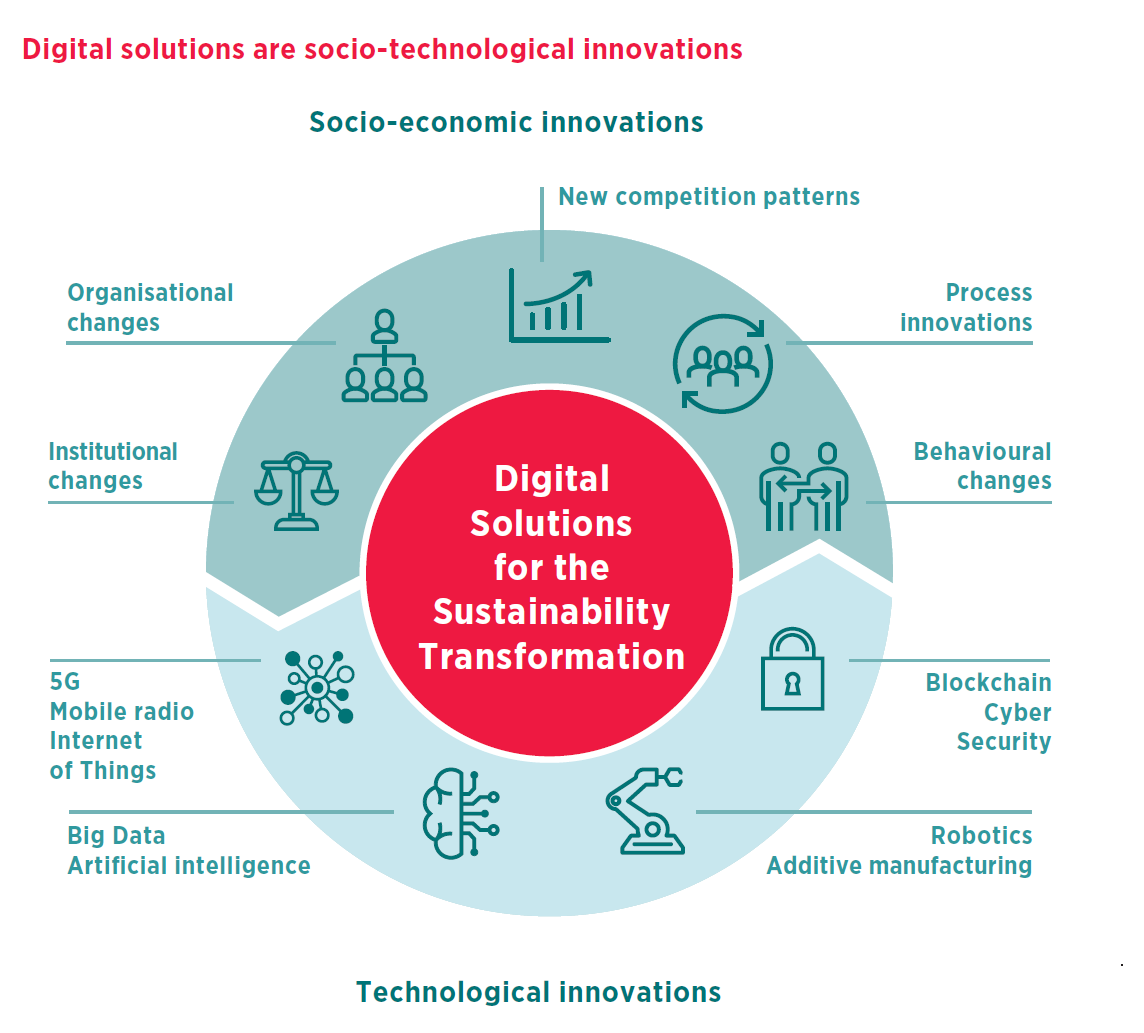
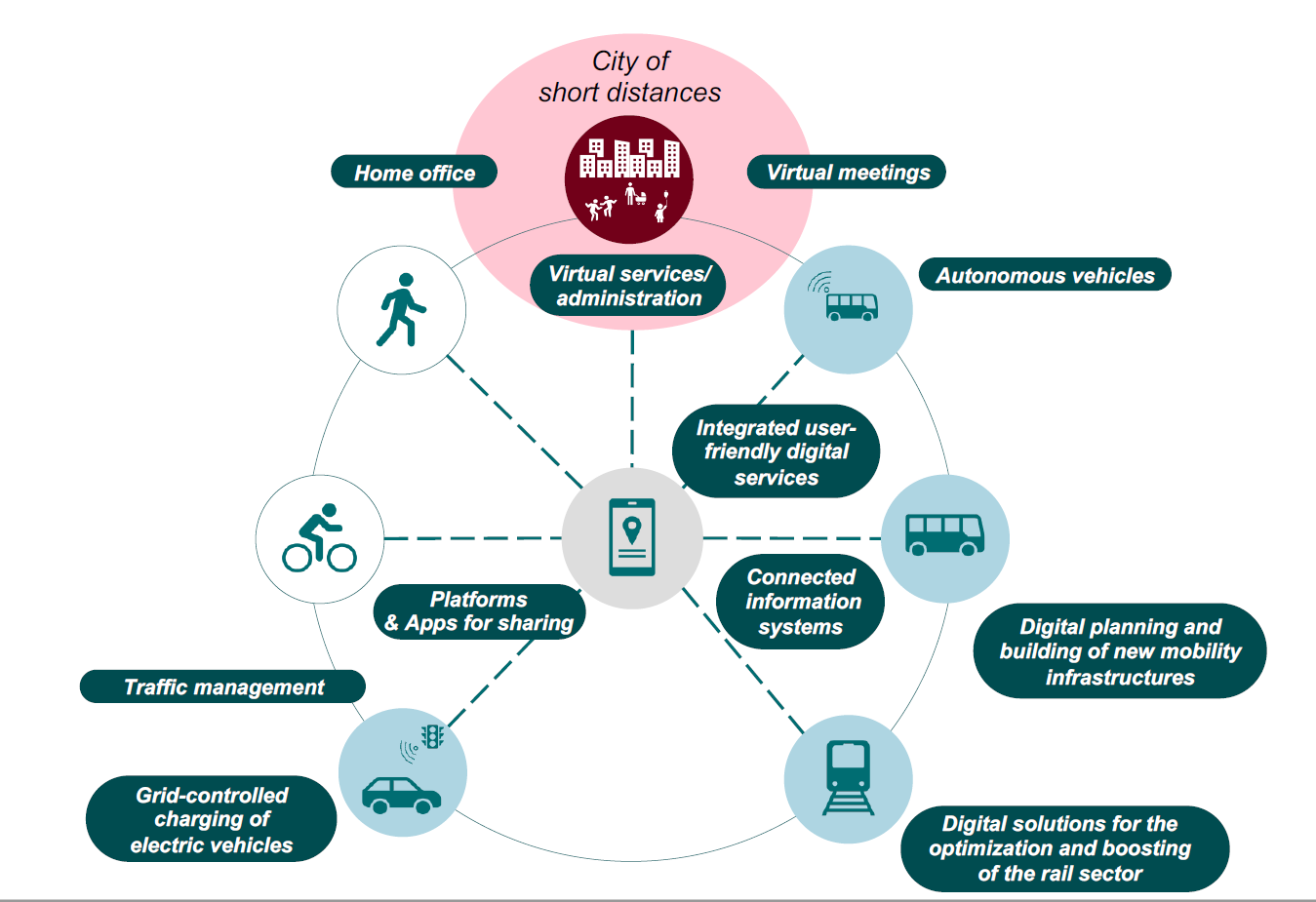
The talk provided insights into the challenges posed by anthropogenic climate change and discussed the role the digital could play in supporting the necessary transformations. Socio-economic and technological innovations must go hand in hand. Together they provide new opportunities for a transformation towards more sustainability. The talk presented two in-depth examples of how technology can support and drive socio-cultural change in the domain of personal mobility and business models for a circular economy. In general, digital technology must be underwood as a network of opportunities to shape everyday practices to be sustainable. In the mobility domain, for example, traffic management, sharing platforms, virtualisation (meetings, homeoffice), autonomous driving, digital government solutions, as well as new approaches to town planning together create a the transformation, which enables people to be less mobile, to choose eco-friendly modes of transportation (bike, walking, public transport) as well as to make necessary individual mobility more efficient. Talk summarized by Marc Hassenzahl
3.3 Torn Between Impulses and Reflection. Why Don’t You Just Let Me Carry On as Usual?
Matthias Laschke (University of Siegen, Interaction Design for Sustainability and Transformation, DE, matthias.laschke@uni-siegen.de))
License: Creative Commons BY 4.0 International license © Matthias Laschke
In light of the threatening consequences of anthropogenic climate change, it seems paramount to reduce individual energy consumption. For example, within the European Union, as much as 24 percent of the yearly energy is consumed by individual households. This is due to the many energy-intensive daily routines or activities of consumers within their households, such as heating, taking hot showers, or doing several courses of laundry a day. Thus, one way to counteract the consequences of climate change would be to reduce energy consumption of these activities, for example, by reducing the room temperature, showering more quickly, or by reducing the amount of laundry and its energy consumption. Unfortunately, consumers rarely act accordingly. A possible explanation is that climate objectives are very abstract and future-oriented goals and, therefore, not easily put into practice. In addition, the many energy-intensive daily activities offer direct gratification through immediate comfort, which will increase their execution. Therefore, consumers might need external support to follow and achieve the abstract goal of reducing individual energy consumption. As most of the energy-consuming activities are linked to or achieved through the use of technology, technology design is a possible leaver to foster behavior change and reduce individual energy consumption. For quite a while now, Human-Computer Interaction (HCI) studies how technology could change consumer behavior. Broadly, two different types of approaches are offered: (1) feedback and arguments to persuade consumers to behave differently (e.g., Persuasive Technology) or (2) situational interventions (i.e., “choice architectures”) to prevent impulsive actions and to disturb unconscious unwanted routines. The underlying assumption of persuasion is that users make rational decisions but lack the “right” information and knowledge to do so. From a psychological perspective, this approach is based on the precondition of a reflective system in which behavior emerges as the result of conscious decision-making. In the context of sustainable behavior, technologies designed according to this approach, for example, confront the user with information on how much hot water is consumed during a shower or visualize water as a limited amount that decreases. The underlying assumption of situational interventions is that people primarily do not act rationally but are driven by mostly unconscious impulses, automatic routines, and limited resources to make conscious decisions. In contrast to a reflective system, these approaches build upon an impulsive system in which behavior emerges from previously learned schemata. Technologies that implement this approach, for example, confront users with the choice between a bicycle or a car key to break routines or hide less sustainable choices and even remove them completely.
4 Abstracts
In alphabetical order.
4.1 Towards sustainable multimedia experiences
Katrien De Moor (Norwegian University of Science and Technology – Trondheim, Torgarden, NO, katrien.demoor@ntnu.no)
License: Creative Commons BY 4.0 International license © Katrien De Moor
My research focuses on human-technology experiences and in particular, multimedia and IoT-technology enabled experiences. My activities in these areas are grounded in human-centered approaches and focus on aspects related to the design, evaluation and use practices of different types of media: how can they be made more sustainable and trigger more sustainable use practices? How can we ensure that they are inclusive and put other ethical considerations at the core? More recently, I’m also working on user awareness (and lack of it) of the “invisible” carbon footprint of digital media. How can we support the exploration and uptake of concrete strategies and mechanisms that may help to trigger critical reflection and more conscious and responsible consumption (both from a well-being and environmental point of view)? And how can we – as researchers and educators – push stakeholders with decision power to take action? This week has given me hope and courage to help addressing these and some of the related big questions and challenges.
4.2 Designing sustainable digiphysical experiences
Markus Fiedler (Blekinge Institute of Technology – Karlshamn, SE, markus.fiedler@bth.se)
License: Creative Commons BY 4.0 International license © Markus Fiedler
Personally, I have been interested in the co-existence of ICT and sustainability for 1½ decades, and it has been interesting to see the engagement of some researchers on one side, and the reluctance of scientific communities to pick on the sustainability challenges coming with ICT. As designers of ICT applications and technologies that allow to bridge between various realities (on the continuum between physical and digital experiences), we have great opportunities to make differences in the ways that people perceive and upon sustainability issues. From own previous experience, quality and energy efficiency can well come together, and our knowledge in those areas can enable “Quality of Experience and Sustainability by Design”. In any case, it is very nice to see how the interest in sustainability issues within ICT is taking up speed, which gives hop for more sustainable solutions that enable more sustainable behaviour.
4.3 Situating HCI & moving the dial on sustainability
Adrian Friday (Lancaster University, GB, a.friday@lancaster.ac.uk)
License: Creative Commons BY 4.0 International license © Adrian Friday
Nearly 15 years ago, I recognised that I had become disatisfied that my research was centred around the creation of novel technologies, without addressing the ways in which these technologies were and are impacting society and the environment. I hadn’t fully appreciated at this time, and perhaps I still don’t, but there’s a deep relationship between technology, economics, society and environment – and also how technology can reinforce and even accelerate unsustainable growth. I went on to study energy use in the home, how we use energy to achieve thermal comfort, how technology can promote or negatively impact environmental and social justice in digitally mediated work, and ICT’s global impacts. This journey has helped me realise that digital technology is a tool for transformation, but it’s also political, economic and embedded almost invisibly in society. What are the roles for technology not just in optimising and tuning an unsustainable way of living; or in plugging supposed information deficits – but in really changing thinking; challenging and making visible the drivers of unsustainability; creating emphathy and radical coordinated action; and driving bold leadership and governance on climate. I enjoyed the perpsectives from meeting people from across the world variously engaged with climate and technology; plus the solidarity and kinship that we’re working together. This reminded me that the climate change impacts are urgent, global, collonial, and that technology also has a role in connecting us with those most impacted. A lasting impression is our “ecopill” design, which helped me confront the pervasive presumption that many (too many?) of us have the choice to consume at the expense of others. It is discomfiting that in the first world at least, we can only seemingly choose a sustainable future if we can afford and buy our way there as a consumer? How do we give space for other non-techno-centric, non-growth centred, and nature respecting paradigms?
4.4 On the Importance of Policy and Impact for Sustainable HCI
Jason Jacques (University of St. Andrews, GB, jtj2@st-andrews.ac.uk)
License: Creative Commons BY 4.0 International license © Jason Jacques
My work mainly focuses on the ethical application of labour and how technology influences decisions and lives. My recent work has focused on how our activities affect the environment. In our discipline we often resort to quantitative data before we accept the impact – which is challenging. The climate impact is colloquially settled, but the multifaceted impact is so broad. In many ways technology impacts policy. This has been a story/theme of the workshop. However, equally important is how policy impacts behaviour. I hope that this mutual feedback cycle can be capitalised on, and cause us to develop our technology to feed into this aspect to support a positive impact on sustainability, both for the community in the room – but also more broadly as our work influences colleagues, our institutions, and the wider world.
4.5 Sustainable HCI – Focusing on Interactions of Communities and Societies
Kirsikka Kaipainen (Tampere University, FI, kirsikka.kaipainen@tuni.fi)
License: Creative Commons BY 4.0 International license © Kirsikka Kaipainen
We need to broaden our understanding of people in different communities with different backgrounds in order to drive sustainable futures. Personally, this is one of the reasons I came to this workshop. Although all participants are working in the academic world, there are various perspectives and lived experiences to learn about. I’m also searching for the next best step to take in my professional world, where to best use my own resources for mitigating climate change and addressing social sustainability challenges. While individual level behavior change is important (and tech can definitely support it), it seems urgent to focus on interaction between different societal levels, such as how HCI could help in deliberative democracy, and also how to determine what kinds of “lifestyles” are okay for people: forming a big picture, looking at and analyzing people’s and communities’ footprints and handprints, providing informed decision support for decision-makers. Already, this workshop has given me a lot of food for thought.
4.6 An encouraging and hopeful exchange of diverse perspectives
Lenneke Kuijer (TU Eindhoven, NL, S.C.Kuijer@tue.nl)
License: Creative Commons BY 4.0 International license © Lenneke Kuijer
Ever since my PhD research, my work has situated itself at the touching points of design, domestic energy demand and social practice theories. When I moved to the TU Eindhoven’s Industrial Design Department this shifted to a stronger focus on interaction design. I find the HCI community very inspiring due to its diversity of perspectives and generally rigorous & constructive review culture. This exchange of diverse perspectives and constructive atmosphere is also something that I particularly appreciate about this workshop. Like the others present, I am deeply concerned about the state of the world and feel helpless often with regards to the things I can personally do to change this. I find it inspiring and stimulating to find others struggling with very similar challenges and emotions; it eases some of the pain and offers hope and inspiration. I believe HCI and I personally as a researcher and teacher can make a difference. Systemic understanding translated into concrete, strategic interventions can plan a key role here. Thank you very much.
4.7 Sustainability and Development
Neha Kumar (Georgia Institute of Technology – Atlanta, USA, neha.kumar@gatech.edu)
License: Creative Commons BY 4.0 International license © Neha Kumar
My research lies at the intersection of Human-Computer Interaction (HCI) and sustainable global development. I focus on care infrastructures, from global health informatics and integrating data-driven/AI approaches with care to care work(ers), employing care-based methods, as well as planetary care. Also in my role as serving president of SIGCHI, I work towards global inclusivity and (hopefully) a more sustainable ecosystem of HCI conferences. This workshop has been fantastic in bringing together such an incredible group of conversations on sustainability (and the broad, diffuse scope of this word) as well as the sustainable development goals all day yesterday. I plan to take back some of this energy to my research, teaching, and service responsibilities in my university and beyond. Looking forward to many more stimulating discussions over the next few days. Excellent as this experience has been, it would be fantastic to, next time, have/see more participation from those who live and work in the Global South – in Dagstuhl or elsewhere. Front of mind today, as I listen to Jacki O’Neill’s keynote talk, is how we can approach this work more radically, move towards more hybrid ways of operation, work towards doing more with less, and maybe doing less in some ways as well.
4.8 Designerly Approaches to Behavior Change
Carine Lallemand (University of Luxembourg, LU TU Eindhoven, NL,
c.e.lallemand@tue.nl)
License: Creative Commons BY 4.0 International license © Carine Lallemand
My research interests are mainly focused on experience design and evaluation methods, with a strong will to develop methods and tools that can be relevant for practitioners. As a scientist, I want to “equip” those who are currently designing technologies and shaping experiences of individuals, groups, communities, society.
I also have some experience working on topics related to behavior change for healthy lifestyles, especially sedentary office work or exercising motivation. These projects contribute to both physical and mental vitality. They rely on aesthetics of interaction principles and the use of data as a creative material. To question the status quo, I also enjoy exploring alternative ways of designing, for instance through critical and speculative design, the aesthetics of friction or slow technology.
The SDGs, I am most closely related to are: 3/ good health, and well-being 4/ quality education 8/ Decent work and economic growth
I am however excited to spend the week here in Dagstuhl discovering other perspectives and envisioning how we, HCI researchers, educators and citizens, could contribute to the sustainability challenges ahead.
4.9 Justice-led Technology Design for Biodiversity Conservation
Joycelyn Longdon (University of Cambridge, GB, jl2182@cam.ac.uk)
License: Creative Commons BY 4.0 International license © Joycelyn Longdon
My research interests are focused on co-designed/co-created technologies for tropical forest biodiversity conservation, specifically working with rural forest-fringe communities that are commonly excluded from conservation and technology research. I am currently working with bioacoustic technologies that use environmental sound recordings and machine learning to monitor biodiversity. Through interactive visualisation and participatory design methods, I hope to build an interface that acts as a boundary object between conservationists and forest communities and addresses tensions that arise with the “dataification” of forests.
4.10 Design for Imagination and Climate Futures
Dan Lockton (Eindhoven University of Technology, NL, d.j.g.lockton@tue.nl)
License: Creative Commons BY 4.0 International license © Dan Lockton
My work as a researcher / educator / designer explores designing tools (of different kinds) for participatory (re-)imagining and futuring in an age of transitions (and crises) in climate, energy, and social inequalities. We need new models – new ways to think and new ways to live – to help us imagine, understand, live, and even what we see as possible in our collective futures. Design and HCI have a role to play, and the urgency of climate crisis makes this really very acute. Design methods can enable people to share their experiences with others, giving voice (or other appropriate metaphor) to underrepresented ideas and hopes, and turning these ideas into experienceable prototypes which we can live with and reflect on, sharing our imaginaries with each other. We can bring plural possible futures to life in the present. I would like the HCI/Sustainability community to explore and value the possibilities of imagination in relation to climate futures, and to value the capabilities to bring alternative models to life.
4.11 Crafting Positive Narratives for Sustainable Living
Robin Neuhaus (University of Siegen, DE, robin.neuhaus@uni-siegen.de)
License: Creative Commons BY 4.0 International license © Robin Neuhaus
In light of ever accelerating climate change, we are facing a regional and global challenge to change the way we live towards a more sustainable lifestyle, in order to maintain a livable planet for everyone. Sustainability has emerged as a critical objective in all areas of life and is not bound by disciplines. As designers and practitioners in the field of human-computer interaction (HCI), we must contribute to this common goal and re-evaluate our goals and actions. As tempting as it might be, we should not solely seek to contribute by making things more efficient or to solve immediate problems with more technology. Alternatively, I believe we can leverage HCI’s methodological tools and their potential to shape habits and society through technology and applications. One key aspect is the importance of crafting positive narratives for a future sustainable way of living. While the future can be challenging to imagine and change can be intimidating, HCI is accustomed to exploring and visualizing potential future technology, its use, and even its potential societal impacts. By employing speculative methods, HCI researchers and designers can actively engage with different possible futures. Here, approaches such as speculative design and design fiction show promise to depict and negotiate desirable ways of living sustainably, highlighting the positive role technology can play – or where less technology can be beneficial. Speculative prototypes can facilitate discussions about how to rethink practices and aspects of our daily lives to be more sustainable. By visualizing a part of a possible future as if it was real, we can find out what is acceptable or realize how such changes can even spark joy.
4.12 The Complicated Interconnections between Digitalization and Sustainable Development
Thomas Olsson, (Tampere University, FI, thomas.olsson@tuni.fi)
License: Creative Commons BY 4.0 International license © Thomas Olsson
In terms of sustainable development, digitalization can be viewed through Jacques Derrida’s concept of pharmakon: a composite of remedy, poison, and scapegoat. This reminds us that (i) different sustainability goals might be sensibly pursued by the means of digitalization, (ii) the processes and products of digitalization may also be harmful and unsustainable, even if the intentions were benign, and (iii) digitalization might be unfairly blamed for the faults elsewhere in our society. I think this is a wonderfully simple, yet powerful framework to regard the complicated relationship between these two megatrends shaping our times. My own contribution to this area has so far focused on developing a course for master students in Human-Computer Interaction, aiming to educate the future UX/interaction designers more critical perspectives, systems thinking, and social scientific viewpoints in general, as well as to underline the importance of sustainability also in this seemingly de-material and apolitical professional field. Additionally, recently we’ve been trying to consider the digital world through the concept of digital excess, and I’ll happily tell more about that another time!
4.13 Collaborative HCI for Sustainability: Bridging Divides and Driving Change
Eunice Sari (UX Indonesia – Jakarta, ID University of New South Wales – Indonesia and Australia, eunice@uxindo.com)
License: Creative Commons BY 4.0 International license © Eunice Sari
As a academic representing both the Global North and South, my pragmatic sustainability perspective addresses the need for increased awareness in the Global South. Climate change impacts have fueled this awareness, leading many young individuals to initiate community-based projects. Sustainability has become integral to my academic and non-academic work in the Global North. However, significant gaps in understanding sustainability persist across contexts. I aim to identify these gaps and foster unity through collaboration. The recent Dagstuhl Perspectives Workshop on A Human-Computer Interaction Perspective to Drive Change Towards a Sustainable Future has been enlightening. Engaging with leading experts in HCI-UX and sustainability, we focus on the well-being of our planet, exploring possibilities, potentials, and challenges to find optimal solutions.
4.14 What Is “the Transition” We Should Design for?
Shadan Sadeghian (University of Siegen, DE, shadan.sadeghian@uni-siegen.de)
License: Creative Commons BY 4.0 International license © Shadan Sadeghian
Sustainability has been discussed as a prominent goal in legislation, political, and development processes. Specifically with the current environmental crisis, there is an urgent need for action for radical changes towards sustainable development. Sustainability is the result of practices and behaviours that makes the future life of human and non-human beings better on environmental, social, and economical levels. The question is how to make these radical changes and whether people are ready or willing to make those changes? Through this workshop, we discussed that change should be rather systematic and can primarily be induced through legislation and policies. However, the role of technology in changing towards sustainability through use and interaction with it cannot be ignored. The introduction of new technologies per se could imply new cycles of production which could lead to more CO2 emissions. Nevertheless, we cannot put a stop on production, but we can produce more sustainably and for sustainability. One question is how many products we need, and how can HCI that aims for making more usable, enjoyable products avoid over consumption? Of course, omitting technologies comes with changing the practices around their use. For example, removing the car from a family requires them to redefine their daily commutes, and this only will be possible if they have access to required resources such as public transport, or are physically fit to bike. Another way is to design technologies that change the practices through their use, contribute to sustainability while fulfilling other needs (e.g., riding a scooter improves health besides being a way to commute). Designing technologies that are attractive to people and can be integrate to their daily practices can also contribute to economic growth which is one of the main drives of big players in industry, politics, and legislation.
4.15 Marginalised Perspectives on Interaction Design & Sustainability
Katta Spiel (TU Wien, AT, katta.spiel@tuwien.ac.at)
License: Creative Commons BY 4.0 International license © Katta Spiel
I research marginalised perspectives on technology through a lens of Critical Access, particularly around embodied computing. There, I’m focusing on issues of (minority) genders & disability (specifically neurodivergent and Deaf populations; though I’m hearing). My work hopes to inform the design & development of technologies in ways that allow for reflection, community and access beyond formalised criteria checklists. The workshop here shows me how social & ecological sustainability are modes that co-constitute each other by necessity. We won’t address issues of the climate catastrophy without decentering our indvidual(istic) experiences and attending to the (human & non-human) others in a love-oriented epistemological relationship.
4.16 Toward Sustainable Ubiquitous Computing-A Human-centered Approach
Tengxiang Zhang (Chinese Academy of Sciences – Beijing, CN, tengxiangz@sigchi.org)
License: Creative Commons BY 4.0 International license © Tengxiang Zhang
The vision of ubiquitous computing, characterized by pervasive sensing, computing, and interactive electronic devices, presents significant sustainability challenges. In his talk, Dr. Zhang discussed his research that tackled these sustainability issues in the context of ubiquitous computing. Using a human-centered approach, Dr. Zhang suggested centralizing both computing power and energy on a few wearable devices on the body. This concept aimed to make off-body ubiquitous devices battery-less and computation-free, contributing to their sustainability. To bring this concept to life, Dr. Zhang developed backscatter-based ultra-low-power sensors and interaction-based power transfer mechanisms. These innovations are steps towards creating a more sustainable ubiquitous computing future.
5 Working Groups on SDGs
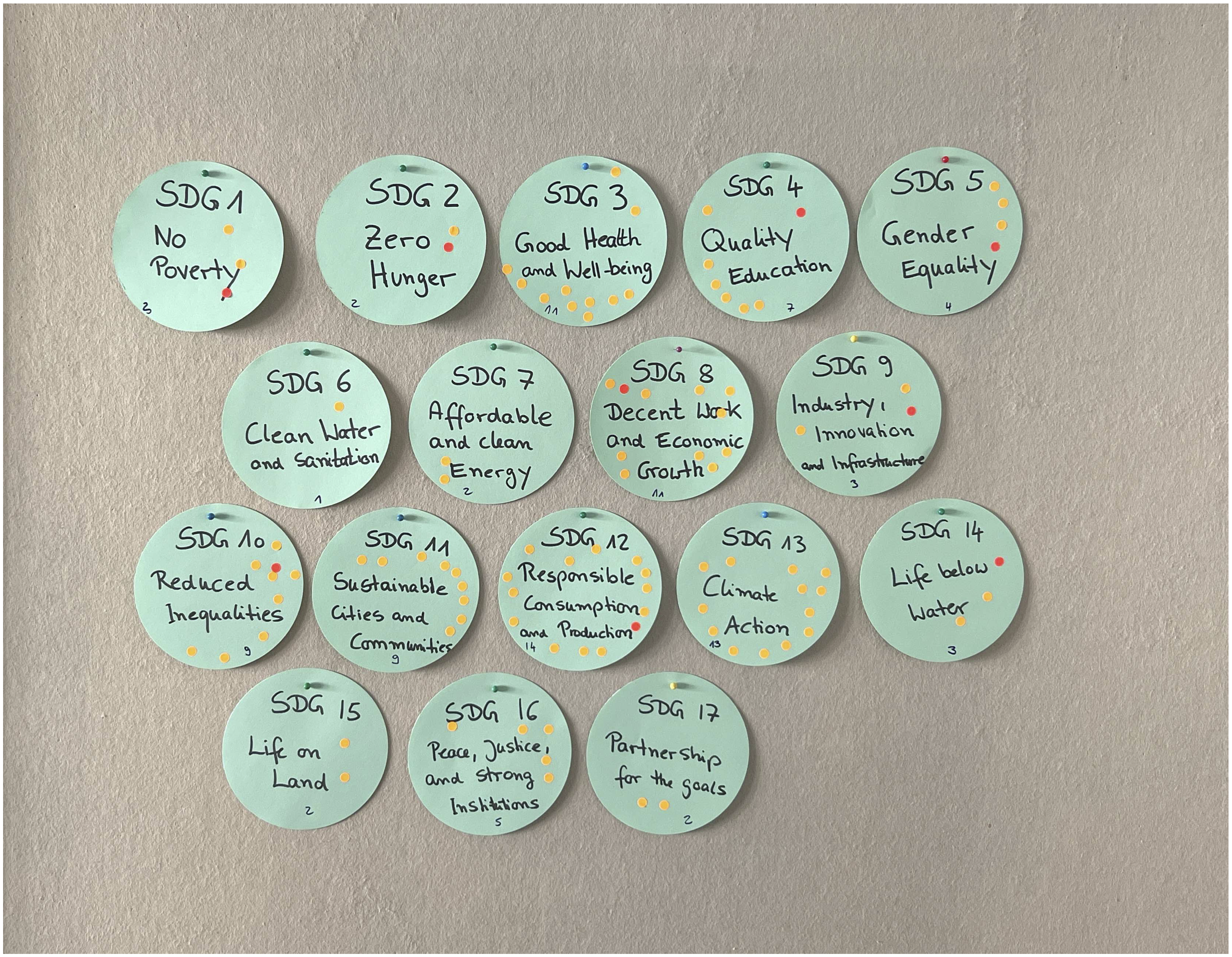
Through small group work and plenum discussions, we explored the role of each of the selected SDGs and its targets in current HCI research and practice. This includes substance (What type of interactive products are related to the goal? What type of research questions and interventions are already addressing these goals?) as well as methods (What type of development/research methods are already conducive to the goal?). This resulted in a map of topics and methods in HCI, which already address sustainability and an overview of white spots, that is, future opportunities to engage in sustainability through HCI.
5.1 Working Group on SDG 3: Good Health and Wellbeing
Carine Lallemand (University of Luxembourg, LU TU Eindhoven, NL,
c.e.lallemand@tue.nl))
Matthias Laschke (University of Siegen, DE, Matthias.Laschke@uni-siegen.de)
Eunice Sari (UX Indonesia – Jakarta, ID University of New South Wales – Sydney, AU, eunice@uxindo.com)
Kaisa Väänänen (Technical University of Tampere, FI, kaisa.vaananen@tuni.fi)
License: Creative Commons BY 4.0 International license © Carine Lallemand, Matthias Laschke, Eunice Sari, Kaisa Väänänen
SDG 3 Good Health and Wellbeing “ensures healthy lives and promotes well-being for all at all ages”. In our discussion, we first agreed on a possible approach and structure for our analysis. Here, the division into three forms of knowledge – system knowledge, target knowledge, and transformation knowledge (e.g., according to Pohl, C., Hirsch Hadorn, G. (2006): Gestaltungsprinzipien für die transdisziplinäre Forschung, Munich: Oekom Verlag) – seemed to be particularly useful for the analysis. This approach is often applied in the context of sustainability science and involves an iterative process of learning, planning, and implementation involving multiple stakeholders and perspectives. Systems knowledge involves understanding the structure and function of the system under study, while target knowledge involves defining clear goals for sustainability. Transformational knowledge refers to the strategies and actions needed to achieve those goals, including identifying potential trade-offs and developing strategies and actions to facilitate transformative change.
The goal to be achieved was set by the SDG 3 “Good Health and Wellbeing ensures healthy lives and promotes well-being for all at all ages”. Therefore, we first focused our discussion on the existing knowledge (i.e., system knowledge) in HCI regarding the goal.
The following items summarize which HCI topics provide system knowledge related to SDG 3:
-
Impact of environment on health and subjective wellbeing:Climate change affects not only the environment but also the health and wellbeing of humans. There are, besides the existence of mankind, also very concrete and short-term interests to stop climate change as soon as possible.
-
Access to healthcare (i.e., inclusive healthcare): Universal access to healthcare is almost non-existent worldwide
-
Data/AI developments and lack of data literacy: More and more data is available. This could be used for the benefit of humanity and nature. At the same time, few people can process and interpret this data. Data is not even a separate subject in school, although it is central in an information age.
-
Intrinsic motivation from people: People and their motivation are deciding factors when it comes to the big transformation.
-
Tech-push solutions rather than supporting human needs: The development of new technologies in HCI is still too much based on new technological rather than social possibilities. Despite a certain technological saturation (i.e., phenomena like “good enough”), enhancing well-being is not at first place in innovation development.
-
Productivity as a driver or innovation rather than subjective wellbeing: The current economic system, to which HCI belongs and contributes, is focused on growth and productivity. Self-determination and an increase in wellbeing have a subordinate role. They are rather soft factors.
The following items represent topics we covered in our discussion of how HCI’s research efforts already contribute to achieving SDG 3:
-
More than one human (design)
-
Personal informatics (self-tracking)
-
Telemedicine/Homecare
-
Explainable/transparent AI
-
Positive design/Experience design
-
Exploration of meaningful design spaces of new technologies
-
Low- or no tech
-
Calm/warm/slow technologies
-
Workplaces that promote wellbeing
-
Physcalisation/visualization of data
-
Healthcare for women
5.2 Working Group on SDG 4: Quality Education
Eunice Sari (UX Indonesia – Jakarta, ID University of New South Wales – Sydney, AU, eunice@uxindo.com)
Markus Fiedler (Blekinge Institute of Technology – Karlshamn, SE, markus.fiedler@bth.se)
Carine Lallemand University of Luxembourg, LU TU Eindhoven, NL, c.e.lallemand@tue.nl)
Thomas Olsson, (Tampere University, FI, thomas.olsson@tuni.fi)
Marc Hassenzahl (University of Siegen, DE, marc.hassenzahl@uni–siegen.de)
License: Creative Commons BY 4.0 International license © Eunice Sari, Markus Fiedler, Carine Lallemand, Thomas Olsson, Marc Hassenzahl, Robin Neuhaus
SDG 4 Quality Education (QE) aims to ensure inclusive and equitable quality education, and HCI provides a set of opportunities: 1) Improved accessibility to education for everyone, no matter of location, disabilities, socio-economic conditions, and situations in life. HCI promotes lifelong situated and experiential learning (and assessment) opportunities, as well as stakeholder participation in design and operation. 2) New or improved learning experiences. HCI allows for designing digital tools and interfaces that facilitate positive, engaging and effective learning experiences, social connections between teachers and learners from different places, resilience, lifelong and challenge-based education. 3) Improved organisation. HCI supports the right-scaling of educational resources and joint curriculum development. It helps to remove institutional barriers and enables a holistic end-to-end learning process. However, HCI also brings a set of challenges of relevance for any QE-related design process, for instance: 1) Focus on socio-technical aspects beyond infrastructures; 2) Match people and resources; 3) Realise that technologies make their own policies and realities; 4) Increase digital literacy; 5) Teach HCI beyond universities; 6) Articulate our values; 7) Frame societal issues; and 8) Combine research and activism.
5.3 Working Group on SDG 8: Decent Work and Economic Growth Education
Jason Jacques (University of St. Andrews, GB, jtj2@st-andrews.ac.uk)
Shadan Sadeghian (University of Siegen, DE, shadan.sadeghian@uni-siegen.de)
Katta Spiel (TU Wien, AT, katta.spiel@tuwien.ac.at)
Robin Neuhaus (University of Siegen, DE, jtj2@st-andrews.ac.uk)
Thomas Olsson (Tampere University, FI, thomas.olsson@tuni.fi)
Neha Kumar (Georgia Institute of Technology – Atlanta, USA)
License: Creative Commons BY 4.0 International license © Jason Jacques, Shadan Shadeghian, Katta Spiel, Robin Neuhaus, Thomas Olsson, Neha Kumar
Our group looked at the targets and indicators and were in consensus that these were too focused on numbers, and failed to capture meaningfulness of work. We discussed how decent work may or may not be meaningful, and how HCI could focus on work becoming more focused on meaning. As an example, we considered academia and how work models in academia target numbers over quality of life, even though “when we are happy we are performing better” arguably. On the topic of growth, we talked about what would entail “sensible growth” or “slowth” and how this might impact our HCI research and practice. We concluded that “capitalism is likely not saving us.”
5.4 Working Group on SDG 10: Reduce inequalities
Daniel Pargman (KTH Royal Institute of Technology – Stockholm, SE, pargman@kth.se)
Kaisa Väänänen (Technical University of Tampere, FI, kaisa.vaananen@tuni.fi)
Neha Kumar, (Georgia Institute of Technology – Atlanta, USA)
Kirsikka Kaipainen, (Tampere University, FI, kirsikka.kaipainen@tuni.fi)
Jacki O’Neill (Microsoft Africa Research Institute – Nairobi, KE,
Jacki.ONeill@microsoft.com)
Katrien de Moor (Norwegian University of Science and Technology – Trondheim, Torgarden, NO, katrien.demoor@ntnu.no)
License: Creative Commons BY 4.0 International license © Daniel Pargman, Kaisa Väänänen, Neha Kumar, Kirsikka Kaipainen, Jacki O’Neill, Katrien De Moor
We started our discussion on SDG 10 “Reduced inequalities” by an initial reflection on the understanding of inequality and on how “improvement” in this respect may take very different forms. Briefly discussing all goal targets and indicators associated to SDG 10 led to a shared view that (1) the proposed targets are not very radical and that (2) there is a lack of goal targets aiming to reduce growth of those with a higher income as a strategy to address this goal (instead of targeting mainly income growth from below). While we discussed various opportunities for HCI in the context of SDG 10, some of the recurring themes have to do with understanding inequality and barriers to equality at different levels; methods and tools for increasing representation and for giving a voice to those who are currently not heard (based on an understanding of how they want to be voiced) and for ensuring that they are heard; research and practices to unpack bias in technology (e.g., bias in AI) and to transition to more transparent and bias-aware technology. However, there are various barriers to (further) realising the potential role that HCI can play, one of them being how to make people care? How to ensure that relevant activities in this respect trigger action, e.g., at the policy level?
5.5 Working Group on SDG 11: Sustainable cities and communities
Shadan Sadeghian (University of Siegen, DE, shadan.sadeghian@uni-siegen.de)
Dan Lockton (Eindhoven University of Technology, NL, d.j.g.lockton@tue.nl)
Anjali Karol Mohan (INDÉ – Bangalore, IN, anjali@integrateddesign.org)
Jacki O’Neill (Microsoft Africa Research Institute – Nairobi, KE,
Jacki.ONeill@microsoft.com)
Lenneke Kuijer (TU Eindhoven, NL, S.C.Kuijer@tue.nl)
Adrian Friday, (Lancaster University, GB, a.friday@lancaster.ac.uk)
License: Creative Commons BY 4.0 International license © Shadan Sadeghian, Dan Lockton, Anjali Karol Mohan, Jacki O’Neill, Lenneke Kuijer, Adrian Friday
Our starting point was looking at societal and economic drivers that we were seeing as working against environmental and social sustainability. We believe that systemic change is needed to redress the balance between forces of globalisation, environmental and societal exploitation that are working against social and environmental sustainability. Especially in light of recent geo-political changes highlighting how long, remote or complex supply chains can be disrupted and are neither safe nor resilient under assertions and future impacts of climate change.
How is the flow of money, and digitisation of services with environmental and climate impacts, and of labour driving these systems. What role does HCI and the design of digital technologies in reshaping these to better meet local needs and reduce the externality costs? Ultimately, we felt that an opportunity space led in addressing and supporting pro-social and pro-community activities, and addressing and correcting folk theories and anti-climate mis-information and discourses of delay. We saw this as “digital infrastructuring” of sustainability, and promoting better awareness and connection to technologies, business and governmental failures to act with regards to “theft of the commons” to promote pro-sustainable agency in all its forms. We finished with a discussion about how to transform deeply embedded and market led aspirations of consumerism to provide a notion of alternative values to make being more sustainable aspirational, c.f. “attractive sustainability”. How might we amplify and build community around potentially disparate actors, overcome barriers, and give voice for greater solidarity and drive toward pro-sustainable community?
5.6 Working Group on SDG 12: Responsible Consumption and Production
Susanne Boll (University of Oldenburg, DE, susanne.boll@uni-oldenburg.de)
Joycelyn Longdon (University of Cambridge, GB, jl2182@cam.ac.uk)
Katrien de Moor (Norwegian University of Science and Technology – Trondheim, Torgarden, NO, katrien.demoor@ntnu.no)
Markus Fiedler (Blekinge Institute of Technology – Karlshamn, SE, markus.fiedler@bth.se)
Gözel Shakeri (University of Oldenburg, DE, goezel.shakeri@uni-oldenburg.de)
Dan Lockton (Eindhoven University of Technology, NL, d.j.g.lockton@tue.nl)
License: Creative Commons BY 4.0 International license © Susanne Boll, Joycelyn Longdon, Katrien de Moor, Markus Fiedler, Gözel Shakeri, Lenneke Kuijer, Dan Lockton
We were aware from the start that a large proportion of HCI (and design) research focused on “sustainability” already arguably addresses SDG 12 – from “design for sustainable behaviour” (e.g. energy use feedback) through applications of social practice theory, to servitisation (product-service systems), etc, it seems as though HCI and design researchers have found the “responsible consumption” aspects of SDG 12 to be something very much within the ambit of their domain. However, we noted that the “production” aspects of SDG 12 were less well-addressed in HCI, at least within the HCI areas that we as a group had experience in. We noted that while aspects like circular economy ideas, sharing economy, alternatives to fast fashion, repairability (and right-to-repair), attention to production and material supply chains (traceability, and the labour practices involved), distribution logistics, and so on, had some currency in design research, they were not so often discussed within mainstream HCI, and yet there were many opportunities, including consideration of how to achieve higher quality digital experiences more sustainably (linking to discussions elsewhere at the Dagstuhl Perspectives Workshop about, for example, how academic conference norms might change) which could have significant impact.
Our discussion included noting that while the focus of HCI on SDG 12 topics is often the individual, a refocus on social groups, policymakers, and industry would also offer potentially transformative opportunities. Even with individual-focused HCI work on consumption, it is often about making technologies (or use) more “efficient”, rather than challenging norms, disrupting consumption patterns, doing more with existing things rather than creating new things, or embodying alternative economic models. Is it preferable to consume less, or to consume better? The answer is not as simple as the question sounds. In some ways some of this work could be characterised as greenwashing a “wants” economy rather than addressing underlying issues. Can HCI go beyond the assumptions that if only people have more/better information (a deficit model), they will necessarily consume more responsibly? Can HCI be more radical, showing the magnitude of change needed, and enabling new patterns of living? We explored whether visualisation (or “visibilisation”, maybe using AR) or tangibilisation, making parts of systems that are currently invisible, visible (e.g. showing e-waste and whole product lifecycles), or figures that are relevant – including to decision-makers upstream rather than just consumers – would make a difference. We asked whether HCI could engage with some of the sociological issues such as attachment to products (or ownership, or “the new”), the social value of “success” attributed to material goods, phenomena such as taste regimes, conspicuous consumption, mindless consumption, perceptions of norms around consumption (e.g. through practical “speculative” design enacting different ways of living, or presenting alternative realities to stimulate people’s imaginations) We were also aware that much of this work in HCI has traditionally been centred on a very global north conception of consumption practices and needs, and that contexts, societal norms, assumptions around “development”, and relevant issues to address can be very different in the global south – what local practices, or indigenous knowledges, offer different ways of addressing SDG 12?
5.7 Working Group on SDG 13: Climate Action
Alexander Raake (TU Ilmenau, DE, alexander.raake@tu-ilmenau.de)
Jacki O’Neill (Microsoft Africa Research Institute – Nairobi, KE,
Jacki.ONeill@microsoft.com)
Anjali Karol Mohan (INDÉ – Bangalore, IN, anjali@integrateddesign.org)
Kirsikka Kaipainen (Tampere University, FI, kirsikka.kaipainen@tuni.fi)
Adrian Friday (Lancaster University, GB, a.friday@lancaster.ac.uk)
Daniel Pargman, (KTH Royal Institute of Technology – Stockholm, SE, pargman@kth.se)
License: Creative Commons BY 4.0 International license © Alexander Raake, Jacki O’Neill, Anjali Karol Mohan, Adrian Friday, Kirsikka Kaipainen, Daniel Pargman
We saw taking and supporting climate action as addressing an interconnected and systemic problem, “doing the work”, “promoting the salience” of the need for climate action at multiple stages and by many actors, together, and with greater awareness as to the outcomes. We thus framed HCI in the context of working to address systemic issues that prevent climate inaction.
This could mean holding various stakeholders (broadly cast – governments, businesses, leaders, citizens, scientists) to account. Providing tools to gather or communicate evidence as to the positive and negative impacts of policies impacting the climate, and their effectiveness or unintended consequences, to help identify meaningful positive change. Helping share the experience of climate change as it impacts people, society and environment; recognising that the impacts of climate change are not evenly experienced across the world in space and time. Using this experience as a lever to increase empathy and motivate changes in different stakeholder groups. Addressing the information war, supporting clear narratives, accounts and storytelling around action or inaction. Especially overcoming barriers to appreciate the climate science such as dealing with the inherent uncertainty and challenges of communicating this science, to make it a critical societal topic of debate, where climate inaction is no longer tolerated (c.f. drink driving). Practically, joining and supporting communities to accelerate and infrastructure positive and timely action. And finally, countering discourses of delay and misinformation, avoiding critical misunderstandings and even toxic and subverted discourse.
We saw this as a step change for HCI, from driving more efficient X, or better user experience Y, to deeply engaging with barriers to climate action, positive change, and more transformative and timely action across the systems.
5.8 Working Group on SDG 16: Peace, Justice and Strong Institutions
Nicola Bidwell (University of Melbourne, AU International University of Management, NA, nic.bidwell@gmail.com)
Joycelyn Longdon (University of Cambridge, GB, jl2182@cam.ac.uk)
Alexander Raake (TU Ilmenau, DE, alexander.raake@tu-ilmenau.de)
Gözel Shakeri (University of Oldenburg, DE, goezel.shakeri@uni-oldenburg.de)
Katta Spiel (TU Wien, AT, katta.spiel@tuwien.ac.at)
Jason Jacques (University of St. Andrews, GB, jtj2@st-andrews.ac.uk)
License: Creative Commons BY 4.0 International license © Nicola Bidwell, Joycelyn Longdon, Alexander Raake, Gözel Shakeri, Katta Spiel, Jason Jacques
In looking at Sustainable Development Goal 16, Peace, Justice & String Institutions, we began with an overview of the goal targets, which include a broad array of areas. Some of these targets have with concrete outcomes, such as ending abuse of children (16.2), while others have concrete timelines, such as providing legal identity for all by 2030 (16.9); though there was some discussion about the extent and inclusiveness of this with reference to the target to enforce non-discriminatory laws and policies (16.B). In some respects, the group felt there was scope to strengthen the targets, such as only reducing illicit flows of arms (16.4), while in other aspects there were some concerns raised about how the target might conflict with other personal freedoms, such as with the target to strengthen national institutions (16.A). Much of our discussion was focused on the democratic aspects of the goal and its targets, including reducing corruption (16.5), improving transparency (16.6), broadening participation at local (16.7) and international (16.8) levels, and finally regarding increasing access to information (16.10). We considered these targets in relation to aspects that must reflect the inclusiveness of the goal: cultural context, trust in the community, epistemic injustice, and belief in decision makers. We felt that the goal highlighted several opportunities around improving access to data, visibility, and transparency. These areas are strongly supported by HCI, through techniques such as visualisation, data curation, presentation, and structuring information in a customisable and layered experience. Finally, we briefly considered the tensions that were raised in creating a common understanding and allowing space for multiple meanings to be explored. We also touched upon more opportunistic engagement with the goal, and goals, and how this might create further distortion or tension both by actors and through our own work.
6 Speculations
6.1 Introduction and Method
Transformation requires critical engagement with possible futures. While many treat the future as something to discover, we understand the future as something – at least in part – to be “made”. In this sense, we not only anticipate future problems based on today but imagine desirable futures to explore and better understand the mindsets, methods and technologies necessary to make these futures happen. [20] argued that an utopian science, a science of possible change, requires research into three different types of knowledge: system knowledge, goal knowledge, and transformation knowledge. Traditionally, science focuses on the production of system knowledge, that is descriptions, models, or theories of how things are. However, to change we need to explore and discuss how things ought to be to set desired goals. Futuring and speculation, for example in the form of design fiction, is one way to critically [10] or constructively [9] engage with possible futures (see also [2] [16] [17] [21]. Speculation is a way to analyse and to better understand the intricate entanglement of technology, people, and policies. It is able to question dominant narratives of technology in general and Human-Computer Interaction and provides starting points to rewrite them.
In the workshop, we introduced positive speculation as a form of analysis of possible futures (see [9]). We formed four groups. The instruction was to start with the knowledge encapsulated in some of the Sustainable Development Goals (SDG) discussed on Tuesday (see section 5), however, to acknowledge their limits, to go beyond them, or to ignore them completely. Groups were then asked to imagine “positive” (meaningful, in line with the SDGs) everyday situations (who, where, activities, feelings) in the near future (2028) and to explore how this situation had been and is still shaped by people, policies, technologies. The groups did so through worldbuilding and storytelling, roleplay and a form of anticipatory ethnography (e.g., [16] ). In general, we encouraged the groups to make their own futures, pick topics they find engaging, without a strong focus on technology.
The results were presented in the form of 20 minute group performances and discussed in the plenum at the end of the day (16:00 – to 18:00).
6.2 Four Speculations
In the following, we summarize the four speculations as presented by the groups.
6.2.1 GROUP 1: “Global Sugar Act”
Susanne Boll (University of Oldenburg, DE, susanne.boll@uol.de)
Markus Fiedler (Blekinge Institute of Technology – Karlshamn, SE, markus.fiedler@bth.se)
Lenneke Kuijer (TU Eindhoven, NL, S.C.Kuijer@tue.nl)
Neha Kumar (Georgia Institute of Technology – Atlanta, USA, neha.kumar@gatech.edu)
Eunice Sari (UX Indonesia – Jakarta, ID University of New South Wales – Sydney, AU, eunice@uxindo.com)
Thomas Olsson (Tampere University, FI, thomas.olsson@tuni.fi)
License: Creative Commons BY 4.0 International license © Susanne Boll, Markus Fiedler, Lenneke Kuijer, Neha Kumar, Eunice Sari, Thomas Olsson
“The United Nations” think-tank for revising the 2030 Integrated Development Goal for Nutrition, Environment, Decent Work and Degrowth began its online meeting. Four participants, four time-zones, four beverages. One participant, with her early morning beverage, discusses how it is oat-milk with a novel scent-based taste of coffee [inspired by existing technology: air-up 666* inspired by existing technology (air-up: https://uk.air-up.com/); another, at the end of her day, sips a light “beer”, also scent-based taste only, and the others sip scent-based health and chocolate drinks. The group discusses how quickly the scent-based infusions changed the beverage market since the Global Sugar Act was introduced. Originally, the act was implemented to address the implications of sugar as a serious threat to health. While originally focused on the health issue, the Act had multiple additional consequences, economically, environmentally as well as on innovation. First, sugar-producing regions adjusted their agricultural regimes. Naturally sweetened products became rare luxuries, especially chocolate. Cacao producers stepped into other products and professions, improving their labour position in the process. Today’s meeting focuses on translating lessons from this transition to coffee-producing regions, which are experiencing decline because of the more recent switch to scent-based coffee. Observers asked how the Global Sugar Act was introduced in the first place, and why honey, a popular replacement of sugar, was still available in spite of it.”
This speculation prompted reflection on the multifaceted entanglement of policies, technological responses, and further (economical) impact. It depended on a radical policy decision regarding global health, which then had consequences for food production practices across the world, but also on everyday practices such as having breakfast or celebrating a birthday. It highlighted the potential of an existing technology to step into the space created by radical policy and to turn it into a triple win (when optimistically approached).


6.2.2 GROUP 2: “Glow in Care”
Joycelyn Longdon (University of Cambridge, GB, jl2182@cam.ac.uk)
Dan Lockton (Eindhoven University of Technology, NL, d.j.g.lockton@tue.nl)
Kirsikka Kaipainen (Tampere University, FI, kirsikka.kaipainen@tuni.fi)
Gözel Shakeri (University of Oldenburg, DE, goezel.shakeri@uni-oldenburg.de)
Shadan Sadeghian (University of Siegen, DE, shadan.sadeghian@uni-siegen.de)
Nicola Bidwell (University of Melbourne, AU International University of Management, NA, nic.bidwell@gmail.com)
License: Creative Commons BY 4.0 International license © Joycelyn Longdon, Dan Lockton, Kirsikka Kaipainen, Gözel Shakeri, Shadan Sadeghian, Nicola Bidwell
“Welcome egalitarian council of the Global Majority, and all people and life beings of the former Global Souths”, said the chair. Delegates responded, “Glow in care”. The meeting began with the monthly report on the Global North’s transition to a care-based economy as introduced by the newly formed sovereign coalition of the Global Majority. Under the new economic system people received “glow” when they actively engaged in sharing resources sustainably or acted with an ethic of care (Gilligan 1982). Professor John assessed the progress using the Doughnut Economics model (Raworth, 2017) and summarised population characteristics in a matrix with Egotism-Reciprocity and Resistance-Enthusiasm dimensions. He illustrated these using interviews with people at different stages of transition: a senior woman who resisted the non-exploitative use of resources; an enthusiastic, but tired, former taxi driver whose livelihood now depends on cycling a rickshaw; a “whistle-glower”, who informs about the illegal cartels who were stealing “glow”; and, a millennial enthusiast who felt less anxiety and loneliness under the new system.”
This design fiction sought to frame societies in the Souths from the perspective of socio-psychological abundance, not deficit. It depicted a radical transformation of the global economic system, with “glow” to replace currency to represent actions that contribute to sustainability. This transformation had begun with local movements of avocado and coffee farmers joining together. In order to prompt reflecting on what constitutes the capability for resilience and the need to learn from the Global Majority in managing resources sustainably the performance broke “the fourth wall”.

6.2.3 GROUP 3: “The EcoFLOW Pill”
Daniel Pargman (KTH Royal Institute of Technology – Stockholm, SE, pargman@kth.se)
Carine Lallemand (University of Luxembourg, LU TU Eindhoven, NL,
c.e.lallemand@tue.nl)
Adrian Friday (Lancaster University, GB, a.friday@lancaster.ac.uk)
Jason Jacques (University of St. Andrews, GB, jtj2@st-andrews.ac.uk)
Matthias Laschke (University of Siegen, DE, Matthias.Laschke@uni-siegen.de)
License: Creative Commons BY 4.0 International license © Daniel Pargman, Carine Lallemand, Adrian Friday, Jason Jacques, and Matthias Laschke
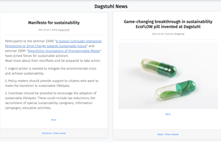
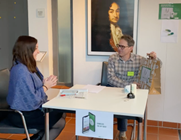
“Activists”, the British Prime Minister said quietly, “were now engineering the EcoFLOW pill and dosing people involuntarily.” The Prime Minister took the issue seriously since it was out of hand and had forced his government to now heavily promote the voluntary use of EcoFLOW. Many citizens had already voluntarily taken the pill, with its effect estimated to last for 12-14 months. Doctors around the country were routinely explaining to patients how the drug leads to negative physical responses to others and their own eco-unfriendly practices, such as taking the car, and to the enhanced experience of engaging in sustainable practices, for example a heightened sense of enjoyment of the nature walk and of cycling to work. To do so, EcoFLOW stimulates the vagus nerve, part of the parasympathetic system. The strong bodily reactions to unsustainable practices has created strong tensions in relationships and in families if members have taken different decisions in regards to consuming the pill. Indeed, activists’ practice of setting up serial Tinder dates to slip the pill into the drink was causing widespread disruptions to marriages and parents were justifiably upset when their teenage children slipped them the pill.”
Composed of three narrative parts (the manifesto of scientists published on the Dagstuhl website, the British Prime Minister’s speech and a doctor’s appointment), this speculation prompted reflection on ways to creatively exploit the felt-experience of ecoanxiety. It turned sustainable practices into a disruptive social challenge, rather than framing sustainability as an individual choice. In addition it prompted thoughts on activism, potential illegal activist practices, and the tension between individual freedom and the need to act.

6.2.4 GROUP 4: U4ya – “Community and Water”
Kaisa Väänänen (Technical University of Tampere, FI, kaisa.vaananen@tuni.fi)
Anjali Karol Mohan (INDÉ – Bangalore, IN, anjali@integrateddesign.org)
Katrien de Moor (Norwegian University of Science and Technology – Trondheim, Torgarden, NO, katrien.demoor@ntnu.no)
Robin Neuhaus (University of Siegen, DE, robin.neuhaus@uni-siegen.de)
Katta Spiel (TU Wien, AT, katta.spiel@tuwien.ac.at)
License: Creative Commons BY 4.0 International license © Kaisa Väänänen, Anjali Mohan, Katrien de Moor, Robin Neuhaus, Katta Spiel
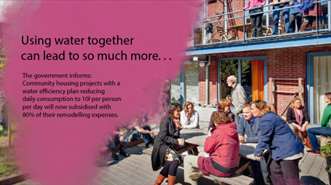
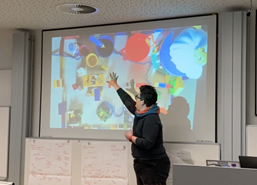
“Remember how it all started: “To promote more efficient use of water, the government is now subsidising the costs for community housing projects to remodel.” We came together as a community, discussed how we can change the way we use water and have fun together. We built models of our remodelled housing complex and slowly everything took shape. Of course, it was a little hard in the beginning to let go of the large bathtubs and spa amenities we used to have in our personal bathrooms. But now many of us greatly cherish the new shared activities that came with it and how we are closer than ever. Enjoying a comfortable bath while exchanging what’s new over a beer, or caring for the community garden as the laundry is slowly soaking – I would not want to miss that anymore. A visit every now and then to the museum of Water-‘ways’ that Were (commissioned by the water utilities department), housing the relics of water infrastructure – shower heads, bathtubs, water bottles, big water pipes, laundromats – are all reminders of the wasteful (and individualistic ) lifestyle that we “enjoyed” from a “place of ignorance”. The experience does draw expressions of incredulousness from our children and is often a topic of over-dinner conversation for our families. To promote more efficient use of water, the government is now subsidising the costs for community housing projects to remodel. Community members engaged in play, using miniatures to physically model the design of their infrastructure. Imagining how walkways between shared showering, bathing and washing facilities might open new opportunities for social engagement and care, community members.”
This speculation engaged physical play around built infrastructure. It prompted considering how the need to change to support more sustainable practices and consuming less resources would not lead to a feeling of missing out, but to a better quality of life. A closely knit diverse community has managed to turn the challenge of a strict rationing of water supply and strict regulations of reusing grey water into positive communal practices. Bathing and laundry have become weekly social rituals that do not only matter for hygiene but also strengthen togetherness. Water is used and reused in planting and gardening projects, which the community takes great pride in. In that, it was relevant to the group to include a community perspective over individualised approaches or system level overwhelmedness. While more individual technological solutions, such as a novel shower designed to only “freshen up” were discussed as well, the design fiction stresses how new community practices can help shape narratives of a more sustainable positive future. Additionally, this fiction makes a point in turning not just to an always far away future that assumes technocentrism in a Global North sense, but rather a sideways consideration of existing practices with geographies that continue with deep-rooted, long standing cultural practices that have the potential to steer sustainable living. It shows that orienting ourselves towards a community requires rethinking our current individualistic practices and creating infrastructures that support differing individual needs within a collective.
6.3 Reflection: Emerging Themes
In this section, we briefly summarize the themes emerging from the speculations itself and the discussions following the presentations of the speculations.
6.3.1 Theme: Role of Community
A predominant narrative of change, especially when it involves technology, is one of individual behavior. In this view, people are “free” to either adopt or ignore more sustainable lifestyles. It remains basically choice, how to be mobile, how to heat, how to eat, or how to be healthy. Other people, that is the social, is framed as a source of pressure, interfering with individual choice. It is the individual, who is responsible for sustainability. Two of speculations, “U4ya” and “Glow in Care”, were about the pursuit practices that produce, reproduce and use the commons and create communality, also known as of “commoning” [5]. They frame the social, that is, community as a resource. “Glow in Care”, for example, envisions how the cumulated knowledge of communities (here from the Global South) challenges the dominant Western way of exploiting rather than caring. A community based on shared values has the power to change the existing. “U4ya” points at community as a “safety net”, a way to face the manifold challenges posed by necessary radical changes required to live more sustainable. Both views acknowledge the importance of community as a motivator and a support of change. In fact, all the design fictions spoke in various ways to the need for coordinated actions and reframing efforts in HCI from an isolated and individualist approach to sustainability (see also Jacki O’Neil’s keynote in Section 3.1). While not made explicit in the speculation, technology can play a role in facilitating community building, for example, by providing accessible infrastructures for communities, exchange of values, views, and strategies, for example between people in the Global Norths and those on the ground in the Souths (e.g., [6]). The tension between the overwhelmingly individualist frame of HCI, and indeed all of modern life, and collectivist approaches can be creative.
6.3.2 Theme: Positive Practices
Especially in saturated Western societies, sustainability is often understood as a threat to the current lifestyle, a dystopian step back rather than an utopian step forward. Sustainable life is depicted as bleak and undesirable. The speculations paint a different picture. They emphasize the capability of humans to adapt their practices to changes in conditions. This can be preserving, for example, when in the “Sugar Tax” speculation global change in the availability of resources, such as cocoa or coffee, lead to the wide adoption of a new technology (here: scent-based taste) to be able to carry on with beloved rituals and habits (e.g., breakfast). It can also be disrupting, when for example “U4ya” reshapes practices of water use, such as bathing or laundry, from the rather hidden and private into something shared and communal. In both speculations, people quite naturally respond to external demands by developing adapted practices, which are positive and meaningful. First, this can be understood as a plea to simply trust the ability of people to respond positively to changed circumstances. Second, we can support this by providing potential positive narratives of the everyday life after the introduction of external change, such as a new policy (see [13]). Third, we should encourage scientific real world experimentation with change to make alternatives experienceable and to foster people’s ability to positively respond to alternatives. From a technology-perspective this highlights how technology is inextricably entangled with our practices. It should not be thought of as separate and neutral, but as integral and constituting. While in HCI the typical strategy is to adapt technologies to current practices, this entanglement offers the possibility to introduce new sustainability-related technologies first and to rely on the transformative powers of these technologies.
6.3.3 Theme: Policies and Technology
All four speculations tell stories about how technology and its adoption is heavily intertwined not only with the social per se (see theme “the role of community”) but also with policies. In “Sugar Tax”, the banning of sugar had been a starting point for small technological changes, in “Glow with Care” an alternative “regime” defined care to be the ultimate “currency”, or in “U4ya” extensive regulations on water use triggered a social and a technological response. Interestingly, these speculation place policy changes at the beginning of their story, rather than at the end. They see policy changes as a trigger rather than as a response. “ecoFLOW” is different. Here a “technology” is set free and only after the fact policies emerge as a response. However, no matter the direction, these speculations remind us of the fact that technology should never been seen as independent from rules and regulations. While HCI as a discipline seems well aware of the social embedding of technology, it seem less aware of the politics of the technologies suggested. For example, forms of contextual analysis have been a ubiquitous part of research and practice for decades. A lot of effort is put in understanding people directly affected, their tasks, and the physical as well – albeit to some lesser extent – organizational context they use the technology in. There is no equivalent standard analysis for the political dimension of a new technology. But this seems required especially in the field of change for sustainability. In line with the present speculations, typical questions to answer would be, which policies may support the beneficial effect of any given technology (and which may obstruct) as well as to which new policies a given technology may lead.
6.3.4 Theme: Autonomy and Coercion
In general, technologies for change are often scrutinized from the standpoint of manipulation and coercion. Nudging through technology is often critically seen as ethically questionable. “ecoFLOW” paints a more nuanced picture. In this speculation, a pill creates viscerally negative sensations when the person who took it or other close people behave unsustainably. In one part of the story, people are tricked by activists into swallowing the “ecoFLOW” pill, and as a consequence not only need to behave sustainable against their will but also need to explain under which debatable circumstances they caught the pill. Others however take the pill as a form of self-commitment, because they know that they cannot rely on their willpower alone. In another variant of the story, members of the younger generation slip the pill to their parents, as a form of self-defense, because changes in behavior are imminent to survive, even if some people do not agree. This speculation highlights the many shades along a potential continuum of autonomy and coercion. In fact, it is hard not to feel sorry for the activists or the children because they lose patience with all the people who seem unable to change, even though it seems to be of utmost importance to do so. The “ecoFLOW” speculation reframes unsustainable behavior as a sickness, a pathology, one has to manage. While everybody seems amiable and understanding of the difficult condition people are put in, there is an acceptance of the underlying premises about which behavior is good and bad. To coerce into the good may not be ideal, but as long the result justifies the means it might be acceptable. In this sense, the “ecoFLOW”-pill is akin to a new “social norm” established through technology. From the perspective of the design of technologies for behavior change, it seems crucial to better understand the many shades of autonomy/coercion to find acceptable and effective solutions. On the one hand, technologies, which do not create feelings of friction, that is restrict autonomy, may not be in any way effective in changing beloved routines. On the other hand, too much friction may lead to resistance and reactance, which in turn will reduce effectiveness as well. Finding a balance is the ultimate challenge of behavior change technologies (see Hassenzahl and Laschke, 2015).
6.3.5 Theme: Activism and Research
A final theme emerged from the discussion about the speculations rather than from the speculations themselves, namely the relationship between activism and research. Many scientific disciplines take pride in remaining neutral. In terms of Schneidewind’s (2017) model (see introduction to this section on speculation) they primarily create system knowledge with the intention to factually describe how it is. In technology-oriented disciplines, basic technologies take the place of system knowledge. HCI, however, is per definition concerned with the way technology is used in everyday life. This was always accompanied with strong normative notions about how technology ought to be (e.g., usable) and how it as to be sensibly designed (e.g., in a human-centered way). In this sense. HCI always had been an utopian science, concerned with making the world better through technology. The same logic that drove the notion of HCI as acting as an “advocate of user’s needs” could be applied to sustainability. HCI could face the responsibility of becoming a lobby for the environment, just as it has already become a lobby for users. For HCI, research and activism doesn’t seem to be as much of a contradiction.
7 Conclusions and Actions
In a last step, we will group the narratives into larger coherent themes. This can be input to a provocative as well as reflective paper/website about possible sustainable futures, the role HCI might play, and the potential transformations needed to achieve this. As a result from the workshop the participants collected a set of statements that characterize the role that HCI should take on making a positive change for sustainability. We will elaborate on these statements in our Dagstuhl Manifesto for this Perspectives Workshop.
The organizers envision a number of follow-up activities from the Dagstuhl Perspectives Workshop. The central venues in the field of behavioral science and computer interaction offer a great platform to propose new workshops and bring together the participants from the Dagstuhl Perspectives Workshop and further researchers in the field. We also envision that the Dagstuhl Perspectives Workshop will initiate collaborations on projects and project proposals and mutual visits of the participants and their PhD students to exchange and continue the discussions that started in Dagstuhl. During the closing days of the Dagstuhl Perspectives Workshop we collected several of the participating researchers which will be implemented in the months to come. Below some of these actions are summarized.
-
Education: Participants will work on a curriculum on sustainability that complements our existing courses in Human Computer Interaction. We will aim to educate future generations and equitable access to sustainability.
-
Recognizing Sustainability in HCI: Give paper that contribute to sustainability in HCI more visible recognition. Invite authors to add a section to their paper that makes a sustainability statement on their research and encourage journals and magazines to ask for such a section. Also raise awareness for sustainability topics for reviewers.
-
Funding and project: Lobby at funding agencies to a strong recognition on sustainability in funding schemes and references to the SDGs as one framework for addressing global goals in our research.
7.1 About the organizers
7.1.1 Nic Bidwell
Nicola Bidwell is inaugural Adjunct Chair for Sustainability on the Executive Committee of the Special Interest Group for Computer Human Interaction (SIGCHI) of the Association for Computer Machinery (ACM); and, for nearly 20 years, has researched in HCI with a focus on the Global Souths and socio-ecological sustainability. Her research encompasses working with Aboriginal people in north Australia and inhabitants of rural Namibia, South Africa, Mozambique, Kenya, Uganda, Indonesia, Argentina, Mexico and India. She initiated the first panel on Indigenous Led Digital Enterprise at a leading HCI forum in 2008, co-founded the African HCI Conference in 2016 and her ethnographically informed design work with rural collaborators in South Africa received an award for its contribution to social and economic development. Her research is distinguished for combining novel intellectual contributions with measurable and sustained social impact, as illustrated by being chosen as a best-practice case in Future-proofing: Making Practice-Based IT Design Sustainable. Nic’s analyses of relations between spectrum regulation and involvement in designing and deploying technologies for community networks (CNs) and community radio have also informed policy debate. Her recent studies include experiences of conditional programming in philanthropic donations, interactions with algorithms in ride-sharing platforms, and onto-epistemic translations in designing probabilistic programming languages for marginalised knowledge practices. Nic has taught in universities around the world. She is currently Associate Professor and Head of the Techno-Anthropology research group at Aalborg University, Denmark; however, for the past fourteen years she lived and worked in southern Africa, where she continuesas an adjunct Professor at the International University of Management, Namibia. Nic’s work has theoretically and practically directly aligned with nearly half of the SDGs. Her support and studies of CNs, for instance, tackle economic marginalisation (e.g., SDG 8) and gender equality (SDG 5) directly; her design and implementation of community-based solar charging in three different projects have tackled affordable clean energy (e.g. SDG 13); and, across her work, from the rainforests of tropical north Queensland to the Kalahari desert, there is a constant theme of considering indigenous people’s and local ways of knowing and caring for their ecological environment (e.g. SDG 10).
7.1.2 Susanne Boll
Prof. Dr. techn. Susanne Boll is Professor of Media Informatics and Multimedia Systems in the Department of Computing Science at the University of Oldenburg, in Germany. She serves on the board of the OFFIS–Institute for Information Technology, in Oldenburg. Prof. Dr. Boll earned a doctorate with distinction from the Technical University of Vienna, Austria. She received her Diploma in Computer Science with distinction from the Technical University of Darmstadt, Germany in 1996. Her research field lies at the intersection of human computer interaction and interactive multimedia in which she has an excellent scientific track record. Her research passion is developing interactive technology for people, joining novel innovative technology development with user needs and social acceptance in the center of her research.
Susanne Boll has been debating with the scientific community on what multimedia can do for sustainability [8] and how human computer interaction related to the Sustainable Development Goal 3: Good Health and Well-being [3]. In several scientific research projects she has developed novel technology for personal health and interactive technology in ambulant and stationery care [11]. As a female researcher in computer science she has always been an advocate for gender equality in STEM for many years and has led scientific projects for introducing Computer Science to girls. She has studied how physical computing can facilitate the understanding required for learning the subject matter for children [1] and middle-school girls [19] which relates to Sustainable Development Goal 5: Gender Equality. Her ongoing work looks into acceptable technology for humans in cooperation with automation and artificial intelligence which relates to Sustainable Development Goal 8 to promote sustained, inclusive and sustainable economic growth, full and productive employment and decent work for all (e.g., [15]). Recently she was the lead author of a white paper on “Mit Künstlicher Intelligenz zu nachhaltigen Geschäftsmodellen” (With artificial intelligence to sustainable business models [7]. She is also currently building a new theme of interaction design in her group for eco-friendly purchase with Dr. Gözel Shakeri joining her team (c.f. [22]).
7.1.3 Marc Hassenzahl
Marc Hassenzahl is Professor for “Ubiquitous Design” in the Department of Business Computing at the University of Siegen, Germany. With his group of designers and psychologists, he explores the theory and practice of designing pleasurable, meaningful and transforming interactive technologies. He currently leads or participates in five national and international research projects. While the main theme of all projects is to use design as a means to create meaningful technology-mediated everyday experiences, the projects range from the question of how to use AR/VR in the health-domain (HIVE, BMBF) to how to best design assistive robots (e-VITA, EU, Honda Research Grant). He is author of “Experience Design. Technology for all the right reasons” [12], co-author of “Psychologie in der nutzerzentrierten Produktgestaltung. Mensch-Technik-Interaktion-Erlebnis” (“People, Technology, Interaction, Experience”) (Springer, with Sarah Diefenbach). His current h-index (according to Google Scholar) is 56 with a total of 22158 citations. Sustainability and Human-Computer Interaction is a recurrent theme in Marc’sl work. His broader focus is on behavioral and attitudinal change and the role technology can play as an intervention to instill transformation of everyday practices. Individual motivation and ability to change already had been a topic in his doctoral dissertation, which addressed intertemporal choice and self-regulation (e.g., willpower) – both typical problems in acting sustainably. Since 2010, he has worked with Dr. Matthias Laschke on a particular approach to technological intervention, called “pleasurable troublemakers” [14]. This led to the successful application of Dr. Laschke for the funding of MOVEN (MOtivationale und VErhaltensändernde Nachhaltigkeitstechnologien/ Motivational and Behavior Change Technologies for Sustainability) a “Junior Research Group in Social-Ecological Research” (FONA, BMBF) in cooperation with LMU Munich, RWTH Aachen, the Wuppertal Institute as well as Miele. The faculty is about to establish a new Juniorprofessorship “Interaction Design for Sustainability and Transformation”. Sustainability and HCI is a recurrent theme in Prof. Hassenzahl’s teaching, for example, with research courses given in the HCI Master in the winter term 20/21, as well as in 21/22. In his role as dean, he is a member of DECODE, the European Deans Council For Sustainable Development.
7.1.4 Kaisa Väänänen
Kaisa Väänänen is a full professor of user experience (Human-Computer Interaction) in Tampere University, Finland. Kaisa leads the research group of Human-Centered Technology (IHTE) in the unit of Computing Sciences. Kaisa has over 25 years of experience in research related to human computer interaction both in university and industry. In 1995-2004, she worked at Nokia Inc, in leading positions of user needs research and strategic consumer insights. Kaisa’s research interests cover user experience and human-centered design, with emphasis on design research of digital services for advancing sustainability and human-centered AI. Kaisa is an author of >160 peer-reviewed academic publications. She is very active in the international research community, and frequently takes part in organizing conferences related to user experience and human-computer interaction. In 2013-2018, Kaisa served six years as a member of Academy of Finland’s research council for Natural Sciences and Engineering.
Related to SDGs, Kaisa Väänänen’s research is addressing themes from both environmental and social sustainability perspectives: 1) Digital societal participation of all kinds of youths (SDGs 3, 10 and 16). In this research, Kaisa’s team has studied the design and use of digital tools for societal participation, for example in legislation, mental wellbeing and educational development [23]. 2) Smart persuasive technologies for sustainable behaviour (SDGs 11, 12 and 13). In this research line, the research has focused on social robots and how they can be used as proactive agents and mediators of people’s sustainable behaviour [4]. 3) Novel digital technologies for urban environments (SDGs 3, 11 and 13). In this line of research, positive citizen experiences and wellbeing is studied through human-centered design of interactive technology concepts for urban residents [18]. Outcomes of all topics include models, frameworks and design guidelines for human-technology interactions advancing technologies.
8 Literature overview
Before the workshop, we asked the participants to add one paper or one video to the workshop wiki that in any way relates to the topic of the workshop and that they have identified as key paper or video in the field (theory, new directions, and visions; not their own research). This allowed each participant to prepare themselves for the workshop by going through the list of proposed papers and videos to read or watch those which are yet unknown. By this we will also make sure that each of the interdisciplinary fields can share their key publications which might not be so visible to other fields.
Below we present the compilation of this reading list.
-
Abowd, G. D. (2020). The Internet of Materials: A Vision for Computational Materials. IEEE Pervasive Computing, 19(2), 56–62. https://doi.org/10.1109/MPRV.2020.2982475
-
Bardzell, J., Bardzell, S., & Light, A. (2021). Wanting To Live Here: Design After Anthropocentric Functionalism. Proceedings of the 2021 CHI Conference on Human Factors in Computing Systems, 1–24. https://doi.org/10.1145/3411764.3445167
-
Bates, O., Thomas, V., & Remy, C. (2017). Doing good in HCI: Can we broaden our agenda? Interactions, 24(5), 80–82. https://doi.org/10.1145/3121386
-
Baumer, E. P. S., & Silberman, M. S. (2011). When the implication is not to design (technology). Proceedings of the SIGCHI Conference on Human Factors in Computing Systems, 2271–2274. https://doi.org/10.1145/1978942.1979275
-
Bender, E. M., Gebru, T., McMillan-Major, A., & Shmitchell, S. (2021). On the Dangers of Stochastic Parrots: Can Language Models Be Too Big? Proceedings of the 2021 ACM Conference on Fairness, Accountability, and Transparency, 610–623. https://doi.org/10.1145/3442188.3445922
-
Biørn-Hansen, A., Pargman, D., Eriksson, E., Romero, M., Laaksolahti, J., & Robért, M. (2021). Exploring the Problem Space of CO2 Emission Reductions from Academic Flying. Sustainability, 13(21), Article 21. https://doi.org/10.3390/su132112206
-
Blevis, E., Chow, K., Koskinen, I., Poggenpohl, S., & Tsin, C. (2014). Billions of interaction designers. Interactions, 21(6), 34–41. https://doi.org/10.1145/2674931
-
Bremer, C., Knowles, B., & Friday, A. (2022). Have We Taken On Too Much?: A Critical Review of the Sustainable HCI Landscape. CHI Conference on Human Factors in Computing Systems, 1–11. https://doi.org/10.1145/3491102.3517609
-
Breves, P., & Schramm, H. (2021). Bridging psychological distance: The impact of immersive media on distant and proximal environmental issues. Computers in Human Behavior, 115, 106606. https://doi.org/10.1016/j.chb.2020.106606
-
Caraban, A., Karapanos, E., Gonçalves, D., & Campos, P. (2019). 23 Ways to Nudge: A Review of Technology-Mediated Nudging in Human-Computer Interaction. Proceedings of the 2019 CHI Conference on Human Factors in Computing Systems, 1–15. https://doi.org/10.1145/3290605.3300733
-
Chauhan, C., Parida, V., & Dhir, A. (2022). Linking circular economy and digitalisation technologies: A systematic literature review of past achievements and future promises. Technological Forecasting and Social Change, 177, 121508.
https://doi.org/10.1016/j.techfore.2022.121508 -
Chopra, S., Clarke, R. E., Clear, A. K., Heitlinger, S., Dilaver, O., & Vasiliou, C. (2022). Negotiating sustainable futures in communities through participatory speculative design and experiments in living. Proceedings of the 2022 CHI Conference on Human Factors in Computing Systems, 1–17. https://doi.org/10.1145/3491102.3501929
-
Dema, T. (2021). Engaging remote communities in technology design for connecting people to and through nature [PhD, Queensland University of Technology].
https://doi.org/10.5204/thesis.eprints.211484 -
Döring, N., Moor, K. D., Fiedler, M., Schoenenberg, K., & Raake, A. (2022). Videoconference Fatigue: A Conceptual Analysis. International Journal of Environmental Research and Public Health, 19(4), Article 4. https://doi.org/10.3390/ijerph19042061
-
Dourish, P. (2010). HCI and Environmental Sustainability: The Politics of Design and the Design of Politics. In DIS 2010 – Proceedings of the 8th ACM Conference on Designing Interactive Systems (p. 10). https://doi.org/10.1145/1858171.1858173
-
Ferreira, D., Dey, A. K., & Kostakos, V. (2011). Understanding Human-Smartphone Concerns: A Study of Battery Life. In K. Lyons, J. Hightower, & E. M. Huang (Eds.), Pervasive Computing (pp. 19–33). Springer.
https://doi.org/10.1007/978-3-642-21726-5_2 -
Fiedler, M., Popescu, A., & Yao, Y. (2016). QoE-Aware Sustainable Throughput for Energy-Efficient Video Streaming. 2016 IEEE International Conferences on Big Data and Cloud Computing (BDCloud), Social Computing and Networking (SocialCom), Sustainable Computing and Communications (SustainCom) (BDCloud-SocialCom-SustainCom), 493–500. https://doi.org/10.1109/BDCloud-SocialCom-SustainCom.2016.78
-
Freitag, C., Berners-Lee, M., Widdicks, K., Knowles, B., Blair, G., & Friday, A. (2021). The real climate and transformative impact of ICT: A critique of estimates, trends, and regulations. Patterns, 2, 100340. https://doi.org/10.1016/j.patter.2021.100340
-
Fromhold-Eisebith, M., Grote, U., Matthies, E., Messner, D., Pittel, K., Schellnhuber, H.-J., Schiefendecker, I., & Schlacke, S. (2019). Unsere gemeinsame digitale Zukunft: Zusammenfassung. Wissenschaftlicher Beirat d. Bundesregierung Globale Umweltveränderungen.
-
Gnanasekaran, V., Fridtun, H. T., Hatlen, H., Langøy, M. M., Syrstad, A., Subramanian, S., & Moor, K. D. (2021). Digital carbon footprint awareness among digital natives: An exploratory study. Norsk IKT-Konferanse for Forskning Og Utdanning, 1, Article 1.
-
Grönewald, L., Weiblen, J., Laschke, M., Christoforakos, L., & Hassenzahl, M. (2023). Sustainability by Design. How to Encourage Users to Choose Energy-Saving Programs and Settings when Washing Laundry. Proceedings of the 2023 CHI Conference on Human Factors in Computing Systems, 1–14. https://doi.org/10.1145/3544548.3581150
-
Hansson, L. Å. E. J., Cerratto Pargman, T., & Pargman, D. S. (2021). A Decade of Sustainable HCI: Connecting SHCI to the Sustainable Development Goals. Proceedings of the 2021 CHI Conference on Human Factors in Computing Systems, 1–19. https://doi.org/10.1145/3411764.3445069
-
Hassenzahl, M., Dörrenbächer, J., Laschke, M., & Sadeghian, S. (2022). European Union’s Green Smart Directive or How Resource-Conscious Smart Systems Saved the World. Nordic Human-Computer Interaction Conference, 1–5.
https://doi.org/10.1145/3546155.3547277 -
Hassenzahl, M., & Laschke, M. (2015). Pleasurable Troublemakers. In S. P. Walz & S. Deterding (Eds.), The Gameful World (pp. 167–196). The MIT Press.
https://doi.org/10.7551/mitpress/9788.003.0011 -
Herglotz, C., Robitza, W., Kränzler, M., Kaup, A., & Raake, A. (2022). Modeling of Energy Consumption and Streaming Video QoE using a Crowdsourcing Dataset (arXiv:2210.05444). arXiv. https://doi.org/10.48550/arXiv.2210.05444
-
Howson, P., & de Vries, A. (2022). Preying on the poor? Opportunities and challenges for tackling the social and environmental threats of cryptocurrencies for vulnerable and low-income communities. Energy Research & Social Science, 84, 102394. https://doi.org/10.1016/j.erss.2021.102394 Hsu, Y.-C., & Nourbakhsh, I. (2020). When human-computer interaction meets community citizen science. Communications of the ACM, 63(2), 31–34. https://doi.org/10.1145/3376892
-
Ickin, S., Wac, K., & Fiedler, M. (2013). QoE-based energy reduction by controlling the 3g cellular data traffic on the smartphone. 2013 22nd ITC Specialist Seminar on Energy Efficient and Green Networking (SSEEGN), 13–18.
https://doi.org/10.1109/SSEEGN.2013.6705396 -
Inayatullah, S., Paine, E., & Scharmer, O. (2022). The Navigation System, The Planetary Gardener, and the Prism: Metaphors for Bringing the Future into Being. Journal of Awareness-Based Systems Change, 2(2), Article 2. https://doi.org/10.47061/jasc.v2i2.5047
-
Jacques, J. T. (2020). CHI 2020: Right Here, Right Now? A bottom-up approach to estimating the carbon emissions from more than twenty years of CHI conference travel. Extended Abstracts of the 2020 CHI Conference on Human Factors in Computing Systems, 1–13. https://doi.org/10.1145/3334480.3381806
-
Junge, I. P. (2021). Single Use Goes Circular–An ICT Proto-Practice for a Sustainable Circular Economy Future. Journal of Sustainability Research, 3(1). https://doi.org/10.20900/jsr20210009
-
Kannabiran, G., & Reddy, A. V. (2022). Exploring Kolam As An Ecofeminist Computational Art Practice. Proceedings of the 14th Conference on Creativity and Cognition, 336–349. https://doi.org/10.1145/3527927.3531452
-
Kasila, K., Vainio, S., Punna, M., Lappalainen, P., Lappalainen, R., Kaipainen, K., & Kettunen, T. (2020). Individual differences in processes of lifestyle changes among people with obesity: An acceptance and commitment therapy (ACT) intervention in a primary health care setting. Primary Health Care Research & Development, 21, e12. https://doi.org/10.1017/S146342362000016X
-
Klapperich, H., Laschke, M., Hassenzahl, M., Becker, M., Cürlis, D., Frackenpohl, T., Köhler, H., Ludwigs, K., & Tippkämper, M. (n.d.). A social practice approach to wellbeing-driven design.
-
Kuijer, L., & Robbins, H. (2021). Teaching alternative Paradigms through Critical Design. Interaction Design and Architecture(s), 51, 172–201. https://doi.org/10.55612/s-5002-051-008 Laschke, M., Diefenbach, S., & Hassenzahl, M. (2015). “Annoying, but in a Nice Way”: 9(2).
-
Lee, J., Kaipainen, K., & Väänänen, K. (2020). Local foodie: Experience design of a mobile augmented reality application for tourists to encourage local food consumption. Proceedings of the 23rd International Conference on Academic Mindtrek, 110–119. https://doi.org/10.1145/3377290.3377298
-
Lockton, D., Chou, M., Krishnaprasad, A., Dixit, D., La Vattiata, S., Shon, J., Geiger, M., & Zea-Wolfson, T. (2019, December 10). Metaphors and imaginaries in design research for change.
-
Lockton, D., Lallemand, C., & Menheere, D. (2022). Designing qualitative interfaces: Experiences from studio education. DRS Biennial Conference Series. https://dl.design
researchsociety.org/drs-conference-papers/drs2022/researchpapers/196 -
Longdon, J. (2020). Environmental data justice. The Lancet Planetary Health, 4(11), e510–e511. https://doi.org/10.1016/S2542-5196(20)30254-0
-
Magoutas, B., Bothos, E., Schrammel, J., Orji, R., & Mentzas, G. (2017). Exploring the Links Between Persuasion, Personality and Mobility Types in Personalized Mobility Applications: 12th International Conference on Persuasive Technology. Persuasive Technology: Development and Implementation of Personalized Technologies to Change Attitudes and Behaviors, 107–118. https://doi.org/10.1007/978-3-319-55134-0_9
-
Meyer, J., Beck, E., Holdt, K. von, Koppelin, F., Pauls, A., & Boll, S. (2021). ActiThings: Reminders for physical activity exercises in daily lives of inactive older adults. 2021 IEEE 9th International Conference on Healthcare Informatics (ICHI), 386–395. https://doi.org/10.1109/ICHI52183.2021.00064
-
Mthoko, H., Adamu, M., & Lazem, S. (2023). Context, Culture, and Fabulations: In Search of a Home for Our Veiled African Design Stories. Interactions, 30(2), 30–33. https://doi.org/10.1145/3581642
-
Nardi, B., Tomlinson, B., Patterson, D. J., Chen, J., Pargman, D., Raghavan, B., & Penzenstadler, B. (2018). Computing within limits. Communications of the ACM, 61(10), 86–93. https://doi.org/10.1145/3183582
-
Nielsen, K. S., Clayton, S., Stern, P. C., Dietz, T., Capstick, S., & Whitmarsh, L. (2021). How psychology can help limit climate change. The American Psychologist, 76(1), 130–144. https://doi.org/10.1037/amp0000624
-
Nyström, T., & Mustaquim, M. M. (2014). Sustainable information system design and the role of sustainable HCI. Proceedings of the 18th International Academic MindTrek Conference: Media Business, Management, Content & Services, 66–73.
https://doi.org/10.1145/2676467.2676486 -
Olsson, T., & Väänänen, K. (2021). How does AI challenge design practice? Interactions, 28(4), 62–64. https://doi.org/10.1145/3467479 Personalization and the Smart Home: Questioning techno-hedonist imaginaries – Kari Dahlgren, Sarah Pink, Yolande Strengers, Larissa Nicholls,
-
Jathan Sadowski, 2021. (n.d.). Retrieved 3 July 2023, from
https://journals.sagepub.com/doi/pdf/10.1177/13548565211036801 -
Pietilä, I., Meriläinen, N., Varsaluoma, J., & Väänänen, K. (2021). Understanding youths’ needs for digital societal participation: Towards an inclusive Virtual Council. Behaviour & Information Technology, 40(5), 483–496. https://doi.org/10.1080/0144929X.2021.1912182
-
Preist, C., Schien, D., & Blevis, E. (2016). Understanding and Mitigating the Effects of Device and Cloud Service Design Decisions on the Environmental Footprint of Digital Infrastructure. Proceedings of the 2016 CHI Conference on Human Factors in Computing Systems, 1324–1337. https://doi.org/10.1145/2858036.2858378
-
Root, E., Heuten, W., & Boll, S. (2019). Maker Cards: Evaluating design cards for teaching physical computing to middle-school girls. Proceedings of Mensch Und Computer 2019, 493–497. https://doi.org/10.1145/3340764.3344445
-
Royakkers, L., Timmer, J., Kool, L., & van Est, R. (2018). Societal and ethical issues of digitization. Ethics and Information Technology, 20(2), 127–142.
https://doi.org/10.1007/s10676-018-9452-x -
Sadeghian, S., Wintersberger, P., Laschke, M., & Hassenzahl, M. (2022). Designing Sustainable Mobility: Understanding Users’ Behavior. Proceedings of the 14th International Conference on Automotive User Interfaces and Interactive Vehicular Applications, 34–44. https://doi.org/10.1145/3543174.3546833
-
Sari, E. (2022). Changing the world through HCI and UX. Communications of the ACM, 65(3), 7. https://doi.org/10.1145/3510541
-
Sari, E., Tedjasaputra, A., Kurniawan, Y., Zulaikha, E., Asfarian, A., Ghazali, M., Sivaji, A., Abu Bakar, J. A., Wong, C. Y., Norowi, N. M., Makany, T., Perera-Schulz, D., Chintakovid, T., Nuchitprasitchai, S., & Ong, E. (2023). HCI in Southeast Asia: The Journey Forward. Asian HCI Symposium ’22, 48–51. https://doi.org/10.1145/3516492.3558812
-
Schien, D., Shabajee, P., Chandaria, J., Williams, D., & Preist, C. (2021). Using behavioural data to assess the environmental impact of electricity consumption of alternate television service distribution platforms. Environmental Impact Assessment Review, 91, 106661. https://doi.org/10.1016/j.eiar.2021.106661
-
Schmidt, A., Giannotti, F., Mackay, W., Shneiderman, B., & Väänänen, K. (2021). Artificial Intelligence for Humankind: A Panel on How to Create Truly Interactive and Human-Centered AI for the Benefit of Individuals and Society. In C. Ardito, R. Lanzilotti, A. Malizia, H. Petrie, A. Piccinno, G. Desolda, & K. Inkpen (Eds.), Human-Computer Interaction – INTERACT 2021 (pp. 335–339). Springer International Publishing. https://doi.org/10.1007/978-3-030-85607-6_32
-
Scuri, S., Ferreira, M., Jardim Nunes, N., Nisi, V., & Mulligan, C. (2022). Hitting the Triple Bottom Line: Widening the HCI Approach to Sustainability. Proceedings of the 2022 CHI Conference on Human Factors in Computing Systems, 1–19. https://doi.org/10.1145/3491102.3517518
-
Shakeri, G., & McCallum, C. H. (2021). Envirofy your Shop: Development of a Real-time Tool to Support Eco-friendly Food Purchases Online. Extended Abstracts of the 2021 CHI Conference on Human Factors in Computing Systems, 1–10. https://doi.org/10.1145/3411763.3451713
-
Shukla, R., Kiran, N., Wang, R., Gummeson, J., & Lee, S. I. (2019). SkinnyPower: Enabling batteryless wearable sensors via intra-body power transfer. Proceedings of the 17th Conference on Embedded Networked Sensor Systems, 68–82. https://doi.org/10.1145/3356250.3360034
-
Skowronek, J., Raake, A., Berndtsson, G. H., Rummukainen, O. S., Usai, P., Gunkel, S. N. B., Johanson, M., Habets, E. A. P., Malfait, L., Lindero, D., & Toet, A. (2022). Quality of Experience in Telemeetings and Videoconferencing: A Comprehensive Survey. IEEE Access, 10, 63885–63931. https://doi.org/10.1109/ACCESS.2022.3176369
-
Smids, J., Nyholm, S., & Berkers, H. (2020). Robots in the Workplace: A Threat to – or Opportunity for – Meaningful Work? Philosophy & Technology, 33(3), 503–522. https://doi.org/10.1007/s13347-019-00377-4
-
Soden, R. (2022). Reimagining environmental data. Interactions, 29(1), 44–47. https://doi.org/10.1145/3501302
-
Spiel, K. (2021). ”Why are they all obsessed with Gender?” – (Non)binary Navigations through Technological Infrastructures. Designing Interactive Systems Conference 2021, 478–494. https://doi.org/10.1145/3461778.3462033
-
Spiel, K. (2022). Transreal tracing: Queer-feminist speculations on disabled technologies. Feminist Theory, 23(2), 247–265. https://doi.org/10.1177/14647001221082299
-
Stamhuis, S., Brombacher, H., Vos, S., & Lallemand, C. (2021). Office Agents: Personal Office Vitality Sensors with Intent. Extended Abstracts of the 2021 CHI Conference on Human Factors in Computing Systems, 1–5. https://doi.org/10.1145/3411763.3451559
-
Strengers, Y. (2014). Smart energy in everyday life: Are you designing for resource man? Interactions, 21(4), 24–31. https://doi.org/10.1145/2621931 The ”Artificial” Colleague: Evaluation of Work Satisfaction in Collaboration with Non-human Coworkers | 27th International Conference on Intelligent User Interfaces. (n.d.). Retrieved 3 July 2023, from https://dl.acm.org/doi/10.1145/3490099.3511128 Visualising Forest Sound: Justice-led Ecoacoustic Data Interaction – CHI ’23. (n.d.). Retrieved 27 June 2023, from https://programs.sigchi.org/chi/2023/program/content/99121
-
Wang, Y., Zhou, J., Li, H., Zhang, T., Gao, M., Cheng, Z., Yu, C., Patel, S., & Shi, Y. (2019). FlexTouch: Enabling Large-Scale Interaction Sensing Beyond Touchscreens Using Flexible and Conductive Materials. Proceedings of the ACM on Interactive, Mobile, Wearable and Ubiquitous Technologies, 3(3), 109:1-109:20. https://doi.org/10.1145/3351267
-
Williams, K., Kane, B., Clarke, C., & Widdicks, K. (2021). The Environmental Impact of Research Communities: Insights from conference sustainability chairs. XRDS: Crossroads, The ACM Magazine for Students, 27(4), 46–51. https://doi.org/10.1145/3468216
-
Ystgaard, K. F., Atzori, L., Palma, D., Heegaard, P. E., Bertheussen, L. E., Jensen, M. R., & De Moor, K. (2023). Review of the theory, principles, and design requirements of human-centric Internet of Things (IoT). Journal of Ambient Intelligence and Humanized Computing, 14(3), 2827–2859. https://doi.org/10.1007/s12652-023-04539-3
-
Zhang, T., Yi, X., Yu, C., Wang, Y., Becker, N., & Shi, Y. (2018). Touchpower: Interaction-based Power Transfer for Power-as-needed Devices. GetMobile: Mobile Computing and Communications, 22(2), 27–31. https://doi.org/10.1145/3276145.3276156
References
- [1] Swamy Ananthanarayan and Susanne Boll. Physical computing for children: Shifting the pendulum back to papertian ideals. Interactions, 27(3):40–45, apr 2020.
- [2] James Auger. Speculative design: crafting the speculation. Digital Creativity, 24(1):11–35, 2013.
- [3] Elke Beck, Kai von Holdt, Jochen Meyer, and Susanne Boll. Sneaking physical exercise into sedentary work life: Design explorations of ambient reminders in opportune moments. In 2019 IEEE International Conference on Healthcare Informatics (ICHI), pages 1–7, 2019.
- [4] Nasim Beheshtian, Sina Moradi, Aino Ahtinen, Kaisa Väänanen, Kalle Kähkonen, and Markus Laine. Greenlife: A persuasive social robot to enhance the sustainable behavior in shared living spaces. In Proceedings of the 11th Nordic Conference on Human-Computer Interaction: Shaping Experiences, Shaping Society, NordiCHI ’20, New York, NY, USA, 2020. Association for Computing Machinery.
- [5] Nicola J. Bidwell. Rural uncommoning: Women, community networks and the enclosure of life. ACM Trans. Comput.-Hum. Interact., 28(3), jul 2021.
- [6] Nicola Jane Bidwell. Keeping the World Alive: An Alternative Story for Funding Community Networks, pages 99–104. FGV Direito Rio, December 2021. Official Outcome of the IGF Dynamic Coalition on Community Connectivity. Presented at the United Nations Internet Governance Forum. Katowice, Poland, December 2021.
- [7] Susanne Boll and Markus Schnell. Mit künstlicher intelligenz zu nachhaltigen geschäftsmodellen – nachhaltigkeit von, durch und mit ki. Sep 2022.
- [8] Susanne Boll, Hari Sundram, Svetha Venkatesh, Martha Larson, and Mohan Kankanhalli. The world has changed - the world needs to change. what multimedia has to offer for our common digital future. In Proceedings of the 28th ACM International Conference on Multimedia, MM ’20, page 4796–4798, New York, NY, USA, 2020. Association for Computing Machinery.
- [9] Judith Dörrenbächer, Matthias Laschke, Diana Löffler, Ronda Ringfort, Sabrina Großkopp, and Marc Hassenzahl. Experiencing Utopia. A Positive Approach to Design Fiction. arXiv e-prints, page arXiv:2105.10186, May 2021.
- [10] Anthony Dunne and Fiona Raby. Speculative Everything: Design, Fiction, and Social Dreaming. The MIT Press, 2013.
- [11] Sarah Forberger, Karin Bammann, Jürgen Bauer, Susanne Boll, Gabriele Bolte, Tilman Brand, Andreas Hein, Frauke Koppelin, Sonia Lippke, Jochen Meyer, Claudia R Pischke, Claudia Voelcker-Rehage, and Hajo Zeeb. How to tackle key challenges in the promotion of physical activity among older adults (65+): The aequipa network approach. International Journal of Environmental Research and Public Health, 2017.
- [12] Marc Hassenzahl. Experience Design: Technology for All the Right Reasons. Synthesis Lectures on Human-Centered Informatics. Morgan & Claypool Publishers, 2010.
- [13] Marc Hassenzahl, Judith Dörrenbächer, Matthias Laschke, and Shadan Sadeghian. European union’s green smart directive or how resource-conscious smart systems saved the world. In Nordic Human-Computer Interaction Conference, NordiCHI ’22, New York, NY, USA, 2022. Association for Computing Machinery.
- [14] Marc Hassenzahl and Matthias Laschke. Pleasurable Troublemakers. In The Gameful World: Approaches, Issues, Applications. The MIT Press, 01 2015.
- [15] Marion Koelle, Swamy Ananthanarayan, and Susanne Boll. Social acceptability in hci: A survey of methods, measures, and design strategies. In Proceedings of the 2020 CHI Conference on Human Factors in Computing Systems, CHI ’20, page 1–19, New York, NY, USA, 2020. Association for Computing Machinery.
- [16] Joseph Lindley and Paul Coulton. Back to the future: 10 years of design fiction. In Proceedings of the 2015 British HCI Conference, British HCI ’15, page 210–211, New York, NY, USA, 2015. Association for Computing Machinery.
- [17] Conor Linehan, Ben J. Kirman, Stuart Reeves, Mark A. Blythe, Theresa Jean Tanenbaum, Audrey Desjardins, and Ron Wakkary. Alternate endings: Using fiction to explore design futures. In CHI ’14 Extended Abstracts on Human Factors in Computing Systems, CHI EA ’14, page 45–48, New York, NY, USA, 2014. Association for Computing Machinery.
- [18] Jouko Makkonen, Rita Latikka, Laura Kaukonen, Markus Laine, and Kaisa Väänänen. Advancing residents’ use of shared spaces in nordic superblocks with intelligent technologies. AI Soc., 38(3):1167–1184, dec 2022.
- [19] Erika Root, Wilko Heuten, and Susanne Boll. Maker cards: Evaluating design cards for teaching physical computing to middle-school girls. In Proceedings of Mensch Und Computer 2019, MuC ’19, page 493–497, New York, NY, USA, 2019. Association for Computing Machinery.
- [20] Uwe Schneidewind. Utopische Wissenschaft. Oder: Warum gerade Wirtschaftswissenschaften als Möglichkeitswissenschaft konzipiert sein sollten., pages S. 147–159. 01 2017.
- [21] Gözel Shakeri, Frederike Jung, Ferran Altarriba Bertran, Adrian Friday, and Daniel Fernández Galeote. Eco-joy: Imagining sustainable and joyful food eco-label futures. In Adjunct Proceedings of the 2022 Nordic Human-Computer Interaction Conference, NordiCHI ’22, New York, NY, USA, 2022. Association for Computing Machinery.
- [22] Gözel Shakeri, Frederike Jung, Ferran Altarriba Bertran, Adrian Friday, and Daniel Fernández Galeote. Eco-joy: Imagining sustainable and joyful food eco-label futures. In Adjunct Proceedings of the 2022 Nordic Human-Computer Interaction Conference, NordiCHI ’22, New York, NY, USA, 2022. Association for Computing Machinery.
- [23] Jari Varsaluoma, Iikka Pietilä, Kaisa Väänänen, and Tiina Rättilä. Experimenting with youth-centred e-participation. Young People as Agents of Sustainable Society: Reclaiming the Future, 2023.
9 Participants
-
Nic Bidwell – IUM – Windhoek, NA
-
Susanne Boll – Universität Oldenburg, DE
-
Katrien De Moor – NTNU – Trondheim, NO
-
Markus Fiedler – Blekinge Institute of Technology – Karlshamn, SE
-
Adrian Friday – Lancaster University, GB
-
Marc Hassenzahl – Universität Siegen, DE
-
Jason Jacques – University of St Andrews, GB
-
Kirsikka Kaipainen – Tampere University of Technology, FI
-
Lenneke Kuijer – TU Eindhoven, NL
-
Neha Kumar – Georgia Institute of Technology – Atlanta, US
-
Carine Lallemand – University of Luxembourg – Esch-sur-Alzette, LU & Eindhoven University of Technology, NL
-
Matthias Laschke – Universität Siegen, DE
-
Dan Lockton – TU Eindhoven, NL
-
Joycelyn Longdon – University of Cambridge, GB
-
Anjali Karol Mohan – INDÉ – Bangalore, IN
-
Robin Neuhaus – Universität Siegen, DE
-
Jacki O’Neill – Microsoft Africa Research Institute – Nairobi, KE
-
Thomas Olsson – University of Tampere, FI
-
Daniel Pargman – KTH Royal Institute of Technology – Stockholm, SE
-
Alexander Raake – TU Ilmenau, DE
-
Shadan Sadeghian Borojeni – Universität Siegen, DE
-
Eunice Sari – UX Indonesia – Jakarta, ID
-
Gözel Shakeri – Universität Oldenburg, DE
-
Katta Spiel – TU Wien, AT
-
Kaisa Väänänen – University of Tampere, FI
![[Uncaptioned image]](x3.jpg)
10 Remote Participants
-
Stephan Ramesohl – Wuppertal Institut, DE
-
Tengxiang Zhang – Chinese Academy of Sciences – Beijing, CN