Art, Visual Illusions, and Data Visualization
Abstract
This report presents the program and outcomes of Dagstuhl Seminar 24301, titled “Art, Visual Illusions, and Data Visualization.” The seminar explored the intersection of art, visual illusions, and data science – three distinct yet interconnected disciplines that share a focus on visual representation and perception. Art serves as a medium for storytelling and complex visual communication, while visual illusions offer insights into cognitive and perceptual mechanisms. Data science complements these fields with advanced methods for analyzing and visualizing complex datasets. The seminar examined historical and contemporary examples of the interplay between these domains, showcasing artists such as M.C. Escher, Bridget Riley, and Yayoi Kusama, as well as modern practitioners like Laurie Frick, Refik Anadol, and Giorgia Lupi. These examples illustrate how visual illusions and data visualization techniques have been used to challenge perceptions, uncover hidden patterns, and foster deeper understanding. By bringing together experts in art, cognitive psychology, and data science, the seminar fostered interdisciplinary dialogue and collaboration. Participants explored innovative approaches to visual storytelling and data communication, emphasizing the potential of integrating artistic methods, perceptual insights, and computational tools to create engaging and intuitive visualizations. The seminar highlighted the rich synergies at the intersection of these fields, advancing both theory and practice in visual representation and perception.
Keywords and phrases:
Data Visualization, Perception, Cognition, Art, Visual Illusions, Generative Art, Artificial Intelligence (AI), Machine Learning (ML), Cognitive Psychology, Human-Computer Interaction, Creativity, Empirical AestheticsSeminar:
July 21–26, 2024 – https://www.dagstuhl.de/243012012 ACM Subject Classification:
Computing methodologies Artificial intelligence ; Computing methodologies Computer vision ; Theory of computation Pattern matching ; Information systems Data structures ; Theory of computation Distributed algorithms ; Computing methodologies Computer graphics ; Human-centered computing Human computer interaction (HCI) ; Mathematics of computing Information theory ; Information systems Multimedia information systems ; Computing methodologies Neural networksCopyright and License:
![[Uncaptioned image]](x1.png) Except where otherwise noted, content of this report is licensed under a
Creative Commons BY 4.0 International license
Except where otherwise noted, content of this report is licensed under a
Creative Commons BY 4.0 International license
1 Executive Summary
Christophe Hurter (ENAC - Toulouse, FR)
Claus-Christian Carbon (Universität Bamberg, DE)
Mauro Martino (MIT-IBM Watson AI Lab - Cambridge, US)
Bernice E. Rogowitz (Visual Perspectives - New York, US)
License: ![[Uncaptioned image]](x2.png) Creative Commons BY 4.0 International license © Christophe Hurter, Claus-Christian Carbon, Mauro Martino, and Bernice E. Rogowitz
Creative Commons BY 4.0 International license © Christophe Hurter, Claus-Christian Carbon, Mauro Martino, and Bernice E. Rogowitz
Art, visual illusions, and data science are seemingly disparate fields, but they are deeply intertwined. Art has always been a means of visual expression and communication of complex narratives. Visual illusions have captivated audiences for centuries with their ability to “trick the eye,” and challenge our perceptions, but also to teach the beholders about cognitive and perceptual functioning in a joyful and compact way (Carbon, 2014). Data science offers powerful tools for analyzing and interpreting diverse and large data sets, using novel visualization metaphors to provide insight and new perspectives. These three disciplines offer different approaches to understanding the relationship between the visual representation and its perception. The goal of this seminar was to provide a forum for exploring synergies between these diverse disciplines. This premise is built on a strong foundation. There is a long history of artists incorporating visual illusions in their art to challenge audience perceptions Some examples include Robert Delaunay’s explorations of color contrast; Victor Vasarely’s spatial illusions; Bridget Riley’s optical illusions; Salvador Dalí’s spatial sampling illusions; M.C. Escher’s impossible constructions; Giuseppe Arcimboldo’s composite portraiture; Yayoi Kusama’s infinity rooms; Hans Holbein the Younger’s anamorphic art; and Patrick Hughes’s reverse perspective paintings. Contemporary artists now use data science to create works that explore hidden patterns and relationships in complex data sets. Examples include Laurie Frick’s use of self-tracking information gathered from personal devices to create hand-built works and installations; Jenny Odell’s combination of satellite images to create collages revealing patterns in human-made structures; Refik Anadol’s use of datasets from EEG brainwave patterns and machine learning algorithms to create immersive, data-driven installations exploring memory and cognitive processes; Nathalie Miebach’s intricate, three-dimensional sculptures visualizing climate change data and its impact on weather patterns; Giorgia Lupi and Stefanie Posavec’s hand-drawn visualizations of personal data exchanged through postcards over the course of a year; Aaron Koblin’s visualization of airplane flight paths across the United States, creating mesmerizing patterns that reveal the complexity of air traffic; Onformative’s use of face detection algorithms to search for human-like faces in satellite images from Google Earth, exploring pareidolia and pattern recognition; Ingo Günther’s illuminated globes that visualize various datasets such as population density, energy consumption, and military spending; and Ben Rubin and Mark Hansen’s collection and display of real-time text fragments from internet chat rooms and forums, revealing the ebb and flow of online conversations. Visualization researchers explore spatial, temporal, and color metaphors to represent complex data and relationships (Brooks, 1988), and are increasingly turning to visual arts and perceptual psychology for new ways to communicate complex data in more intuitive and engaging ways. This seminar brought together artists, perceptual and cognitive psychologists, and computer scientists active in the data science fields of visualization and artificial intelligence, who are not only experts in their own fields, but whose work has actively crossed discipline boundaries. Our format encouraged the organic evolution of these connections and synergies.
2 Table of Contents
3 Introduction
The combination of art, visual illusions, and data science is an interesting and captivating research area. There have been interactions between these fields, but we have not fully explored the promise and limitations of this interface. The goal of this seminar was to push the boundaries of our creativity and knowledge discovery, providing new insights and new research directions at the crossing of these multidisciplinary topics. In the standard data visualization pipeline, data are rendered onto visual geometries, like lines, fields, or three-dimensional spaces, and dimensions of the data and relationships are mapped onto these geometries. However, this 1:1 mapping is often insufficient to capture the deep complexity of the data, which can limit deep understanding. Visual illusions and art provide a new set of metaphors to the data scientist, which can bring new insights. Both the psychology of visual illusions and art are designed to draw the participant into the exploration process. Some features are revealed immediately, some emerge, and some morph and change in the exploration process. It is common in data visualization practice to focus on making salient features “pop out”. Our exploration of art and visual illusions can be a powerful vehicle for drawing research attention to the “slower,” more analytical processes (Kahneman, 2011), which are critical to understanding complex perceptual and cognitive phenomena (Carbon 2014). Moreover, advancements in artificial intelligence, particularly in generative models and machine learning algorithms, have opened new avenues for integrating AI into the creation and interpretation of visual art and illusions. AI can assist in generating complex visual patterns that challenge human perception, thereby providing deeper insights into cognitive processes and data interpretation.
Managing Complexity.
A new paradigm is needed for managing complexity. Our overly complex world is growing in complexity. Data from social networks, medical imaging, software and hardware sensors are increasing at a rate that is outpacing our ability to make the patterns they contain understandable, communicable and addressable. We feel that a new paradigm is needed, one that focuses not on the manipulation of the data, per se, but on the way it is transformed by the human mind. Art, visual illusions and visualization are three approaches that involve the human observer in the process of finding emergent patterns and meaning. Our goal is to bring these communities together to explore these emergent properties through different lenses, benefiting from the insights from each discipline.
Artificial and Human Intelligence.
As technology – and Artificial Intelligence (AI) in particular – continues to advance at an unprecedented pace, it is more crucial than ever to consider the ethical and societal implications of these developments. This meeting occurs at a critical juncture when even technology leaders are advocating for a pause in the ’out-of-control’ AI race, underscoring the need for interdisciplinary collaboration and thoughtful consideration of these technologies’ impact on society. By bringing together experts in art, design, perception, and data science, we aim to contribute to the global effort to enhance our understanding and practice with novel technologies. Artificial intelligence not only serves as a tool for data analysis but also as a medium for artistic expression and a subject of philosophical inquiry, bridging the gap between human and machine intelligence.
New metaphors for talking about art, perception and data.
We also hope to put structure around the question of how art can effectively contribute to computer science, and vice versa. There are many examples of visual pieces which have been created using artificial intelligence or data visualization techniques. Are they simply visually appealing displays, or even gimmicks? Or, do they contain the seeds that can grow into new ways of understanding and communicating about data? Generative adversarial networks (GANs), Diffusion Models and other machine learning models have been employed to create art that challenges our perceptions and prompts new questions about creativity and authorship. Historically, technology has continually transformed art by providing new materials, tools, and metaphors that allow artists to engage differently with viewers and enable new realizations. Which tools from data science and AI will empower the next chapter in the evolution of art?
Constructing emergent percepts.
Similarly, visual illusions are often treated as parlor games or party tricks. Their meaning, however, is deeper. They reveal cases where our expectations about how the information in the world is processed is shown to be untrue. We see two unequal lines as being equal, or think two areas have the same color when they are wildly different. And, we can perceive two areas that are physically different as being the same. Visual illusions reveal that the human brain is not simply transducing the objects in the world, but actively processing them. In every moment, we are constructing the world we perceive. Artificial intelligence can model and simulate these perceptual processes, providing insights into the cognitive mechanisms underlying perception. Deep learning algorithms, for example, have been used to model visual recognition and can even be fooled by adversarial examples, analogous to visual illusions in humans. The visual and cognitive mechanisms that create these emergent percepts from physical stimuli are also at work when we view art, or when we explore data visually to find meaningful patterns. We hope to put some structure around this constructive process that is common to illusions, art, and data visualization by creating the opportunity for elite representatives of these perspectives to explore these ideas together.
What is a “Perceptual Illusion” and what about visual illusions is important to research in computer science?
A perceptual illusion can be defined as a situation in which the perception of a stimulus differs from reality, resulting in a misinterpretation of sensory information. There are many types of perceptual illusions. In our seminar, we focused on different types of “visual illusion” (Coren et al., 1976; Shapiro & Todorovic, 2016). Actually, the scientific community vividly debates about the ontological status of illusions, delusions and biases (see Rogers, 2014, 2022). Most importantly, visual illusions are a powerful format of elucidation, triggering intuitive understanding, and creating deeper understanding. They are a compact format to efficiently communicate and effectively disseminate very complex data or even highly theoretical frameworks in a compact and highly appealing way (Carbon, 2014).
Are “Vis Lies” examples of illusions in Data Visualization,
since they create an impression of data meaning that is not a veridical representation of the data? In data visualization, data and relationships are mapped onto visual dimensions, such as color, lengths, and areas. The intent is to create a mapping that faithfully represents the meaning in the data. This mapping process however, can be subverted by the intention to deceive, or inadvertently by well-meaning practitioners, resulting in what is called a VisLie. VisLies have been the subject of many blogs, workshops, and books, (e.g., https://www.vislies.org/2022/ ), and the inadvertent misrepresentation of relationships in network graphs was one of the topics explored in the Perception in Network Visualization seminar [Dagstuhl 23051]. One promising topic is the relationship between VisLies and Illusions, since in both, what is perceived depends on the representation, which may not be in a 1:1 relationship with the underlying data.
What is the role of Generative AI in the creation of art?
Generative AI (Robin Rombach et al., 2022) has recently had a significant growth on the creation of art by enabling artists to use deep neural networks to generate new and unique art works. Even further, Generative AI algorithms can analyze existing artwork, learn from it, and then create new pieces based on the learned patterns and styles. Generative models can enable new multimodal experimentation, allowing artists to transform images into text and vice versa, convert words into sounds and vice versa, and even turn sounds into 3D volumes and vice versa. This fluid and seamless exploration of different modalities opens up exciting possibilities for creative expression and innovation. One of the primary benefits of using such tools in art is that it allows artists to explore new creative ideas that they may not have considered before. Another advantage of using generative AI in art is that it can create artwork at a much faster pace than traditional methods, saving artists time and resources while increasing trials and errors. While the role of generative AI in the creation of art is to provide artists with new tools and techniques, little is known regarding the limits and the possible pitfalls of such emerging technologies.
Thinking Fast and Thinking Slow.
In data visualization, the perceptual principle of “pop out,” where certain aspects of the visual tableau that are highlighted visually, are more salient, attract attention, and are detected more quickly, in parallel. However, visual illusions show us that important features of the perceptual organization can emerge slowly, demanding scrutiny.
Ambiguity.
Many visual illusions turn on the concept that the same visual stimulus can be consistent with multiple different interpretations, and the visual impression can switch back and forth (see elaborate theories and data on ambiguity and the processing of semantic instability in Muth & Carbon, 2013, and Muth, Hesslinger & Carbon, 2018). This is often termed “tricking the mind,” but actually, it is a reflection of how perception works (Carbon, 2014). Perception doesn’t simply transduce the stimuli of the outside world, the perception we have is a construction, based on these outside stimuli, and our organizational processes (Muth et al., 2013; Pepperell, 2011). This is a difficult concept for many quantitative scientists, but is a natural concept for contemporary artists, whose work is often designed to challenge our organizational processes, and even create dissonance as the different interpretations beat against each other in our minds. How can embracing ambiguity (not to be confused with uncertainty) be marshaled in data visualization?
4 Structure of the Seminar
The seminar consisted of a dynamic mix of plenary discussions and work in groups. Invited talks focused on core topics in art, perception, cognition, data visualization, and artificial intelligence highlighting work at the intersection of these disciplines. We allowed plenty of time to allow important questions to emerge organically, before breaking into focused groups. We began with short self-introductions (2 minutes each), followed by several invited talks to help bridge the knowledge gaps between fields. Working group topics were seeded by ideas proposed by the organizers, and emerged organically from the participants. Six groups were formed, and each provided interim and final read-out reports.
5 Overview of Talks
Participants were asked to present some of their work or thoughts to extend our discussions during the working groups. We received so much motivation from our participants that we had to adjust our seminar schedule. These talks explored illusions as a gateway to understanding perception, the exploration of illusions in art, the intersection of AI, art and illusions, and principles of visual perception that can reveal (or distort) features in data. Many thanks for all the highly interesting and insightful content, which triggered many additional ideas and future directions for extensive discussions. All of this reflects the general enthusiasm of the participants and presenters for this highly inspiring topic (15 minutes).
5.1 A Space Between Seeing and Reading
Michelle Banks (Washington, US)
License: Creative Commons BY 4.0 International license © Michelle Banks
This talk examined the use of semi-legible text in visual art, including work by Glenn Ligon, EJ Hauser, Julia Bloom, Xu Bing and myself. Banks discussed the artists’ various intentions in using semi-legible text, and considered how this type of artwork could be viewed through the lens of visual perception and cognition, in particular the different kinds of visual and neural processing that would be used when viewing the art. The discussion on the topic was expanded elsewhere: https://artologica.substack.com/p/a-space-between-seeing-and-reading.
5.2 “What are visual illusions”
Dejan Todorovic (University of Belgrade, RS)
License: Creative Commons BY 4.0 International license © Dejan Todorovic
Visual illusions have been studied for a long time, but in recent years, several authors have criticized the very notion of illusions by claiming that it cannot be properly defined. An attempt has been made to salvage this notion by offering an acceptable definition. However, differences between various authors remain in recent literature. A number of classical and novel illusion displays, including so-called polarity-dependent orientation illusions, have been presented, and their various aspects have been discussed. Additionally, several strong context effects have been presented, which, it has been argued, should not be regarded as illusions according to this definition, because they do not involve perceptual error
5.3 Illusions that aren’t and illusions Using our Body
Michael Bach (Universität Freiburg, DE)
License: Creative Commons BY 4.0 International license © Michael Bach
Illusions are difficult to define, but a common theme is an “error,” where perception and (superficial) reality do not agree. Such is the case, for instance, in afterimages or angle illusions. However, it is argued that some visual phenomena are incorrectly classified as illusions. These include Adelson’s checkerboard, the Lotto-Purves color cube, and Shepard tables and “terrors.” In these cases, perception is veridical, but manipulation in image space, combined with misleading questions, confounds object space and image space. Additionally, some delightful visual phenomena can be experienced using one’s own body, such as the blind spot, the Delayed Finger, the Frankfurter Illusion, and Aristotle’s Illusion.
5.4 “Can I trust in what I see?”
Jürgen Kornmeier (IGPP - Freiburg, DE)
License: Creative Commons BY 4.0 International license © Jürgen Kornmeier
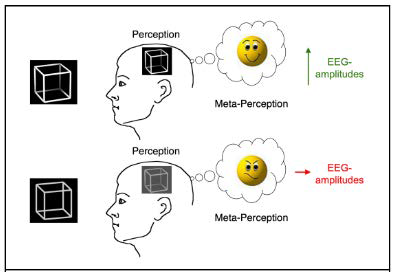
Our perceptual system constructs reliable perceptual interpretations out of a priori incomplete, noisy and to varying degrees ambiguous sensory input. This is done by integrating this bottom-up sensory input with top-down conceptual knowledge from our perceptual memory. In a series of experiments, we investigated the underlying neural processes by comparing the participants’ EEG response to ambiguous and low-visibility stimuli with the EEG to corresponding disambiguated and high-visibility stimulus variants.
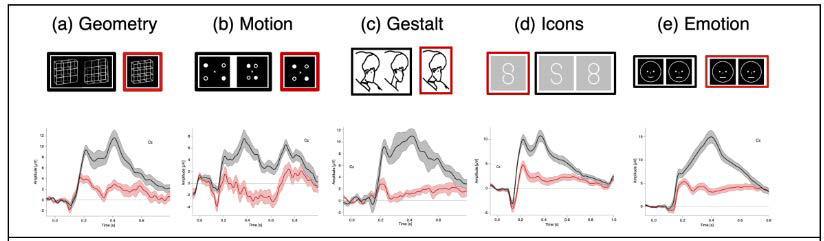
Across very different stimulus categories and complexity levels, we found a surprisingly larger EEG effect with much larger amplitudes in the case of unambiguous and high-visibility stimuli cubes compared to ambiguous and low-visibility stimulus variants (see also Fig. 1). We postulate a meta-perceptual valuation instance that evaluates the outcome of a highly automated perceptual integration process (Fig. 2). High reliability comes with large EEG amplitudes and vice versa.
5.5 Making science accessible through art
Ahna Skop (University of Wisconsin - Madison, US)
License: Creative Commons BY 4.0 International license © Ahna Skop
The objective of this presentation was to facilitate a connection between scientific concepts and public understanding through the medium of artistic expression. The usage of visual art and sculpture enables the communication of complex scientific ideas to a broader audience in a more effective manner. Artistic interpretations can evoke curiosity and engagement, thereby rendering abstract or challenging concepts more relatable and easier to grasp. This approach fosters a deeper connection between science and society, promoting learning through creativity and visual storytelling.
5.6 Evolution of Indirect to Direct Relations between Topics in Neuroscience Literature in Augmented Reality
Boyu Xu (Utrecht University, NL)
License: Creative Commons BY 4.0 International license © Boyu Xu
Encouraging more integrative research efforts that bridge neuroscience
and AR can lead to innovative applications and deeper understanding of brain function.
5.7 Some Thoughts on Color and Space
Arthur Shapiro (American University - Washington, US)
License: Creative Commons BY 4.0 International license © Arthur Shapiro
Arthur Shapiro examined the complex interrelationship between visual perception, color theory, and spatial awareness. In his analysis, Shapiro elucidated the notion that color is not merely an intrinsic attribute of objects, but rather, it interacts dynamically with the surrounding space and context, thereby influencing how it is perceived by the observer. He emphasized that color perception can be affected by numerous factors, including lighting, background hues and spatial arrangements, which can give rise to visual phenomena that often deceive the eye. Shapiro also analyzed the manner in which our visual system processes information regarding space. The interplay between color and spatial perception gives rise to distinctive experiences, including simultaneous contrast and the perception of three-dimensionality on a two-dimensional plane. These observations assisted in elucidating why certain visual illusions, such as color constancy and shadow effects, can result in perceptual discrepancies between what is observed and what exists in objective reality.
5.8 Designing Intentional Data Visualizations
Jan Willem Tulp (TULP interactive - Rijswijk, NL)
License: Creative Commons BY 4.0 International license © Jan Willem Tulp
This talk emphasized the importance of purposeful design in data visualization. By considering perceptual principles and cognitive load, visualizations can be crafted to convey information more effectively. Tulp also advised the audience to use AI-based tools to create more efficiency and professionalism and to assist to develop more creative ideas.
5.9 AI-Art: Creative Machines, a History of Ideas and a Philosophical Twist
Arthur I. Miller (University College London, GB)
License: Creative Commons BY 4.0 International license © Arthur I. Mille
The talk “AI-Art: Creative Machines, a History of Ideas and a Philosophical Twist” offered an engaging exploration into the intersection of artificial intelligence, art, and philosophy. Arthur I. Miller began by tracing the roots of AI and creativity, delving into the historical evolution of ideas that had shaped the development of creative machines. He highlighted how pioneering technology laid the groundwork for the concept of machines capable of more than just computation – machines that could potentially mimic or even generate art.
5.10 Data as Illusion
Kim Albrecht (Filmuniversität Babelsberg - Potsdam, DE)
License: Creative Commons BY 4.0 International license © Kim Albrecht
Is data an illusion? Are data aesthetics a representation of the world, or is it a cultural artifact that is shaped by socio-political forces? This talk delved into the concept that data visualizations are not neutral representations but are influenced by the designer’s choices and cultural context. The role of AI in data aesthetics was discussed, particularly how machine learning algorithms can both reveal and obscure patterns in data, potentially creating new “illusions” in our interpretation of information.
5.11 Some Thoughts on the Concepts of Perception, Illusions & Visualisation
Brian Rogers (University of Oxford, GB)
License: Creative Commons BY 4.0 International license © Brian Rogers
In “Some Thoughts on the Concepts of Perception, Illusions & Visualisation,” Brian Rogers presented an overview about what illusions are, how misunderstandings about illusions can arise and how to differentiate between illusions and delusions. Rogers stressed the complexities of perception as a process that is not merely passive reception, but rather active construction that helps to orient to a dynamically evolving world. Rogers also touched on the role of perception and visual processing in creativity and artistic expression.
5.12 Rubin and Illusions
Michael Kubovy (University of Virginia - Charlottesville, US)
License: Creative Commons BY 4.0 International license © Michael Kubovy
In “Rubin and Illusions,” Michael Kubovy provided a sophisticated analysis of the now world-known work of Danish psychologist Edgar Rubin known as the Rubin Vase–a picture of a vase that can be interpreted as a vase or two faces, depending on which part of the image is seen as foreground or background. After having clarified how Rubin’s original image looked, Kubovy posited that Rubin’s work on figure-ground perception established a foundation for a more comprehensive understanding of how the brain interprets complex visual scenes. He emphasized that the study of illusions was not merely a matter of intellectual interest but rather a gateway to the underlying mechanisms of human cognition and the processes by which reality is constructed from visual input. Through this investigation, Kubovy reinforced the notion that illusions pushed the boundaries of perception and prompted a more profound examination of the nature of visual and cognitive processing.
5.13 How Grand Is the “Grand Illusion” (the reference is to Dennett 1991, not to the 1937 French film)
Marco Bertamini (University of Padova, IT)
License: Creative Commons BY 4.0 International license © Marco Bertamini
This talk questioned the extent to which our perceptual experience is an illusion, as proposed by philosopher Daniel Dennett. The implications for understanding consciousness and the reliability of our senses were explored.
6 Art show
One important aspect of our seminar was the inclusion of professional artists who have worked with the concept of visual illusions, or have used AI in their creative process. To highlight their perspectives, we mounted an art show, which was supported by the Dagstuhl team. Our vernissage was on Tuesday night. Seminar participants, staff and visitors were invited to visit with the 12 artists, to discuss their work. The two exhibit rooms were open for visiting throughout the week. We also hosted a visit to an art exhibition featuring one of our artists, Bodo Korsig.
6.1 Michele Banks
-
Paintings of text and images, created in 2024, Ink on Upo
-
Light of Memory, What We See, Act of Perception, and What Is Memory
6.2 Alina Braun
Two abstract paintings of flowers
6.3 Shanti Chandrasekar
-
Pen and Ink on Paper Drawings entitled: Microglia, Black Hole, Astrocytes, Spacetime,
-
Information Paradox, Networks, Time Crystals- Square, Time Crystals- Hexagon,
-
Embroidery on paper –Microglia, Black Hole, Astrocytes, Spacetime, Information
-
Paradox, Networks, Time Crystals-Square, Time Crystals- Hexagon, Black Hole- Event
-
Horizon
-
Pen on Paper– Journeys-Neutrinos, Light,
-
Pen and Ink on Paper- Black Holes&Wormholes- Red Orange; Black Holes&Wormholes-
-
Blue Green, Seed Universes, Overlapping Waves, Borders&Boundaries
-
Hand Hole-punched paper on mirror sheets–Maya- Illusions.
6.4 Oliver Deussen
Four robot-generated paintings from the E-David project

6.5 Karina Kueffner
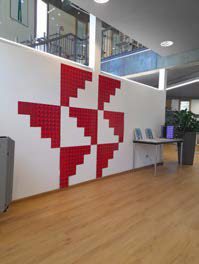
Brique, a modular site-specific installation whose individual parts are woven from adhesive foil stripes. 2024

6.6 Ludwig Hanisch
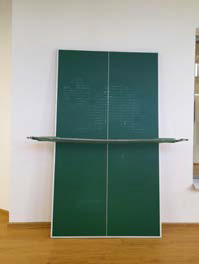
2-Player (Turtle), acrylic on canvas with table tennis net, 2024.
6.7 Karina Kueffner and Ludwig Hanisch
#patterntopixel p2p Edition 1st Wave (10 x 2 pcs.), 2024. Colored pencil on paper / Acrylic, varnish on paper

6.8 Sophia Huth
Title: daughter and mother smoking
Graphite on paper
Size: DinA4
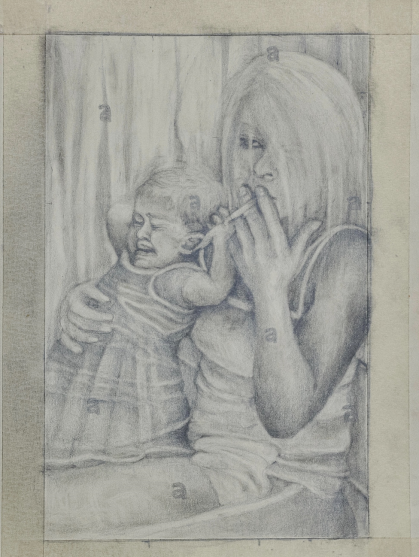
In this drawing, Sophia worked with the composition of a stock photography showing a mother holding her crying baby while she is smoking a cigarette. What one might perceive as a generic, self explanatory image is deeply coded, whether it be morally, culturally and/or historically. By drawing this image the artist tried to find understanding of the implications this image has and the intentions it is trying to set: Smoking is bad, especially as a mother: The archetype of a bad mother is portrayed. “I’m gauging between the heaviness of that judgement and the ironic quality those ad-like overdramatized images embody.”
6.9 Bodo Korsig
-
Videos of interactive installations
-
Artworks viewed at an art show during the excursion to Trier

6.10 Claudia Muth
-
Three drawings entitled: (Re)tie, (De)wind, (Un)fold, plus a video of untying.
-
(see video https://vimeo.com/561277476/9a082bfabe)

6.11 Brian Rogers presenting Patrick Hughes’ Revospectives
-
Perspective Buildings
-
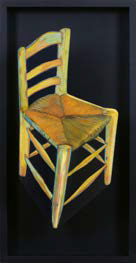
Van Gogh’s chair
-
3D-library
6.12 Jan Willem Tulp
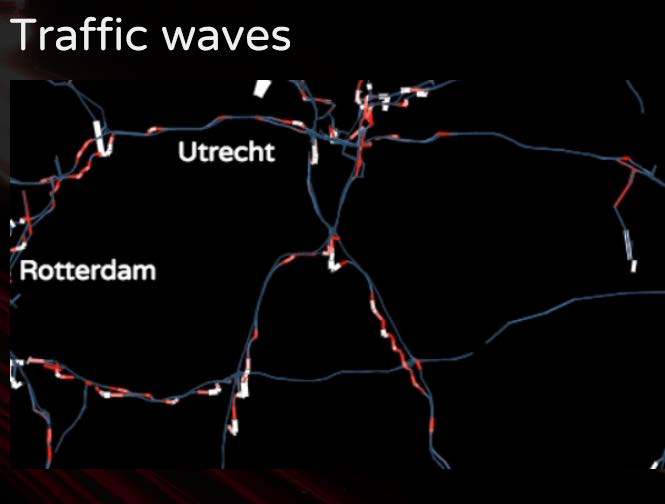
Video of data visualization (transport system, see https://tulpinteractive.com/ )
6.13 Rebecca Xu
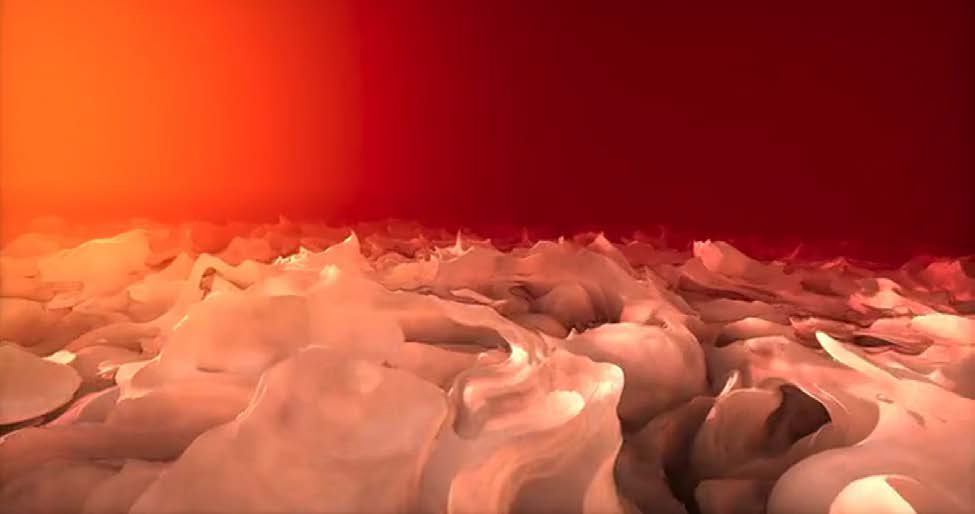
For Tashi is a 2020 programing-generated animation by composer Jiayue Cecilia Wu, computer graphics creators Rebecca Ruige Xu and Sean Hongsheng Zhai, with Konghou performance by Lucina Yue (see video: https://vimeo.com/402035599/d193ed5e78).
7 Demonstrations
We offered our seminar members the opportunity to explore the intersections of art, science, and perception through hands-on demonstrations by experts. Participants gained unique insights into how perceptual principles shape our understanding of art and data visualization, and engaged with interactive examples that blur the boundaries between visual science and artistic expression.
- Sylvia Pont:
-
Illusory lighting-materials-shapes demonstrations.
- Marco Bertamini:
-
Wow we interact with mirrors.
- Michael Bach:
-
A collection of examples, categorized by superficial perceptual dimensions, plus examples for interaction and mutual inspiration between art and vision science of perceptual illusions.
- Boyu Xu:
-
DatAR, an Augmented Reality prototype (in HoloLens 2) designed for topic-based literature exploration in neuroscience.
- Michele Banks:
-
“I will bring materials to do an ink painting demo which people can join. I just need water, paper towels, and something to protect the table.”
- Dejan Todorović:
-
Effects of observer vantage point on perception of images, how the same stimulus is affected by many different contexts.
- Arthur Shapiro:
-
A variety of color, motion, and shape demonstrations.
8 Excursion
On Wednesday afternoon, we visited the Rheinisches Landesmuseum in Trier where we viewed historic visual illusions (ancient Roman mosaics), including large areas built from reversible-perspective Necker cubes which directly referred to our own art show organized at Dagstuhl and the expert talks by visual illusionists and scientists.

We then spent time at the beautiful outdoor Contemporanea Gallerie which displayed over 20 art works by one of our participants, Bodo Korsig. We ended the day with dinner at a winery which offered us Saar wines including a profound explanation of the wines by the head sommelier.
9 Brainstorming Sessions
We conducted several brainstorming sessions, in which we explored how AI, randomness, and creativity intersect in visual illusions, perception and art , raising ethical, cultural, and societal questions. These topics guided the formation of the working groups:
9.1 AI, Randomness, and Creativity: Navigating Ethical Challenges and Trust in Data for Societal Good”
-
Randomness and AI: Can humans create truly random numbers with the help of AI? If so, could this ability be misused to fake research results or tax reports, blurring the lines between reality and fabrication?
-
AI’s Impact on Data Visualization: What is the purpose of visualization, and can AI-generated visualizations be trusted? How do we address ethical challenges like algorithmic bias, data bias, and cultural representation in visualization?
-
Art and Creativity: What defines art and creativity? Can machines create art, and how does machine creativity affect human creativity?
-
Societal Benefits of Illusions: What are the positive sides of AI and illusions?
How can illusions be used to benefit society, perhaps even to “save democracy” or address global challenges?
9.2 AI and Cultural Context in Art: Transgression, Craftsmanship, and Learningin Machine Creativity
-
AI and Cultural Context in Art: Art is created relative to an audience with a shared culture. Can AI-generated art fulfill the definition of art if it doesn’t share human cultural experiences?
-
Transgression and Craftsmanship: Can AI be transgressive or develop a craft in the way human artists do? Can it learn from criticism similarly to an apprentice?
-
Learning and Adaptation: How can AI learn from feedback and evolve its artistic expressions? Is it capable of deskilling itself or combining materials in novel ways?
9.3 AI in Art Creation: Balancing Science, Measuring Artistic Experience, and the Role of Data Visualization
-
Necessity of AI in Art Creation: Why do we need AI to make art? How does the reductive nature of science align with the expansive nature of art?
-
Measuring Artistic Experience: How do we measure the experience of art, and when does data visualization become art?
9.4 Aesthetics, Emotion, and Authorship in AI Art: Exploring the Intersection of Consciousness, Creativity, and Information Transfer
-
Aesthetics and Information Transfer: How important is aesthetics for effectively transferring information? How do aesthetics and information work together in visualization?
-
Emotion in AI Art: Is AI-generated art missing emotional context, and how does this affect its appeal or emotional impact on the human audience?
-
Consciousness and Creativity: Does creativity need to be connected to a conscious mind? How can we define consciousness in the context of creativity?
-
Authorship in AI Art: Can authorship and art be separated? In AI-assisted art, who is the true author?
9.5 Mistakes, Embodiment, and Trust: Exploring the Role of Cognition and Validity in Art and Data Visualization
-
Understanding Mistakes: What constitutes a mistake in art and data visualization?
-
Embodiment and Cognition: How do humans think and feel, and what is the role of embodiment in artistic creation?
-
Validity of Information: What is the validity of information and data, and how does this affect trust in visualization?
9.6 Visualization and Interpretation: Audience, Aesthetics, and Decision-Making in Data Representation
-
Visualization vs. Interpretation: Visualization is one aspect; understanding it is another. How does the choice of visualization depend on the goal or audience?
-
Decision-Making in Visualization: How do we decide how to visualize data, and are some visualization methods universal?
-
Perception of Aesthetics: Do aesthetically pleasing graphs bias the audience’s perception, and how does this impact the interpretation of data?
9.7 Perception, Umwelt, and Creativity: Exploring Context, Randomness, and Intuition in Art and Beyond-Human Perspectives
-
Perception and Art: What can perception tell us about art, and vice versa?
-
Umwelt and Perspective: Exploring the concepts of “Umwelt” (self-centered world) versus “Umgebung” (environment) and how beyond-human perspectives (AI, animals, plants) influence art and perception.
-
Contextualization and Meaning: How do effects of (de)contextualization and temporalization affect our understanding of art?
-
Randomness and Creativity: Does randomness feed creativity, and how do human limitations compare to AI limitations?
-
Intuition and Sensemaking: How do intuition and sensemaking contribute to the creative process?
9.8 Multisensory Experiences, Illusions, and AI Collaboration: Enhancing Communication and Artistic Expression
-
Multisensory Approaches: How can augmented and mixed reality, along with multisensory experiences, enhance information communication?
-
Illusions and Perception: How can understanding illusions and perceptual mechanisms inform the creation of meaningful artistic expressions and interventions?
-
AI Collaboration: How can AI support multimodal experiences, and how can artists and scientists collaborate or co-create with AI?
10 Working group reports
Building on the rich ideas from the brainstorming phase, participants formed six final groups to delve deeper into selected topics, and form plans for future exploration, which could produce tangible outputs, such as research papers, exhibits, and workshops.
10.1 Group 1: Komar & Melamid & AI and “Should Computers Compete in the Olympics?”
Members.
Alina Braun, Claus-Christian Carbon, Itay Goetz, Sophia Huth, Michael Kubovy, Dejan Todorovic
This group tackled two fascinating projects investigating the relationship between AI and artistic creation.
-
Komar & Melamid and the usage of AI: The group revisited the study by artists Komar and Melamid, who used surveys to create paintings reflecting public preferences. They aimed to replicate this process using AI tools, exploring how AI interprets and generates art based on preference data. Their experiment probed whether AI could manage the inherent subjectivity of human preferences, highlighting differences between human and AI-generated art.

Figure 14: Original outcome of the “Most Wanted Painting” for US citizens.
© Komar & Melamid (1993) -
Should Computers Compete in the Olympics? This project explored the provocative question of whether computers should be allowed to compete in the Olympics. The group considered the notion of virtuosity in art and sport, questioning whether human limitations are critical to artistic and athletic creation. They speculated on the potential for “naive” computers to produce valuable artistic artifacts, igniting debate on the future role of AI in both art and competitive arenas.
The group is already conducting the first empirical studies within the scope of the first project. This is done at the University of Bamberg with an active involvement of all other team members by regular meetings all 3-4 weeks.

© Carbon (2024), generated by ChatGPT 4o’s DALL-e implementation
10.2 Group 2: AI Impact on Creativity in Art and Visualization
Members.
Marco Bertamini,, Kassandra R. Lee, Mario Michelessa, Arthur I. Miller, Boyu Xu , Rebecca Ruige Xu
The group started with an open discussion about developments in AI and creativity. We recognise the difficulty with definitions. For example, in the case of creativity, human creativity may not be the same as artificial creativity. Another topic of discussion was the view that AI can be seen as a tool. In this sense there is a similarity with how other technologies or scientific discoveries have changed human creative behavior, for example with the discovery of linear perspective. However, the future may include AI systems that are independent of humans in their creative behavior.
Position Article.
The group began planning a position article on AI’s role in art and data visualization. They debated whether AI is merely a tool or could become an independent creative agent. Exploring how AI might hinder or enhance human creativity, they presented examples from art and visualization. The article aims to address fundamental questions about AI’s creative capabilities, the definition of creativity, and the potential for AI to learn from criticism, supported by real-world examples.
The position paper, which we will submit to the Journal of Perceptual Imaging, will combine our multiple perspectives, and begin with a multi-faceted definition of creativity:
-
1.
What is creativity
-
2.
Can AI be creative
-
3.
Is AI just a tool,
-
4.
Can AI be an independent agent
-
5.
Example AI and Art
-
6.
Example AI Information Visualization
-
7.
Can AI hinder human creativity,
-
8.
Can AI improve human creativity
-
9.
Conclusion
10.3 Group 3: The Alchemistic Data Visualizator
Members.
Oliver Deussen, Peter Eades, Christophe Hurter, Mauro Martino, Ahna Skop, Jan Willem Tulp
The group embarked on an innovative exploration of how physical interactions with materials could transform abstract data into immersive and tangible visualizations, drawing on aesthetic principles and multisensory experiences to bridge the gap between data and perception. Their approach harnessed the concept of an Alchemical Metaphor for Data Visualization, taking cues from alchemical processes that involve transformation and material interactions, to build a framework that reimagines data as something to be experienced, rather than simply observed.
By incorporating visual illusions and symbolic elements, such as the striking example of an arrow placed behind a glass of water, the group was able to create a metaphorical narrative around complex ideas – in this case, wealth redistribution. As viewers moved around the display, the arrow seemed to shift, visually echoing the often-hidden dynamics of wealth distribution and the elusive nature of economic shifts. This setup encouraged an experiential form of data storytelling, where viewers had to physically engage with the visualization, leading to a more personal interpretation of the data’s implications.
Data-Driven Storytelling and the Alchemical Framework.
To underscore their approach, the group employed data-driven storytelling to convey the rationale behind their design choices. They highlighted how immersive, multisensory visualizations could increase emotional engagement and comprehension, drawing on empirical studies that show that hands-on, interactive experiences can improve recall and enhance viewers’ understanding of abstract concepts. By tracking participant responses, including changes in emotional engagement and recall ability, they gathered data that supported the effectiveness of their approach.
In developing the alchemical framework, the group experimented with a variety of physical materials – glass, water, metals, and textures – to observe how each could enhance different aspects of the data’s narrative. For instance:
-
Glass and Water: Used to create refractive illusions that symbolized transparency and distortion, conveying themes like socio-economic shifts that may appear clear at first glance but become more complex under scrutiny.
-
Metals and Reflective Surfaces: Experimented with to create a mirrored effect, symbolizing self-reflection in data interpretation, suggesting that how one perceives data can often be influenced by personal biases or context.
The hands-on, exploratory approach they developed aligns with principles of data democratization and inclusivity. Rather than presenting data in static charts or graphs, this method allows participants from diverse backgrounds to explore data through a physical, sensory-based narrative. This multisensory engagement can break down barriers to understanding complex data, transforming data visualization into a shared, accessible experience that fosters reflection, dialogue, and perhaps even a deeper collective understanding.
In summary, by using material interactions and alchemical metaphors, the group aims to create an immersive, data-driven storytelling approach that combines aesthetic, cognitive, and sensory dimensions. Their project highlights a compelling new frontier in data visualization – one that encourages viewers to not only see but experience data, thus deepening both engagement and understanding.
10.4 Group 4: Data Visualization and Aesthetics
Members.
Michael Bach, Fiona Menzel, Alexander Pastukhov, Rebecca Pfiffer
This group delved into how aesthetic principles influence data visualization techniques, building on questions about aesthetics and information transfer.
Multiple Visualizations of the Same Data.
The group visualized a single dataset using different domain-specific styles to illustrate how diverse audiences require tailored visual approaches. They demonstrated that different visualization techniques could dramatically alter the interpretation of the same data, depending on context and audience. Their work highlighted the importance of aesthetics in effectively communicating information and the potential biases introduced by design choices.
10.5 Group 5: Irritations
Members.
Ludwig Hanisch, Jürgen Kornmeier, Bodo Korsig, Karina Kueffner, Claudia Muth, Marius Raab
During the Dagstuhl-Seminar 24301 about Art, Visual Illusions, and Data Visualization, we were discussing themes related to consciousness, emotion, and creativity. Starting from an interest in the evolutionary basis of the perceptual system, resulting in an embodiment of perception, cognition and emotion, our conversation focused more and more on topics around the terms “error”, “error detection”, and “irritation”. We wondered about the potentially positive effects of sensing and/or detecting errors or deviations and the accompanying irritations, which can occur on multiple levels and in multiple domains within the human perceptual, emotional and cognitive system.
The following observations and questions guided our conversations and discussions:
-
Security and curiosity create a field of tension that motivates embodied exploration.
-
Errors and irritations can be part of an insightful process, that we are not necessarily able to verbalize or even become conscious of.
-
How important are errors and irritations for a creative process?
-
Can we define mistakes and irritations without contrasting them to a norm?
-
Is it possible to irritate an artificial/non-living system? What would that mean?
-
What errors are specific to a biological system that might experience harm and death, and what is different for a machine?
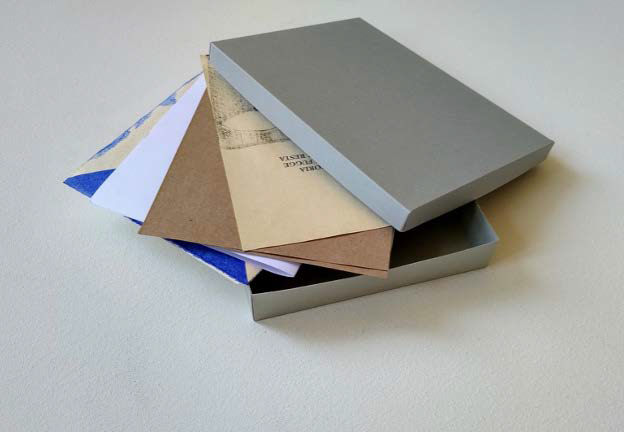
Realizing the potential of our multiple perspectives, we plan to explore phenomena of irritation in dialogues between two people from our group specializing in different disciplines such as art, psychology, informatics, and neuroscience. A set of statements related to the concept of “irritation” based on our discussion will be formulated. Each statement will be fed into different text-generating AIs and different image-generating AIs.
The resulting images and texts will be contrasted with those created by a team consisting of two people from different domains. We will create a sample of documents representing the results of the collaborative work of these inter-disciplinary groups exploring instances and consequences of irritation. As a format, we are considering a portfolio with various combinations of images and texts (e.g. a collection of A3 papers in a box).
10.6 Group 6. Construction in Art, Visual Illusions and Data Visualization
Members.
Kim Albrecht, Michele Banks, Shanthi Chandrasekar, Brian Fisher, Sylvia Pont, Brian Rogers, Bernice Rogowitz, Authur Shapiro
We perceive the world as fixed and stable, even though an infinite range of distal causes could produce each percept. That is, we continuously deal with ambiguous information. Visual Illusions tap into this intrinsic ambiguity by creating experiences that are deliberately perceptually ambiguous or bi-stable, often by pitting one perceptual mechanism against another. Artists use a variety of media to create works that can also produce multiple interpretations, be ambiguous, or bi-stable. Art, like perception, itself, does not create a 1:1 veridical representation of the physical world. Likewise, in data visualization, data values are rendered as visual marks using hue, luminance and size, which can be used to represent or highlight features in the data. Different renderings can produce different impressions of the underlying data, and rendering methods can be used to reveal its features. This group worked to create a common language across domains for exploring the ways visual information can be presented and manipulated to change perception. We also explored the idea of creating a physical book for children 8+ which would provide a hands-on method for exploring how 3D and perspective cues cooperate to provide a unified impression of the real world, and the unusual perceptions that can occur when these cues are in conflict.
10.6.1 The physical world and how it is perceived
Different perceptual systems respond to different aspects of the physical world.
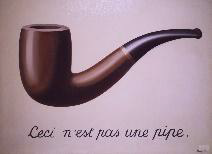
Which perceptual organization dominates depends on many factors, including the relative strength of our perceptual responses to the spatial, color, and motion of the physical world, our past experiences (priors), and our goals and intentions. We looked for common frameworks for exploring these processes across the three disciplines of art, perception, and data visualization.
10.6.1.1 Same Physical Stimulus; Different Percepts
The Necker cube, seen here in an ancient mosaic from Trier, reverses perspective with viewing, even though there is no change in the distal stimulus or viewer action.


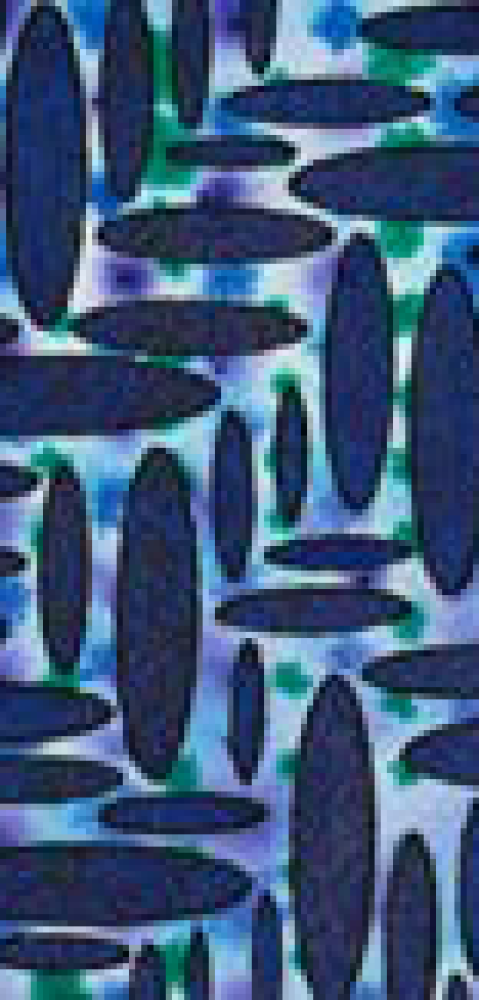
Likewise, In the second image, either the lion or the zebras emerge as percepts. These percepts can switch, either independent of viewer control or by actively steering attention. The different precepts may not have the same time constant, that is, some emerge instantly, and others may take time to emerge. In the painting by Michele Banks, the images and text compete for attention. In the painting by Shanthi Chandrasekar, complex, dynamic constructs emerge from tessellations of two simple triangular shapes.
10.6.1.2 Same Physical Stimulus; Different Percepts induced by viewer actions

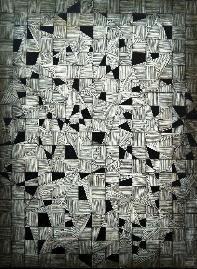
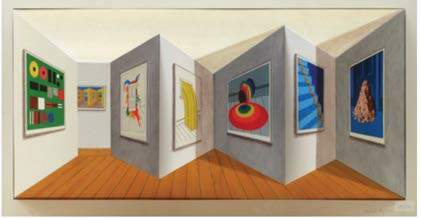
In some cases, the same physical (distal) stimulus produces a different percept depending on how it is viewed. These activities change the balance of perceptual processes operating on the distal stimulus, producing different perceptual organizations (“constructions”). In the first example, which percept dominates in this visual illusion depends on spatial frequency. When high spatial frequencies dominate, diamonds are perceived; if the viewer centers low spatial frequencies by squinting or moving the image into the periphery, the percept of squares dominates. In the painting by Shanthi Chandrasekar, structures on the scale of the black polygons emerge immediately, while the larger geometric structures that organize across the smaller structures emerge more slowly, and require scrutiny. This reverspective by Patrick Hughes, was intentionally created to pit binocular depth cues against perspective depth cues. In this art piece, the viewer’s lateral movement changes the balance of these cues, producing a scene that appears to be dynamically distorting.
10.6.1.3 Same Physical Stimulus; Different Renderings; Different Percepts
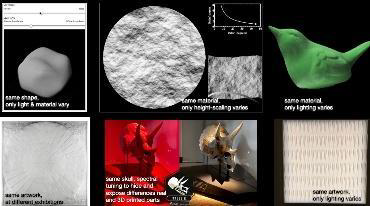
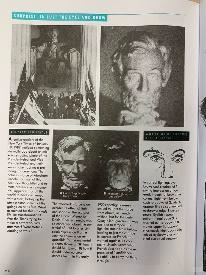

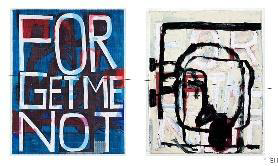
We do not directly perceive “reality”. In the first two examples, we see that perception can be dramatically altered by changing the way that image is rendered. The lighting, for example, can change our judgments of size, shape and texture (first example), and can even alter higher-level judgments. In the second example, lighting the statue of Lincoln from below instead of at the angle intended by the sculptor, can change the visual expression from serious to surprising. In data visualization, values and features in the data are mapped onto visual dimensions, such as color. In the third example, the elevation of the earth is mapped onto two color scales, both of which provide a monotonic mapping from scalar data values onto scalar values of a colormap. The rainbow color scale on the left hides important features in the underlying data (left). A perceptual color scale (right), in which luminance is used to represent data magnitude and hue is used to mark the semantic regions above (green) and below (blue) sea level, clearly reveals the Florida coast, the continental shelf, and the Appalachian mountain range. In the artwork by EJ Hauser, the same text and image, in the exact same geometries, are shown in both representations. Rendering choices, such as the color of the text and images, or which is layered on top, produce completely different percepts.
10.6.2 Hands-on teaching project
We are usually not consciously aware of how much perceptual organization is operating on our understanding of the world around us. Visual illusions provide a chink in the armor, alerting us to the fact that perception is not 1:1 with the physical world. We discussed creating a punch-out, paint and assemble book that would give children and adults hands-on experience with a physical construction, to help them to embody the relationship between the physical world and perception. One idea would be to provide “reverspectives” and/or hollow figures, inspired by the Patrick Hughes art pieces. Assembling these objects, with instructional materials, would organically communicate t insights about optics, geometric perspective, binocular vision, and perceptual organization. Accompanying art lessons would help readers explore how color, geometric texture, and physical depth affect the strength of the visual illusion. We also think that this “construction with intent” process will stimulate questions about how variations in the visual parameters affect perception.
11 Discussion and Outcomes
Art is a multifaceted form of expression that communicates ideas and emotions through various mediums. It often intersects with concepts like optical and visual illusions, which are perceptual phenomena that challenge our understanding of reality by misleading our visual perception. Generative AI represents a technological advancement that enables the creation of new content based on learned patterns from existing data, raising questions about the boundaries and intersections of art, design, data visualization, and artificial intelligence. The emergent features in art, visualization, and illusions do not necessarily provide a direct one-to-one mapping of data or reality, leading to both advantages and disadvantages in interpretation. The nature of “reality” itself can be debated, as it encompasses both the physical world and the constructs of our minds, a concept explored in the philosophical discipline of phenomenology, which emphasizes subjective experience. Understanding when a visual illusion serves merely as a “trick” versus when it offers meaningful insights into data visualization is crucial for effective communication. Artistic techniques like Trompe L’oeil and Mise en Abyme exemplify how visual illusions can relate to the interpretation of data visualizations, revealing complexities in our understanding.
The rise of generative AI – leveraging advanced architectures such as LLM (Large Language Model) and DM (Diffusion Model) – also prompts the emergence of new jobs and roles in both the art and technology sectors, where computer science plays a transformative role in reshaping art and democratizing access to creative expression. Tools like GPT-4, Stable Diffusion, Flux, and Midjourney enable artists and enthusiasts to create complex artworks, leading to professions like AI artists, prompt engineers, and AI ethicists. As art becomes more accessible to a broader public through these AI technologies, it raises questions about the tools used for art criticism and whether new methodologies are needed to evaluate AI-generated art. Additionally, emerging technologies such as blockchain and non-fungible tokens (NFTs) are reshaping the art world by providing new platforms for the distribution and monetization of AI-generated art, altering how we perceive and value these works. Ensuring that this democratization remains inclusive and accessible to diverse audiences and creators is essential for fostering a rich and varied artistic landscape, while also addressing challenges related to algorithmic bias, digital literacy, and equitable access to AI technologies.
The literature includes many pairwise interactions between art, visual illusions, and data visualization, but to our knowledge, this is the first attempt to bring these diverse ideas together into a coherent whole. In our discussions, activities and working groups, we explored many opportunities for publishing scientific papers and creating artistic shows around these themes.
We plan a special issue of the Journal of Perceptual Imaging, focused on illusions, art, and data visualization, edited by Kassandra Lee, Claus Christian Carbon, and Bernice Rogowitz. Other ideas were proposed, such as a book of edited papers and follow-on workshops and seminars to engage a wider community of data and visualization scientists, perceptual researchers and artists, and to inspire new research directions and new interdisciplinary curricula. Other venues for exploration for future interaction include Visual Science of Art Conference (VisAC) associated with the European Conference on Visual Perception (ECVP) VisAP, the art and visualization event aligned with the IEEE Visualization Conference (VIS), as well as relevant sessions at ICC, IUI, and NeurIPS. Additionally, we plan to create white papers for dissemination in more general forums, such as Computer Graphics and Applications and IEEE Viewpoints. An art show focusing on emergent perception across art, vision, and data visualization is also envisioned, highlighting the convergence of these fields.
12 Participants
Our participants bring a rich diversity of expertise, having explored the intersections between perception, art, data visualization, and artificial intelligence. Some have applied perceptual principles to create artistic works, while others have studied how we perceive and experience art. Several participants employ perception principles to enhance data visualization or use data visualization techniques as artistic tools. Many integrate artificial intelligence, either as a creative medium or as a support for artistic expression, and others utilize signal processing to analyze and characterize artistic works. Additionally, their work encompasses the study and application of visual illusions, from classical to contemporary art, and extends to scientific research on perceptual principles like Gestalt, examining their implications for both art and data visualization.

13 Acknowledgements
We are very grateful to Dr. Raimund Seidel and his team for their support for our art exhibit. They spent much additional time and effort to identify exhibit spaces and proposed creative options for displaying the works within operational constraints. We thank Itay Goetz for his enormous contribution to the art show and to the organization of our multi-part excursion, and extend special thanks to Dr. Klaus Reeh who welcomed us at Contemporanea Galerie für moderne Kunst in Oberbillig with original sparkling wine from the Saar region to this exquisite outdoor art exhibition where we had vivid discussions on Art, AI and the potential conditio humana that let us create art. And, above all, we give thanks to the scientists and artists who participated in this seminar, who so openly embraced different perspectives on the theme of this excellent Dagstuhl Seminar Art, Illusion, and Data Visualization.
References
- [1] Carbon, Claus-Christian. “Understanding human perception by human-made illusions.” Frontiers in Human Neuroscience 8: 566.
- [2] Coren, Stanley, et al. “An empirical taxonomy of visual illusions.” Perception & Psychophysics 20.2: 129-137.
- [3] Joos, E. et al. “Large EEG amplitude effects are highly similar across Necker cube, smiley, and abstract stimuli.” PLOS ONE 15: e0232928.
- [4] Joos, E. et al. “Using the perceptual past to predict the perceptual future influences the perceived present – A novel ERP paradigm.” PLOS ONE 15: e0237663.
- [5] Klein, K., Kobourov, S., Rogowitz, B. E., Szafir, D., & Miller, J. “Perception in Network Visualization (Dagstuhl Seminar 23051).”
- [6] Kornmeier, J. & Bach, M. “Ambiguous figures – what happens in the brain when perception changes but not the stimulus.” Frontiers in Human Neuroscience 6: 1-23.
- [7] Kornmeier, J. & Bach, M. “Object perception: when our brain is impressed but we do not notice it.” Journal of Vision 9, 7: 1-10.
- [8] Kornmeier, J. & Mayer, G. “The alien in the forest OR when temporal context dominates perception.” Perception 43: 1270-1274.
- [9] Kornmeier, J., Wörner, R. & Bach, M. “Can I trust in what I see? – EEG Evidence for a Cognitive Evaluation of Perceptual Constructs.” Psychophysiology 53: 1507-1523.
- [10] Long, G. M. & Toppino, T. C. “Enduring interest in perceptual ambiguity: alternating views of reversible figures.” Psychological Bulletin 130: 748-768.
- [11] Muth, Claudia, and Claus-Christian Carbon. “The Aesthetic Aha: On the pleasure of having insights into Gestalt.” Acta Psychologica 144.1: 25-30.
- [12] Muth, Claudia, Vera M. Hesslinger, and Claus-Christian Carbon. “Variants of semantic instability (SeIns) in the arts: A classification study based on experiential reports.” Psychology of Aesthetics, Creativity, and the Arts 12.1: 11.
- [13] Pepperell, Robert. “Art and extensionism.” Situated Aesthetics: Art Beyond the Skin: 148-170.
- [14] Rogers, Brian. “Delusions about illusions.” Perception 43.9: 840-845.
- [15] Rogers, Brian. “When is an illusion not an illusion? An alternative view of the illusion concept.” Frontiers in Human Neuroscience 16: 957740.
- [16] Rombach, Robin, et al. “High-resolution image synthesis with latent diffusion models.” Proceedings of the IEEE/CVF Conference on Computer Vision and Pattern Recognition.
- [17] Shapiro, Arthur G., and Dejan Todorovic, eds. The Oxford Compendium of Visual Illusions. Oxford University Press.
- [18] von Helmholtz, H. L. F. Handbuch der physiologischen Optik. doi:10.3931/e-rara-21259.
14 Participants
-
Kim Albrecht – Filmuniversität Babelsberg – Potsdam, DE
-
Michael Bach – Universität Freiburg, DE
-
Michele Banks – Washington, US
-
Marco Bertamini – University of Padova, IT
-
Alina Braun – BMW Group – München, DE
-
Claus-Christian Carbon – Universität Bamberg, DE
-
Shanthi Chandrasekar – North Potomac, US
-
Oliver Deussen – Universität Konstanz, DE
-
Peter Eades – The University of Sydney, AU
-
Brian D. Fisher – Simon Fraser University – Surrey, CA
-
Itay Goetz – Universität Bamberg, DE
-
Ludwig Hanisch – Nürnberg, DE
-
Christophe Hurter – ENAC – Toulouse, FR
-
Sophia Huth – Berlin, DE
-
Stephen Kobourov – TU München, DE
-
Jürgen Kornmeier – IGPP – Freiburg, DE
-
Bodo Korsig – Trier, DE
-
Michael Kubovy – University of Virginia – Charlottesville, US
-
Karina Kueffner – Nürnberg, DE
-
Kassandra R. Lee – University of Nevada – Reno, US
-
Mauro Martino – MIT-IBM Watson AI Lab – Cambridge, US
-
Fiona Menzel – Technische Hochschule Würzburg Schweinfurt, DE
-
Mario Alexis Emilio Michelessa – National University of Singapore, SG
-
Arthur I. Miller – University College London, GB
-
Claudia Muth – Universität Hof – Münchberg, DE
-
Alexander Pastukhov – Universität Bamberg, DE
-
Rebecca Pfiffer – freakstotable e.V. – Wirsberg, DE
-
Sylvia Pont – TU Delft, NL
-
Marius Raab – Technische Hochschule Nürnberg Georg Simon Ohm, DE
-
Brian Rogers – University of Oxford, GB
-
Bernice E. Rogowitz – Visual Perspectives – New York, US
-
Arthur Shapiro – American University – Washington, US
-
Ahna Skop – University of Wisconsin – Madison, US
-
Dejan Todorovic – University of Belgrade, RS
-
Jan Willem Tulp – TULP interactive – Rijswijk, NL
-
Boyu Xu – Utrecht University, NL
-
Rebecca Ruige Xu – Syracuse University, US
![[Uncaptioned image]](x6.jpg)